The Election Commission has extended the deadline for submitting enumeration forms as part of Kerala’s intensive voter list revision. The new deadline is December 18, and the draft voters list will be published on December 23. The final list will be released on February 21.
Political parties and the state government had raised concerns that conducting the Special Intensive Revision (SIR) amid upcoming local body elections would be challenging. Kerala had also approached the Supreme Court regarding the issue.
Enumerators (BLOs) had also reported difficulties in collecting data and uploading details. Some BLOs across the country had even taken their own lives due to work pressure.
The intensive revision requires BLOs to visit each household and verify voter information. Voters listed in the 2002 electoral roll are not required to submit new ID documents; providing an enumeration form is sufficient.
Pathanamthitta: Devaswom Board president K. Jayakumar announced that meals (sadhya) will be served on alternate days at Sabarimala. Pulav will be served one day and full sadhya the next.
The Devaswom Commissioner has been tasked with organising the new system. Since food items will be procured under the existing tender, no legal complications are expected, Jayakumar said.
Though the plan was initially set to begin on December 2, it was postponed due to incomplete arrangements. A committee had been appointed to study legal concerns before final approval in Friday’s meeting.
New Delhi: Prime Minister Narendra Modi praised Russian President Vladimir Putin for strengthening India–Russia relations, stating that the friendship between the two nations is “deep and enduring.” The leaders addressed a joint press conference at Hyderabad House following the annual summit and bilateral talks.
PM Modi said India welcomes all efforts to resolve the Russia–Ukraine conflict and added that India is willing to support peace initiatives.
The two nations signed eight agreements, including those related to labour, migration, health, and shipping. India also agreed to import more fertilizers from Russia. Both sides reached a consensus on a comprehensive economic cooperation roadmap until 2030 and progressed discussions on a free trade agreement.
Joint production of urea and enhanced cooperation in non-military nuclear energy were also announced.
President Putin thanked India for the warm reception and said that discussions had been productive. He highlighted plans to strengthen ties in defence, security, trade, and economic sectors.
Both leaders reiterated cooperation to complete the Kudankulam Nuclear Power Plant and collaborate on small nuclear reactors. Putin also announced that a Russian TV channel will begin broadcasting in India starting Friday.
Thiruvananthapuram: Activist Rahul Easwar, who is currently lodged in Poojappura Central Jail in connection with a case of allegedly insulting a survivor who filed a complaint against vlogger Rahul Mankootathil, has been hospitalised again.
Rahul, who has been on a hunger strike inside the jail, experienced a deterioration in his health. He was shifted to Thiruvananthapuram Medical College Hospital, where he has reportedly been administered IV fluids.
Prison authorities stated that he will be shifted back to jail once his condition stabilises. Rahul Easwar is the fifth accused in the case and had earlier been arrested by the police for allegedly defaming the complainant.
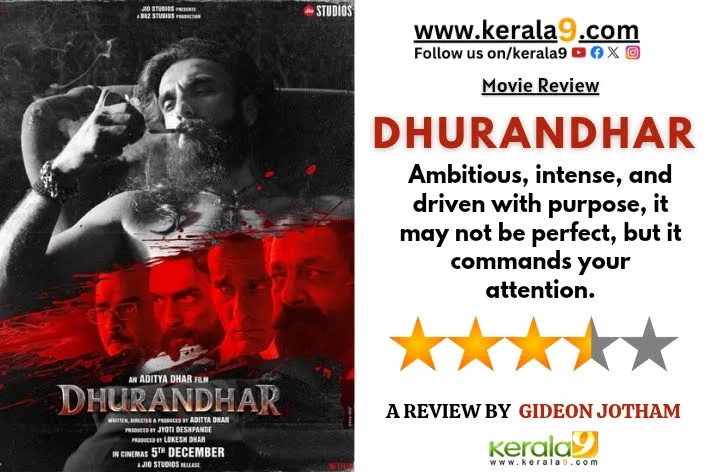
Dhurandhar Review: Ambitious, intense, and driven with purpose, it may not be perfect, but it commands your attention.
A Review by Gideon Jotham
Movie : Dhurandhar
Director: Aditya Dhar
Duration: 212 Mins
Language: Hindi
Genre: Political action thriller
Positives
Direction.
Casting
World-building
Tone
Cinematography
Music
Performance of actors
Negatives
Screenplay
Pacing
Editing
Duration
Emotional depth
CG
STORY
India and Pakistan share a tense history, and in the middle of that sits Ajay Sanyal, a man who believes peace talks are nothing but noise. He isn’t a chest-thumping hero; he’s quiet, calculating, and convinced that the only way to deal with the enemy is to hit first and hit hard. But he needs a political climate that will let him run the game his way, no hesitation, no moral sermon. Once that leadership arrives, Sanyal finally moves. His battlefield isn’t the border it’s Karachi, where crime and politics sleep in the same bed. The Lyari underworld is run by Rehman Dakait, a feared gangster with charisma and blood on his hands, backed by the ambitious politician Jameel Jamali. Together, they control the streets, the police, and everyone too afraid to oppose them.
Into this world walks Hamza Ranveer Singh’s undercover avatar. He doesn’t step in with swagger; he melts in, slowly earning Rehman’s trust. He becomes a loyal foot soldier first, then a strategic advisor, and eventually someone Rehman can’t imagine functioning without. Hamza sells him the dream of power beyond gun power that sits in parliament, not on street corners.
To deepen that divide, Hamza gets close to Jamali’s daughter. Not by accident, by design. His presence quietly poisons the relationship between Rehman and Jamali, turning loyalty into doubt and partnership into rivalry. Sanyal watches it unfold from a distance, like a man watching dominoes fall exactly where he placed them.But every operation takes a toll. The deeper Hamza goes, the thinner the line between duty and identity becomes. The violence grows, alliances shift, and the chaos he created begins circling back at him. He’s no longer just an agent undercover, he’s a man trapped inside a life he can’t fully control.
By the end, the mission feels less like a victory and more like a loaded pause. The stage is set, enemies are exposed, and the war Sanyal wanted has only just begun. The story stops not because it’s finished but because the next chapter demands an even bigger fire.
DIRECTION
Aditya Dhar swings for the fences with the direction, sometimes he hits clean, sometimes he overreaches. He builds the film like a war documentary fused with gangster cinema: gritty textures, handheld frames, muted colours, and sudden bursts of brutality. The tone is clear, this isn’t diplomacy, it’s vengeance dressed as realism.
His biggest strength is atmosphere. Karachi feels alive: chaotic, unpredictable, and hostile. The soundscape, the slang, the political tension it all feels intentional. Dhar treats the space like a pressure cooker, slowly raising the heat until characters either explode or turn into monsters. He uses silence, glare, and violence as storytelling tools instead of just relying on dialogue.
But Dhar also falls in love with his own scale. Instead of tightening the narrative, he begins expanding it adding characters, subplots, and political layers that eventually slow down the momentum. The pacing becomes uneven: explosive highs followed by meandering buildup. You can almost sense he wanted to make a two-season OTT series and then force-packed it into a single film.
Where he shines most is in extracting performances. Akshaye Khanna becomes an unblinking menace, Rakesh Bedi shockingly fluid, and Ranveer intense to a fault. Dhar gives actors space to breathe, stare, linger sometimes too long, but never without intention.
In the end, Dhar’s direction is ambitious, aggressive, and unapologetic. He wants the film to feel like a statement, not just a story. And while the execution isn’t flawless, the confidence and scale make it hard to ignore.
SCREENPLAY
The screenplay tries to operate on two tracks: espionage and gangster drama. On paper, that blend is explosive. In execution, it’s uneven. The opening stretch lays out the political intent clearly India wants to hit back, not negotiate. But the writing spends too much time introducing characters and power circles, turning the first hour into a dossier rather than a narrative.
Once Hamza infiltrates Lyari, the screenplay finally finds rhythm. The tension between Rehman, Jamali, and Hamza becomes the spine of the story, and the dialogue sharpens into political chess moves disguised as street talk. The scenes between Akshaye Khanna and Ranveer Singh feel alive layered with mistrust, admiration, and manipulation. That’s where the writing works: intimate, psychological, and unpredictable.
But the script keeps drifting. Side characters arrive with dramatic build-ups yet barely influence the arc. The ISI angle, Baloch politics, and internal police rivalries are compelling ingredients, but the screenplay tries to give everything equal weight, instead of choosing a dominant emotional anchor. The result: momentum breaks, and the urgency dilutes.
The writing relies on chapter-style progression, which gives structure but also makes the narrative feel episodic rather than cinematic. Moments hit hard, especially confrontations, betrayals, and moral dilemmas, but the connective tissue between scenes sometimes feels stretched or rushed.
Still, the screenplay has bite. The dialogues are sharp, the moral worldview is unapologetic, and the character motivations are clear even when the plotting isn’t. The film knows what it wants to say, even if it takes the long way to say it.
MUSIC
The music is where the film gets its swagger. Shashwat Sachdev doesn’t play safe he goes for a tense, industrial soundscape with heavy percussion, gritty synth, and a constant undercurrent of danger. The score isn’t pretty; it’s aggressive, nervy, and built to make the audience feel like something violent is always around the corner.
The standout choice is the way he mixes nostalgia with menace. Usha Uthup’s iconic voice over gunfire shouldn’t work, but it does. “Rambha Ho” feels less like a song and more like a countdown to chaos. The use of retro tracks isn’t romantic filler; it’s an ironic reminder that even softer emotional beats are just temporary illusions in a world built on betrayal.
Background scoring is used like pressure scenes don’t just play, they throb. Low-frequency pulses turn conversations into confrontations, and silence becomes a weapon. Sachdev understands the tone of the film better than anyone. Nationalism here isn’t delivered via soaring orchestras; it’s delivered through cold adrenaline.
Where the music falters is in the romantic portions. The medley of yesteryear hits tries to humanise Hamza, but instead feels like the film briefly forgets what genre it belongs to. Those moments don’t land emotionally; they feel like filler on a playlist.
Overall, the soundtrack is bold and memorable. It adds grit, identity, and momentum even when the screenplay loses steam. The music doesn’t just support the film, it gives it teeth.
CINEMATOGRAPHY
The visuals lean heavily into realism with a bruised, documentary-like texture. The camera doesn’t flatter anyone, it exposes them. Karachi isn’t shot like a postcard; it’s shot like a wound. Narrow streets, dim interiors, flickering tube lights, and dusty skylines create a claustrophobic tone that matches the political tension. Handheld shots amplify paranoia, while tight framing turns conversations into psychological duels. When violence erupts, the camera doesn’t cut away, it observes, cold and unflinching. The contrast between Delhi’s clean bureaucracy and Lyari’s lawless chaos is deliberate and sharp, making the shift in geography feel like a shift in morality. The cinematography succeeds in putting the audience inside the mission, not just watching it.
EDITING
The editing is where the film struggles. The intention is clear: build tension slowly, layer characters, let silence speak. But the execution stretches too long. The chapter-based structure gives the story a series feel, but also breaks momentum. Some scenes linger far past their emotional peak, while others, especially crucial turns, are cut too abruptly. The action sequences and confrontations are edited with bite, sharp, rhythmic, and impactful, but the narrative portions suffer from bloat. The trailer was cut tight and explosive; the film feels like its slower, heavier cousin.
PERFORMANCE OF ACTORS
R. Madhavan (Ajay Sanyal) Madhavan plays Sanyal like a man who has already made peace with the darkness he operates in. His stillness isn’t emptiness it’s calculation. He rarely raises his voice, yet the room shifts when he speaks. The character is clearly modelled on a real strategist, and Madhavan leans into that methodical pauses, measured reactions, and quiet confidence. The downside? That emotional detachment means he never gives the audience a crack to climb into his psyche. He’s powerful on-screen, but his arc feels more functional than personal a brain directing war, not a man carrying its weight.
Ranveer Singh (Hamza) Hamza is a man living two lives and slowly losing both. Ranveer commits fully the walk, the voice modulation, the simmering rage under the beard everything screams internal combustion. His best moments are silent ones: listening, judging, withholding. But the screenplay traps him in the same emotional pitch for too long, so his intensity becomes predictable instead of evolving. There are glimpses of vulnerability and identity crisis moments where the mask slips and those are the strongest beats. With tighter writing, this could’ve been one of Ranveer’s most layered performances.
Akshaye Khanna (Rehman Dakait) This is the kind of role Akshaye thrives in morally ambiguous, unpredictable, and charismatic enough to pull the audience into enemy territory. He plays Rehman like a man who knows everyone fears him and enjoys that power quietly. His stare alone does half the acting. Rehman isn’t a cartoon villain; he’s a man whose ambition, trauma, and hunger for respect have fused into ruthlessness. Akshaye gives him intelligence and emotional depth, making him more compelling than the protagonist. Every scene he’s in feels charged like anything could snap.
Rakesh Bedi (Jameel Jamali) Bedi’s performance is the surprise punch. He plays Jamali as a political snake charming one minute, venomous the next. His comedic timing doesn’t dilute his threat; it amplifies it, making him unpredictable. One moment he’s smiling like a lovable uncle, the next he’s sanctioning bloodshed without blinking. This duality makes his character terrifyingly real a politician who hides brutality under social grace. His evolution from puppet master to paranoid power-broker is one of the most engaging shifts in the film.
Sara Arjun Sara plays the emotional anchor in a world ruled by violence and strategy. Her character represents innocence not naive innocence, but the kind people guard because it’s rare. She brings warmth and vulnerability, making her scenes feel like emotional oxygen. However, the script doesn’t give her agency she reacts more than she influences. Still, she adds emotional stakes to Hamza’s journey, even if the chemistry doesn’t fully ignite.
Sanjay Dutt (Chaudhary Aslam) Aslam feels like a man who has been at war so long he’s forgotten what peace looks like. He brings raw energy and unpredictability to the scenes, but his arc feels rushed. He has the personality to dominate the narrative, but the screenplay uses him more as a thematic reminder: not all enemies are across the border.
Arjun Rampal (Major Iqbal) Rampal plays Iqbal with icy calm a man who doesn’t need to raise his voice to show danger. He’s the strategist on the opposing side: elegant, controlled, and always three steps ahead. His presence adds balance as a smart villain instead of a caricature. But like Madhavan, he’s written more as an idea than a fully explored human. He leaves an impression, but the film never digs into what drives him.
Final Verdict:
Dhurandhar is a film with ambition larger than its discipline. It wants to be a political statement, a gangster thriller, and a covert-operation drama all at once and somewhere in that ambition, the tight storytelling it needed slips away. The world-building is sharp, the tone is consistent, and the performances especially Akshaye Khanna and Rakesh Bedi, give the film bite. The theme is clear: no mercy, no apology, no soft edges.
But the pacing drags, the screenplay wanders, and the emotional core never fully settles. Ranveer’s arc feels underfed, and the film often prioritises scale over storytelling. The music, cinematography, and atmosphere do the heavy lifting, while the editing struggles to keep control.
Still, when the film hits, it hits hard. The brutality, the politics, the power dynamics all leave an impact. And despite its flaws, it succeeds in creating enough tension and curiosity to make the audience return for Part 2.
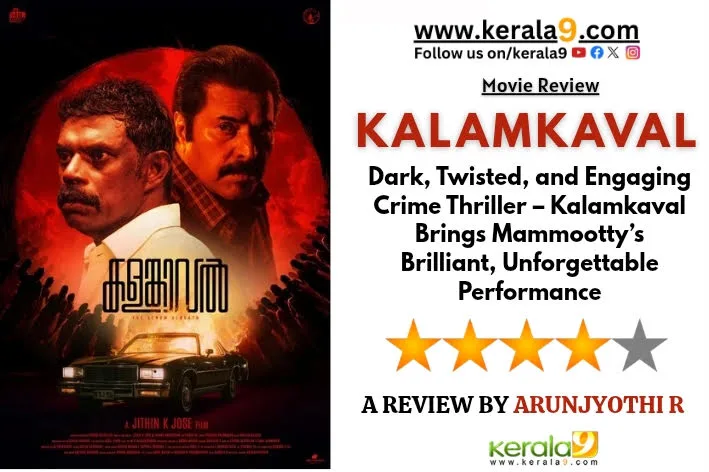
Kalamkaval Review in ONE WORD: Dark, Twisted, and Engaging Crime Thriller – Kalamkaval Brings Mammootty’s Brilliant, Unforgettable Performance
A Review by Arunjyothi R
LANGUAGE: MALAYALAM
DURATION: 02 Hours 19 Minutes
DIRECTOR: Jithin K Jose
GENRE: Crime Thriller
•POSITIVES:
1: Direction
2: Story
3: Screenplay & Dialogues
4: Performance of actors
5: Cinematography
7: Background Score
8: Editing
9: Suspense Mood
10: Negative character arc of Mammootty
•NEGATIVES:
1: Slow build and slightly stretched second half
STORY:
Set against the backdrop of 2000s Kerala, Kalamkaval follows Officer Jayakrishnan, a steadfast and perceptive cop assigned to unravel the mystery behind a sudden communal clash in the region. What initially appears to be a straightforward investigation soon twists into a far more sinister tale. Jayakrishnan soon discovers that the riot was sparked by a seemingly trivial misunderstanding—a young woman eloping—but as he digs deeper, a far darker pattern begins to emerge. Multiple women have gone missing under eerily similar circumstances, and the threads of these disappearances lead him into a shadowy, dangerous world. As he pieces together clues, Jayakrishnan is drawn deeper into a chilling maze of secrets, lies, and hidden motives. His relentless pursuit to uncover the truth forms the heart of Kalamkaval, a story that intertwines suspense, psychological tension, and unexpected twists, keeping viewers gripped and guessing until the very last frame.
REVIEW & ANALYSIS OF THE FILM:
Director Jithin K Jose take inspiration from one of India’s most chilling crime stories—the infamous case of serial killer Mohan Kumar, known as Cyanide Mohan, who murdered around 20 women between 2004 and 2009 by luring them into trust and poisoning them with cyanide. Instead of presenting a straightforward retelling, the filmmakers smartly fictionalise the real events, transforming the material into an engaging psychological thriller. This creative liberty allows them to explore the emotional, moral, and psychological landscape of both predator and pursuer, elevating the narrative beyond simple true-crime documentation.
What stands out first is the solid screenplay of both Jithin and Jishnu, which balances fact and fiction with striking confidence. The writers restructure the real case into a riveting cat-and-mouse narrative between two sharply drawn characters—one inspired by the killer, the other a relentless investigator. Their dynamic becomes the heartbeat of the film. The pursuit is not only physical but also psychological, with both characters constantly trying to outsmart each other. This tension is maintained remarkably well throughout the film, creating a slow-burn thrill that never loses grip. The mystery component is handled with surprising finesse. Despite the audience’s awareness of the real incident, the film manages to craft genuine suspense through cleverly placed twists and narrative misdirections. The screenplay drip-feeds information at the right moments, allowing the story to unfold like a puzzle whose pieces fall into place with dramatic satisfaction. Every twist feels earned, not forced, and the unpredictability keeps the viewer deeply invested.
Debutant director Jithin K. Jose announces himself with astonishing confidence, choosing a subject that many seasoned filmmakers would hesitate to touch and shaping it into a gripping cinematic experience. What stands out immediately is his clarity of vision—he knows the world he wants to create, the tone he wants to sustain, and the emotional weight he wants the audience to carry. For a first-time filmmaker, venturing into such a dark, psychologically complex narrative is a bold decision, but Jithin handles it with maturity far beyond his years. His understanding of the material is evident in the way he constructs tension, builds atmosphere, and allows the narrative to breathe without ever losing intensity. The darker tone is not just a stylistic choice but an integral part of the storytelling, and Jithin maintains it consistently, shaping every frame with precision and purpose. He utilises Mammootty and Vinayakan with exceptional awareness—recognising what each actor brings and crafting scenes that extract their fullest potential. Mammootty’s chilling villainy is magnified by Jithin’s patient framing and psychological detailing, while Vinayakan’s raw intensity as the investigating officer is captured with realism and restraint. Jithin’s direction balances these two towering performances beautifully, ensuring neither overshadows the other but instead creating a dynamic that drives the film’s energy. His control over pacing, his ability to handle complex shifts in tone, and his courage to stick to a grim, uncompromised vision make it clear that he is not just another newcomer—he is a filmmaker with a strong voice and a promising future.
One of the film’s greatest triumphs lies in the immersive atmosphere it creates. The filmmakers craft a dark, unsettling mood that echoes the psychological corrosion at the heart of the story. Through muted colour tones, a brooding musical score, and intentionally measured pacing, they build a visual and emotional environment that feels haunting from start to finish. The direction remains assured and stylistically refined, often bordering on poetic, yet never losing sight of the gravity of the real events. Rather than sensationalising the crimes or glorifying the killer, the film adopts a restrained, respectful tone—one that highlights the terror of the acts while delving deeper into the fractured mind that commits them. Adding to this is the chilling portrayal of the killer’s methods, the twisted psychological gratification he derives from each murder, and the controlled, layered manner in which the narrative reveals its surprises. The tension of discovering new clues, the precision of the investigative trail, and the constant curiosity about what might happen next all combine to deliver the exact mood the film aims for. This impact is strengthened by sharp writing, meticulous execution, and compelling performances, which collectively sustain the film’s dark energy. The atmosphere remains gripping and foreboding throughout, maintaining its intensity right up to the final frame without ever losing momentum.
This is the kind of thriller that tightens its grip scene by scene, keeping your pulse racing as the investigation unravels. From the very beginning, the film draws you into a dark, immersive world where every clue, every silence, and every shift in mood feels loaded with meaning. The narrative is cleverly divided into eight distinct chapters, each one escalating the tension and pushing the story into new, unsettling territory. These stages don’t just move the plot forward—they reshape your understanding of the characters and the danger lurking beneath the surface, making you constantly wonder what the next reveal might be. The interval twist is where the film truly flexes its storytelling muscle. Without warning, it drops a revelation so sharp and unexpected that it instantly changes the stakes. What’s impressive is how flawlessly the film earns this moment: the pacing is tight, the engagement never dips, and the screenplay subtly leads you down one path before pulling the ground from beneath your feet. It’s a rare case where a twist doesn’t just shock—it elevates everything that came before it. By the time the film moves into its later chapters, the momentum is unstoppable, driven by a blend of confident direction, atmospheric tension, and an investigative track that keeps you guessing until the very last frame.
Mammootty has long been celebrated as an actor who refuses to be boxed in by conventional roles. He thrives on experimentation, constantly seeking characters that challenge not only him but also the audience’s expectations. In this film, he steps into a deeply sinister villainous shade—and he does so with remarkable fearlessness. He doesn’t merely play the antagonist; he inhabits him with unsettling precision. The performance is so absorbing that it compels you to wonder which other actor in the industry would dare to take on such a morally dark, psychologically disturbing character with this level of intensity. His commitment to pushing boundaries deserves genuine admiration, for it is rare to see a superstar of his stature surrender so completely to such an unglorified, negative role.
The villain arc he carries is crafted with striking detail. The writing builds the character layer by layer—a chilling combination of charm, psychopathy, disturbing calmness, and a predatory gaze. Mammootty brings all of this alive with an internalised power that is nothing short of mesmerising. The writers, despite being well aware of Mammootty’s massive star value, refuse to dilute the character with hero-like moments or commercial compromises. And that is precisely why the performance lands with such brutal authenticity. He mirrors the psychological depth of a real-world killer with frightening ease: the micro-expressions that flicker across his face, the controlled stillness, the sudden shifts in demeanour, and the eerie conviction in his eyes all speak volumes. The madness, the cruelty, the greedy need to continue killing—he portrays these with a subtlety and weight that linger long after the scene fades. It’s hard not to imagine how different, how diluted, and how less impactful this character would have been in the hands of another actor; Mammootty makes it iconic, unforgettable, and genuinely disturbing.
Vinayakan, playing Nath, stands shoulder-to-shoulder with this towering performance and delivers his own brilliant interpretation of a police officer fuelled by purpose. He brings a raw, lived-in realism to the investigative track. His body language in uniform, the contained aggression, the frustration of chasing a predator, and the desperate urgency to stop the next crime—all are portrayed with remarkable authenticity. He avoids theatrics and instead chooses an understated, grounded approach that suits the film’s tone perfectly. The scenes where Vinayakan and Mammootty confront each other crackle with tension, power, and unpredictability. Their dynamic elevates the film, creating moments that are not just thrilling but also emotionally charged. Together, they craft some of the most gripping sequences in the film, making their combination scenes explosive and unforgettable. If Mammootty is the haunting shadow of the film, Vinayakan is the flame trying to cut through the darkness—and the collision between the two is what makes the narrative truly riveting.
Mujeeb Majeed’s background score becomes the film’s invisible heartbeat, pulsing through every frame and shaping the experience with remarkable finesse. Instead of relying on loud, dramatic cues, he builds tension through eerie textures, creeping undertones, and atmospheric layers that make the darker moments feel alive. The killing scenes, in particular, are elevated by his unsettling mix of low hums, distorted strings, and cold, whisper-like sound patterns that capture the killer’s chilling calmness and the psychological horror of the act. When the film shifts into twist mode, Majeed switches gears with sharp sonic spikes, pulsating rhythms, and sudden orchestral surges that jolt the audience exactly when needed. The interval block becomes unforgettable largely because of his score—it rises like a storm at the perfect moment and makes the twist hit twice as hard. Even in investigative sequences, he subtly mirrors the characters’ tension with heartbeat-like beats and rhythmic textures that keep viewers locked into the mystery. What makes his work truly impressive is how he maintains the film’s dark ambience from start to finish without overpowering the narrative; each scene gets exactly the tone it demands. His score doesn’t just accompany the film—it amplifies the dread, the thrill, the silence, and the shock, ultimately delivering one of the most engaging and atmospheric musical works seen in a crime thriller in recent times.
The cinematography by Faisal Ali plays a crucial role in shaping the film’s haunting atmosphere, bringing visual precision and narrative depth to every scene. The choice of locations across Kerala and Tamil Nadu feels organic to the storyline, grounding the dark narrative in landscapes that are both familiar and unsettling. Faisal captures the duality of these settings—the serene exteriors contrasted against the psychological turbulence at the heart of the plot. His work shines particularly in the sequences involving Mammootty; the killing scenes are shot with chilling exactness, using shadows, tight framing, and controlled lighting to emphasise the character’s sinister calmness without resorting to graphic excess. Each frame is composed with intention, ensuring the visual mood stays aligned with the film’s grim tone.Faisal’s keen eye also enhances Mammootty’s performance, selecting angles and placements that elevate the nuances of his expressions and mannerisms. The camera doesn’t just record; it observes, studies, and sometimes even stalks the character, adding an extra layer of psychological tension. This synergy between actor and cinematographer results in visuals that linger in the mind long after the scene ends. Editor Praveen Prabhakar complements the visuals with clean, thoughtful cuts that maintain narrative flow and momentum. The transitions are smooth, especially in the investigative moments where time and clues connect seamlessly. While the second half carries a slight sense of stretch, a tighter trim could have made the pacing even sharper; still, Praveen’s overall editing choices preserve the immersive nature of the film. His handling of the colour tone deserves praise—the darker palette is consistent, atmospheric, and perfectly suited to the film’s psychological depth. The visual rhythm he crafts enhances the tension, keeps the narrative cohesive, and supports the oppressive, unsettling mood that defines the film.
One of the minor shortcomings of the film lies in the slight sense of stretch felt during the second half, where the pacing momentarily loosens and the narrative takes its time to settle into the intensity of its final act. The early portions of the film also dedicate considerable time to establishing the world, characters, and psychological tone, which some viewers might perceive as slow or overly deliberate. However, this slow-burn approach is intentional, designed to build tension layer by layer rather than rushing into the central conflict. What initially feels like a measured setup gradually evolves into something far more gripping, rewarding the patience of the audience with a cascade of unexpected twists, revelations, and nail-biting turns. The film’s gradual unfolding allows its atmosphere to seep in slowly, making the eventual shocks more impactful and the narrative payoffs far more satisfying. In hindsight, the slower portions function as essential groundwork that enhances the emotional weight and dramatic power of the film’s climactic moments.
CONCLUSION:
I will definitely recommend Kalamkaval for its gripping narrative, dark atmosphere, and masterful handling of a story inspired by real-life events. The film takes the chilling case of a serial killer and adapts it into a taut psychological thriller, maintaining a consistently darker tone that keeps the audience on edge throughout. Mammootty delivers a truly memorable and shocking performance, embodying the villain with terrifying precision—his expressions, mannerisms, and cold calculation leave a lasting impact. Vinayakan matches him with grounded intensity, while debutant director Jithin K. Jose confidently orchestrates the story, balancing suspense, tension, and character dynamics with skill. The plot unfolds with cleverly executed twists and turns, keeping viewers guessing and fully invested until the very end. Coupled with Faisal Ali’s atmospheric cinematography, Praveen Prabhakar’s precise editing, and Mujeeb Majeed’s tension-filled background score, Kalamkaval becomes an immersive, unforgettable thriller. Despite a few slow moments in pacing, the film’s dark tone, suspense, and powerful performances make it an absolute must-watch.
Thiruvananthapuram: The Sessions Court has rejected the anticipatory bail application of MLA Rahul Mankootathil in the sexual assault case.
The court noted that prima facie evidence exists and accepted the prosecution’s stance that there is clear proof of rape and forced abortion. The prosecution submitted medical records, audio clips, videos, WhatsApp chats and other digital evidence.
Rahul’s legal team argued that the relationship was consensual and claimed a political conspiracy involving the BJP and CPI(M). They alleged the case was engineered to sabotage his political future and divert attention from the gold smuggling case.
Rahul has been absconding for the past eight days. He faces two cases, including charges of rape and forced abortion. His friend Joby Joseph from Adoor, who allegedly delivered abortion pills, is the second accused. The charges carry a possible sentence of life imprisonment.
New Delhi: The Supreme Court has directed that more personnel must be appointed to reduce the workload related to State Intensive Revision (SIR) procedures.
The bench reminded that it is the responsibility of state governments to provide adequate staff to the State Election Commission. Hearing a petition from Tamil Nadu, the court questioned where exactly the “burden” lies despite claims that workload has already been reduced.
Senior advocate Kapil Sibal, appearing for the petitioners, said the pressure on Booth Level Officers (BLOs) is concerning. The court asked why the Tamil Nadu government had not raised this issue if difficulties truly exist.
Kochi: The Kerala High Court has rejected the bail application filed by former Travancore Devaswom Board Secretary S. Jayasree, the fourth accused in the Sabarimala gold theft case.
The court accepted the SIT’s argument that granting bail could hinder the progress of the investigation. Jayasree had sought bail citing health issues and willingness to cooperate. Earlier, the court had rejected the bail plea of former Administrative Officer S. Sreekumar. Notices will now be issued to both individuals.
Jayasree is accused of issuing the order to hand over gold plates to the prime accused, Unnikrishnan Potty, claiming they were required for repair work.
Two staff members from the Palakkad MLA office of Rahul Mankootathil — personal staffer Alvin and driver Fazal — have been taken into custody by the Special Investigation Team (SIT). The duo has reportedly been transported to Thiruvananthapuram.
The SIT acted based on information that both individuals allegedly helped Rahul evade arrest after his anticipatory bail plea was rejected by the court. Earlier, the staff had claimed they were not in contact with the MLA and were unaware of his whereabouts.
Meanwhile, the Thiruvananthapuram Principal Sessions Court has dismissed Rahul’s anticipatory bail plea after detailed hearings on two consecutive days. The court observed that a prima facie case exists. Charges against the MLA include rape, forced and unlawful abortion. The prosecution argued that Rahul’s release could lead to destruction of evidence.