Home Blog Page 51

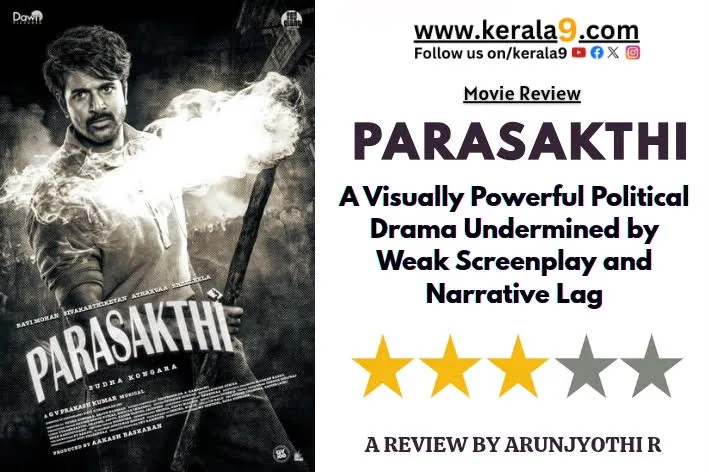
Parasakthi Review: A Visually Powerful Political Drama Undermined by Weak Screenplay and Narrative Lag

0
Parasakthi Review

Parasakthi Review in ONE WORD: A Visually Powerful Political Drama Undermined by Weak Screenplay and Narrative Lag. 

A Review by Arunjyothi R 

LANGUAGE: Tamil  

DURATION: 02 Hours 42 Minutes 

DIRECTOR: Sudha Kongra 

GENRE: Historical Periodical Political Drama 

•POSITIVES:

1: Making Style 

2: Story & Dialogues 

3: Cinematography 

4: Performance of actors 

5: Screen Presence of Shivakarthikeyan 

6: Background Score 

7: : Production Quality 

8: Art Direction 

•NEGATIVES:

1: Lengthy First Half 

2: Placement of Songs 

3: Duration of the movie 

4: Medicore Screenplay 

5: Average Romantic Arch 

6: Editing 

STORY

Parasakthi is set in 1960s Tamil Nadu during the anti-Hindi imposition movement. The story follows Chezhiyan, a young student who becomes actively involved in student-led protests for linguistic identity and social justice. As the movement intensifies, harsh police suppression leads to violent confrontations, forcing Chezhiyan to face emotional loss and moral dilemmas. After a personal tragedy, he abandons the movement to take responsibility for his family, especially his younger brother. Years later, his brother, now an engineering student, becomes drawn into the same ideological struggle, triggering a series of unexpected and life-altering events. 

REVIEW & ANALYSIS OF THE FILM

Set during the politically turbulent 1960s anti-Hindi protests in Tamil Nadu, Parasakthi attempts to portray linguistic pride, ideological resistance, and the social realities of a defining historical moment through a fictional narrative inspired by real events. The film’s ambition is immediately evident in its choice of subject—one that carries emotional, cultural, and political weight. At its core, Parasakthi seeks to remind audiences of the importance of mother tongue and identity, and this intent is clearly reflected in the story’s foundation and thematic focus. The narrative idea itself is strong, rooted in historical relevance, and holds the potential to create a powerful cinematic statement.

One of the film’s notable strengths lies in its story concept and dialogues. The integration of historical facts with fiction is handled thoughtfully on paper, and several dialogues stand out for their ideological clarity and emotional resonance. Lines emphasizing linguistic pride, cultural dignity, and resistance against imposition are powerful and thought-provoking, often echoing the sentiments of the era. At its best, the film succeeds in articulating why the movement mattered, using words as a tool of resistance. These moments remind the audience of the depth and seriousness of the subject and highlight what Parasakthi aims to communicate.

Director Sudha Kongara’s intention deserves appreciation. Choosing such a bold and politically sensitive subject in contemporary cinema is itself a commendable risk. Her effort to stay respectful to the historical backdrop while shaping a narrative around student-led movements reflects sincerity in storytelling. The making, in terms of conceptual approach, shows discipline and restraint, avoiding unnecessary sensationalism. The film consistently maintains a serious tone, reinforcing its identity as a political period drama rather than a commercial entertainer.

However, despite this strong foundation, Parasakthi begins to falter in execution, particularly in its narrative progression. The most pressing issue is the sluggish pacing, especially in the first half. What should have been a gripping establishment of emotional and ideological stakes instead unfolds at a slow and often disengaging pace. The political tension remains in the background for too long, reducing the urgency that such a subject demands. As a result, the audience struggles to emotionally invest in the movement during the initial stages.

The screenplay emerges as the film’s biggest drawback. While the idea is powerful, the writing lacks the sharpness required to sustain a politically charged narrative. The emotions surrounding the anti-Hindi movement feel restrained and at times superficial, as if the film hesitates to fully embrace the anger, pain, and ideological fire of the era. Instead of deeply immersive dramatic moments, the narrative often relies on predictable confrontations and convenient writing choices, which dilute the overall impact.

The romantic arc in the first half further weakens the film’s momentum. The love track feels forced, poorly integrated, and largely unnecessary to the core narrative. Rather than strengthening character motivations or emotional depth, it slows the film considerably and diverts focus from the political conflict. This dull and drawn-out romance becomes a major reason for the lag, testing the viewer’s patience and weakening the film’s ideological drive.

Editing choices add to these pacing issues. The film’s duration feels excessive, with several scenes overstaying their welcome. Tighter editing could have significantly improved the narrative flow, especially in the first half. The slow narration, combined with an overly stretched screenplay, causes the film to lose momentum at crucial points, making the viewing experience uneven.

Despite its narrative shortcomings, Parasakthi redeems itself to an extent through strong technical craftsmanship. The period detailing is highly impressive, with production design, costumes, and art direction authentically recreating 1960s Tamil Nadu. Every visual element—from streets to protest spaces—feels carefully designed, lending credibility to the film’s historical setting. This attention to detail enhances the film’s seriousness and visual appeal. Cinematographer Ravi K. Chandran’s work further elevates the technical quality. His use of soft lighting, earthy color tones, and classical framing adds a nostalgic texture to the film. Close-up shots effectively capture emotional expressions, while protest and action sequences are shot with clarity and scale. Visually, the film maintains a consistent and polished aesthetic that supports its period identity. 

The music and background score play a crucial role in lifting several key moments, particularly in the second half. The background score adds emotional intensity to confrontations and ideological scenes, often compensating for weaknesses in the writing. While the songs themselves are melodically strong, their placement—especially in the first half—feels misjudged and disruptive to the narrative flow, contributing further to the pacing issues.

In terms of performances, Sivakarthikeyan’s screen presence anchors the film. His portrayal carries conviction, particularly in emotionally and politically charged scenes, helping sustain interest even during weaker portions. Ravi Mohan’s antagonist role adds intensity and tension, while Atharvaa brings emotional depth and energy to the protest sequences. Sreeleela delivers a mixed performance, with stronger moments in the climax but a less effective presence in the romantic portions. Overall, while Parasakthi excels in intent, technical quality, and individual performances, its weak screenplay, slow pacing, and underdeveloped emotional core prevent it from becoming the landmark film it aspired to be.

PERFORMANCE OF ACTORS: 

Sivakarthikeyan delivers a powerful and career-defining performance as Chezhiyan “Che,” marking a remarkable transformation in his acting journey. This film can undoubtedly be considered one of the best and most career-changing performances of SK, as he moves far beyond his usual screen image and embraces a politically intense, content-driven role with conviction. From the opening scenes to the very end, his acting remains clear, precise, and deeply intense, and what stands out the most is how consistently he maintains this momentum without losing emotional grip. His body language, controlled expressions, and grounded performance bring authenticity to the character, making Chezhiyan feel like a real leader rather than a cinematic construct.

The true strength of Sivakarthikeyan’s performance lies in how he embodies the qualities of a genuine leader—someone who stands at the forefront and guides people in their fight for rights. His revolutionary side is presented in a refreshing and impactful manner, making it both cheering and engaging to watch. The politically charged dialogues are handled with sharp modulation and strong voice control, giving the feel of a leader who speaks with clarity, purpose, and responsibility. Especially in crucial political moments, his way of expressing dialogues carries weight and conviction, leaving a lasting impression. The climax sequence, where Chezhiyan speaks about the importance of one’s mother tongue, is particularly fascinating; the combination of powerful writing and Sivakarthikeyan’s performance evokes a deep emotional response, awakening a feeling that lies hidden within the audience. 

The second half of the film further elevates Sivakarthikeyan’s performance through emotionally driven scenes that showcase his acting depth. His emotional transitions are subtle yet impactful, making these moments feel genuine rather than exaggerated. The combination scenes between Sivakarthikeyan and Atharvaa add strong sentimental value to the narrative, especially in the way their bond evolves through shared struggles and political ideologies. Their protest sequences are thrilling to watch and bring intensity and realism to the film’s political core. Overall, the film stands tall as a meaningful political drama, largely powered by Sivakarthikeyan’s extraordinary performance, which firmly establishes him as an actor capable of leading socially responsible and content-oriented cinema.

Ravi Mohan, who has long been associated with romantic and soft-toned lead roles, makes a striking transformation by stepping into the shoes of the antagonist, and the result is nothing short of impressive. His performance as the villain stands out as one of the strongest pillars of the film, and it is safe to say that he is a major reason why the narrative remains engaging till the very end. In a film that occasionally takes a slower dramatic turn in the middle portions, it is Ravi Mohan’s commanding screen presence that keeps the momentum steady. The way he brings a sense of unpredictability and menace to his character adds constant tension to the narrative, making the audience eager to know what he will do next. His villainy is not loud or over-the-top, but deeply intimidating, marked by controlled aggression and a chilling lack of mercy that makes his character both dreadful and fascinating to watch.

What makes Ravi Mohan’s performance even more compelling is the depth he brings to the character’s motives, which adds an extra layer of intrigue rather than presenting a one-dimensional antagonist. The villainous shades he undertakes and the conviction with which he portrays them reflect a confident and mature actor exploring a new territory. His attitude and mannerisms as a police officer are convincingly executed, lending authenticity and authority to the role. The combination scenes with Sivakarthikeyan, especially towards the climax, elevate the film’s intensity, turning their confrontations into some of the most thrilling moments of the movie. The climax fight sequences are staged effectively and benefit greatly from Ravi Mohan’s intense performance, making them impactful rather than routine. Overall, this role stands as one of Ravi Mohan’s best and most career-lifting performances, proving his versatility and opening up a promising new chapter in his acting career.

Sreeleela’s performance comes as a pleasant and surprising revelation in the film. Going into the theatre, there may naturally be doubts about whether she could shoulder such a role with the required emotional depth, but she completely breaks those assumptions with a confident and effective performance. She fits well into the narrative and proves her capability, especially in the climax portions where her acting truly stands out. Her expressions during these crucial moments are impactful, and her dialogue delivery is handled with clarity and emotional strength, significantly elevating the intensity of the climax. While the romantic portions with Sivakarthikeyan remain fairly conventional and do not push new boundaries, their chemistry feels decent and functional within the story’s framework. However, it is her strong presence in the emotionally charged sequences that establishes her as a valuable contributor to the film rather than just a supporting character.

Atharvaa, as Chinnadurai, delivers one of his most convincing performances, bringing both emotional depth and raw intensity to the role of the brother figure. His energy and attitude during the protest sequences feel strikingly genuine, capturing the spirit of real-life resistance with authenticity. The precision in his dialogue delivery and the sharpness of his facial expressions add immense power to these scenes, making them memorable. The combination scenes between Atharvaa and Sivakarthikeyan are particularly effective, as they balance an emotional arc with the thrilling vibe of collective protest. Their bond, affection, and shared ideological drive are portrayed with sincerity, which helps push the narrative forward in a meaningful way. Atharvaa’s emotional scenes are executed flawlessly, without any artificiality, proving once again that he is more than capable of handling strong, layered characters with confidence and maturity.

CONCLUSION:

Parasakthi stands as an ambitious and sincere attempt to portray a crucial chapter in Tamil Nadu’s socio-political history, driven by strong intent, impressive period detailing, and committed performances. The film succeeds in capturing the ideological essence of linguistic pride and resistance, supported by solid dialogues, striking visuals, and technical finesse. However, its impact is significantly diluted by an uneven screenplay, narrative lag, and a poorly integrated romantic track that weakens the emotional core. While Parasakthi deserves appreciation for its subject choice and cinematic sincerity, it ultimately falls short of becoming the powerful, hard-hitting political drama it aspired to be, emerging instead as a film of strong moments overshadowed by flawed execution.

RATING: 3/5

A Review by Arunjyothi. R
Rajasaab Review: No Soul, No Scares—Just Noise: A Boring Movie That Severely Tests Patience

0
Rajasaab review

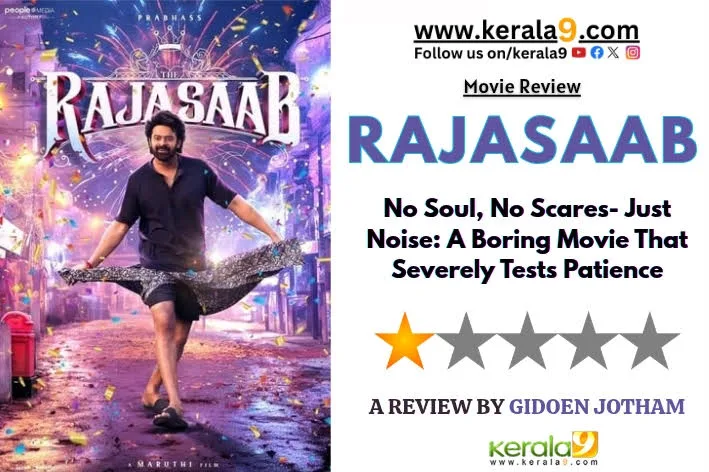
Rajasaab Review: No Soul, No Scares—Just Noise: A Boring Movie That Severely Tests Patience

A Review by Gideon Jotham 

Director: Maruthi

Language: Telugu

Genre: Fantasy Comedy Horror

Duration: 3hr 03 mins

Positives

1: Prabhas screen presence 

2: Malavika mohan Screen presence 

3: Nidhi agraval Screen presence 

4: VTV Ganesh 

Negatives

1: Story

2: Screenplay 

3: Predictability

4: Pacing

5: Limited emotional peaks 

6: VFX

7: Sfx

8: Duration of the movie 

9: Editing 

10: Unworked comedies 

Story

The Raja Saab revolves around a seemingly carefree protagonist who inherits (or stumbles into) an old, eerie mansion that carries more secrets than bricks. What begins as a light, almost frivolous setup soon reveals a haunted past spirits bound by unresolved emotions, unfinished justice, and long-buried truths. Instead of treating the supernatural with dread, the narrative approaches it with humor. The ghosts here are not merely entities meant to scare, but characters with personalities, intentions, and emotional weight. The story plays on the contrast between the hero’s casual attitude and the mansion’s dark history, creating comedy from fear and fear from comedy. At its core, The Raja Saab is less about survival horror and more about coexisting with the past. The plot gradually shifts from surface-level gags to a familiar emotional arc involving redemption, love, and closure. While the storyline doesn’t attempt to reinvent the genre, it comfortably stays within a commercial framework, relying on predictability, charm, and situational twists rather than narrative shocks.

The film ultimately chooses comfort over complexity a ghost story meant to entertain, not unsettle; to amuse, not disturb.

Direction 

The direction by Maruthi is, quite frankly, the weakest pillar of The Raja Saab. There is a complete lack of tonal clarity. The film never decides whether it wants to be a horror film with comic relief or a comedy wearing a horror mask. As a result, scenes that demand tension are diluted with forced humor, and moments that could have landed as comedy fall flat due to poor buildup. The director seems unsure of the genre grammar he is working with.

Maruthi relies heavily on outdated storytelling techniques predictable setups, spoon-fed emotions, and overused reaction shots. Instead of trusting the audience, the film constantly explains itself, killing any possibility of suspense or surprise. Horror requires control, rhythm, and restraint; comedy requires timing. Unfortunately, the direction fails on both counts.

What’s more disappointing is the absence of vision. There is no strong visual or narrative identity guiding the film. Scenes feel assembled rather than designed. The haunted house, which should have been a character in itself, is treated like a generic set piece with no atmosphere or psychological weight.

In essence, the direction feels lazy and mechanical, more concerned with ticking commercial checkboxes than crafting a coherent cinematic experience. What could have been a playful or inventive genre film instead becomes a confused product, undone largely by its own director’s indecision.

Screenplay

The screenplay of The Raja Saab is where the film truly collapses not because of ambition, but because of carelessness. The narrative structure is painfully formulaic. Every beat feels pre-decided: the introduction, the haunted setup, the comic interruptions, the emotional flashback, and the predictable resolution. There is no sense of discovery. Scenes don’t evolve; they merely arrive, do their job, and exit. Cause-and-effect storytelling is weak, making the plot feel stitched rather than organically flowing. One of the screenplay’s biggest failures is inconsistent tone management. Horror scenes are abruptly undercut by jokes that neither advance character nor plot. Instead of easing tension intelligently, the writing destroys it altogether. Comedy here is not written within situations it is inserted, often breaking immersion.

Character writing is equally shallow. Most characters exist only to serve punchlines or exposition. Their motivations are either rushed or conveniently revealed through lengthy dialogues and flashbacks. Emotional moments feel manufactured because the screenplay never earns them through gradual buildup. The second half suffers the most. What should have been a tightening narrative instead becomes repetitive and dragging, recycling the same conflicts with minor variations. The lack of escalation emotional or narrative makes the climax feel inevitable rather than impactful.

Ultimately, the screenplay mistakes noise for narrative and dialogue for drama. It neither respects genre rules nor challenges them. The result is a script that plays it safe, speaks too much, and says very little.

Performance 

Prabhas (lead performance) appears visibly restrained and not in a good way. He brings screen presence by default, but the character gives him nothing substantial to perform. His role oscillates between casual comedy and emotional seriousness without a proper bridge, making his performance feel disconnected. It’s not miscasting; it’s misuse. You sense an actor waiting for a moment that never arrives.

The supporting cast fares no better. Most performances are reduced to loud reactions, exaggerated expressions, and template comic behavior. Instead of character-driven humor, actors are instructed to perform effects shouting, pausing, reacting without emotional grounding. This makes scenes feel artificial and stagey.

Female characters, in particular, are underwritten. Their performances are confined to surface-level charm or emotional exposition, offering little room for nuance. Even when emotional beats appear, they feel imposed rather than lived-in. The biggest issue is performance tonality. Actors are clearly not on the same emotional wavelength some play it like a spoof, others like a commercial drama. This mismatch further exposes the director’s inability to unify performances under a single vision. In short, the cast does what it can, but performances are trapped inside a confused film. There’s no space for depth, no rhythm to react against, and no directorial guidance to elevate acting beyond the functional.

Music & Background Score

The music and background score in The Raja Saab handled by S. Thaman turn out to be another missed opportunity rather than a saving grace.

The songs feel mechanically placed, existing more to satisfy commercial expectations than narrative necessity. Instead of deepening character emotions or advancing the story, they interrupt the flow, especially when the film already struggles with pacing. None of the tracks leave a lasting emotional or melodic imprint; they pass by without resonance.

The background score is where the real damage happens. Horror-comedy thrives on sonic contrast silence, sudden shifts, controlled crescendos but the BGM here is overbearing and monotonous. Rather than creating tension or irony, it constantly instructs the audience on what to feel. Fear is announced loudly, comedy is underlined aggressively, leaving no room for organic reaction.

What’s worse is the lack of thematic identity. There is no recurring motif that ties the supernatural elements together, no musical signature for fear, memory, or emotion. The score reacts to scenes but never defines them. In several moments, it even sabotages potential impact by arriving too early or staying too long. In essence, the music and BGM behave like a crutch for weak writing and direction, instead of elevating the cinematic experience. For a genre that heavily depends on sound design and musical rhythm, this becomes a critical failure.

Final verdict 

The Raja Saab is a film that had all the right ingredients but absolutely no control over the recipe. What could have been a fun, stylized horror-comedy instead turns into a predictable, uneven, and emotionally flat experience. Weak direction and a careless screenplay drain the film of tension, surprise, and depth. The pacing issues further dilute engagement, making the runtime feel longer than it should. Performances by Prabhas and Nidhhi Agerwal provide momentary relief, but even their presence cannot rescue a film that lacks narrative conviction. Technical aspects like VFX and sound design, crucial for this genre, fail to create immersion or impact.

In the end, The Raja Saab doesn’t scare, doesn’t surprise, and rarely connects emotionally. It plays safe, speaks loud, and leaves very little behind once the screen fades to black.

Rating: (1/5)

A Review by Gideon Jotham 

Prayaga Rose Martin

0

Prayaga Martin Photos . Check out the latest pictures, pics, prayaga rose martin new photos, movie stills, event photos, Prayaga Martin photoshoot, and images of Prayaga Martin. Prayaga Rose Martin is an Indian movie actress from Kerala, who mainly works in Malayalam cinema. 

Shamna Kasim

0

Shamna Kasim is a Southindian movie actress mainly in Malayalam and Tamil movies. Shamna Kasim Photos . Check out the latest pictures, pics, Shamna Kasim new photos, movie stills, event photos, Shamna Kasim ( Poorna ) photoshoot and images of Shamna Kasim .

Madras High Court Orders Censor Certificate for Vijay’s ‘Jananayakan’

0

Chennai: In a significant legal victory for the makers of the film Jananayakan, the Madras High Court has ordered the Central Board of Film Certification (CBFC) to issue a U/A certificate for the movie.

The film stars actor-turned-politician Vijay, the leader of Tamilaga Vettri Kazhagam (TVK), and is highly anticipated as it is expected to be his final cinematic outing before he commits fully to his political career.

Key Highlights of the Ruling:

  • Clearance Issued: The High Court cleared the hurdles previously raised by the Censor Board regarding the film’s content.
  • Rejection of CBFC Plea: The court dismissed a letter from the Censor Board requesting a re-review of the film.
  • Immediate Action: The Bench directed the Board to issue the certificate as quickly as possible without further delay.

Political Significance

The news has sparked immense excitement among fans and political observers alike. Given Vijay’s recent transition into active politics, the film’s title (Jananayakan, meaning “The People’s Leader”) and its themes are seen as a strategic precursor to his political journey.

While the court ruling paves the way for an immediate release, reports suggest that the Censor Board may consider filing an appeal against the decision. For now, however, the legal win ensures that the film is one step closer to hitting the big screens.

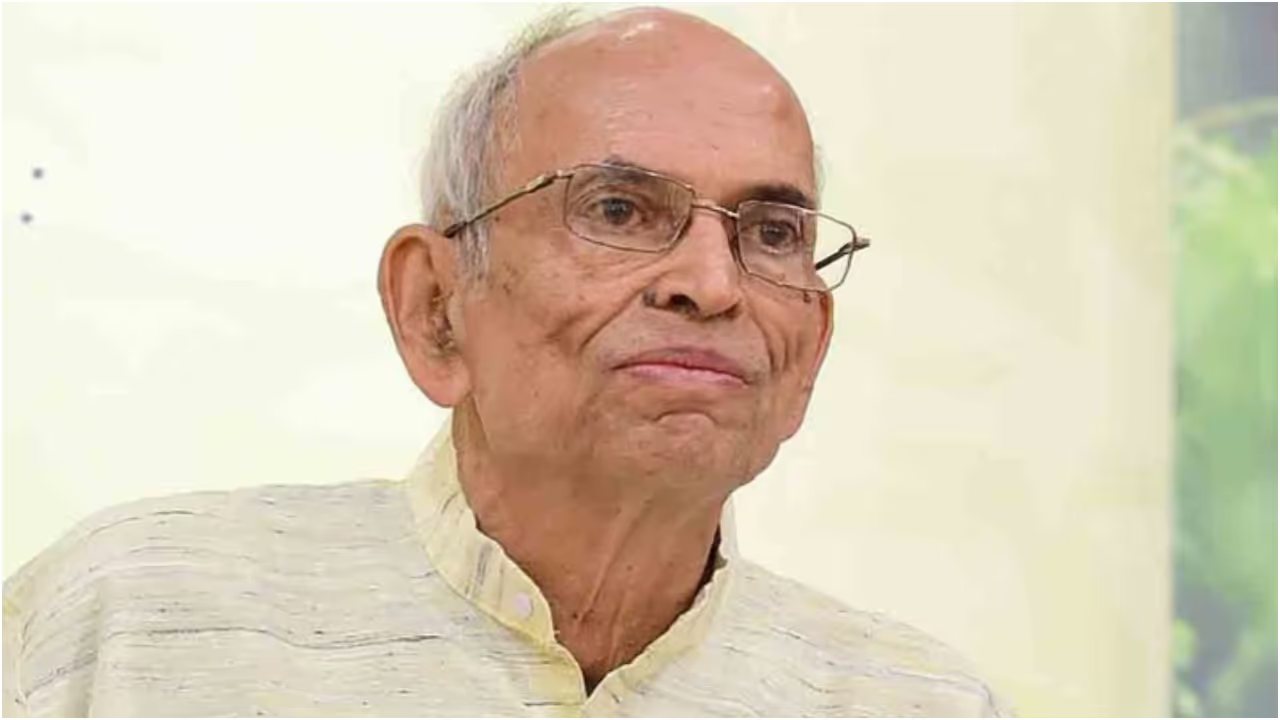
Madhav Gadgil, Renowned Ecologist and Chairman of Western Ghats Panel, Passes Away at 83

0
madhav

PUNE: Madhav Gadgil, one of India’s most preeminent ecologists and environmental scientists, passed away at his residence in Pune. He was 83.

Gadgil laid the scientific foundation for modern environmental studies in India and was a defining figure in the conservation movement for decades. He is perhaps best known for heading the Western Ghats Ecology Expert Panel (WGEEP), popularly known as the Gadgil Committee.

The landmark “Gadgil Report” recommended designating the entire Western Ghats as an Ecologically Sensitive Area (ESA), proposing strict regulations on developmental activities that damage the environment. While the report initially faced political and social resistance, Gadgil’s warnings have gained significant traction in recent years. His farsighted recommendations became a focal point of discussion in Kerala following a series of devastating floods and landslides, particularly in areas like Wayanad, which many attributed to ignoring the ecological sensitivities he highlighted.

Beyond his work on the Western Ghats, Gadgil’s academic contributions were immense. He established the Centre for Ecological Sciences at the Indian Institute of Science (IISc) in Bengaluru and played a pivotal role in formulating India’s Biological Diversity Act of 2002.

In recognition of his lifetime of service to ecology and the environment, the Government of India conferred upon him the Padma Shri in 1981 and the Padma Bhushan in 2006.

His passing is widely seen as an irreparable loss to the scientific community and the environmental movement in India, leaving behind a legacy of rigorous science combined with a deep commitment to protecting the natural world.

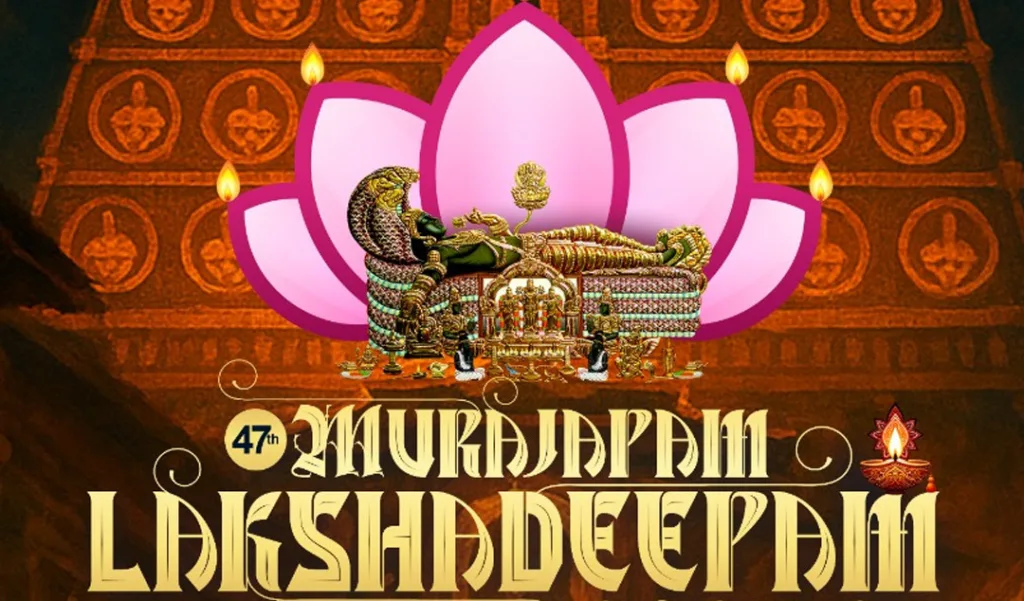
Sree Padmanabha Swamy Temple Murajapam Lakshadeepam 2026: Online Pass Booking Starts Jan 8

0
murajapam

Thiruvananthapuram: The administration of the world-famous Sree Padmanabha Swamy Temple has released an official notification regarding the pass booking for the upcoming 47th Murajapam – Lakshadeepam festival. This grand event, which occurs only once every six years, is one of the most significant spiritual gatherings in Kerala.

Lakshadeepam 2026 Pass Booking Details

Devotees wishing to witness the magnificent Lakshadeepam Sheevali can book their entry passes online. Given the massive crowd expected for this once-in-six-years spectacle, early booking is highly recommended.

  • Booking Date & Time: Starts on January 8, 2026, at 10:00 AM.
  • Event Date: The Lakshadeepam ceremony will take place on January 14, 2026.
  • Official Booking Portal: www.spst.in

How to Book?

  1. Visit the official temple website: www.spst.in
  2. Look for the Lakshadeepam 2026 Pass Booking link (Active from Jan 8, 10 AM).
  3. Fill in the required details and secure your slot.

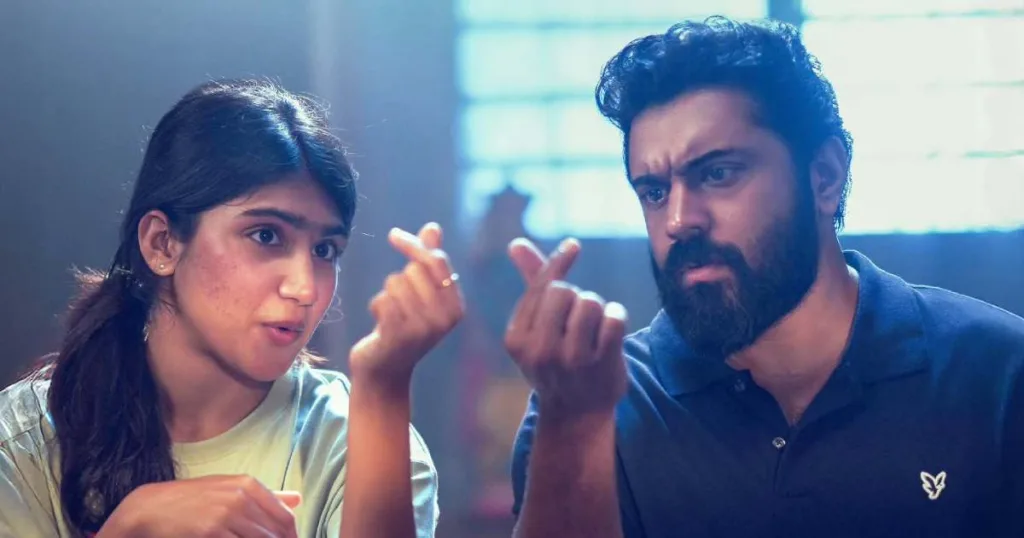
Sarvam Maya OTT Release: Nivin Pauly’s 100 Crore Blockbuster Ready for Digital Premiere; Check Details Here

0
sarvam maya movie ott

Nivin Pauly has made a thunderous comeback with his latest horror-fantasy entertainer, ‘Sarvam Maya.’ After a historic run at the global box office, the film has officially entered the elite Rs 100 crore club, marking a significant milestone in the actor’s career. Now, the excitement has shifted toward its digital debut.

The Box Office Success Released during the Christmas 2025 window, Sarvam Maya captivated audiences with its unique blend of spooky thrills, comedy, and emotional depth. It has become Nivin Pauly’s first film to cross the 100-crore mark globally, proving to be one of the fastest Malayalam films to achieve this feat. The film’s success is a testament to the growing popularity of the horror-fantasy genre in Kerala.

Sarvam Maya OTT Release Date and Platform According to the latest industry reports, the digital streaming rights for Sarvam Maya have been secured by a major platform, likely JioHotstar.

While the makers are yet to announce the official date, the film is expected to start streaming in early February 2026. This digital release will allow fans who missed the theatrical experience to watch the visual spectacle from the comfort of their homes.

Why the Hype? Sarvam Maya stands out because it balances supernatural elements with light-hearted humor. Social media has been buzzing with positive reviews, with many praising Nivin Pauly’s screen presence and the film’s engaging screenplay.

Stay tuned for the official announcement regarding the exact OTT release time and date.

TRAVEL ALERT: New Restrictions on Power Banks During Air Travel!

0

NEW DELHI: In a major move to enhance passenger safety, India’s aviation regulator, the Directorate General of Civil Aviation (DGCA), has imposed a strict ban on the use and charging of power banks during flights. The new safety advisory aims to mitigate fire risks associated with lithium-ion batteries in the cabin.

Key Highlights of the New Rules:

  • No In-Flight Usage: Passengers are strictly prohibited from using power banks to charge mobile phones, tablets, or any other electronic devices while the aircraft is in the air.
  • Charging Ban: Charging power banks using the aircraft’s in-seat power supply or USB ports is now completely forbidden.
  • Carry-on Only: Power banks and spare lithium batteries must be carried exclusively in hand luggage. Carrying them in checked-in baggage remains strictly prohibited as it poses a significant fire hazard in the cargo hold.
  • Storage Restrictions: The DGCA has advised against storing power banks in overhead bins. Passengers are encouraged to keep them in their personal bags under the seat or within reach to ensure immediate detection in case of overheating.

Why the Sudden Ban?

The decision follows several global and domestic incidents where lithium batteries entered a state of “thermal runaway,” leading to smoke and fire mid-flight. Most recently, an incident on an IndiGo flight sparked concerns, prompting the regulator to align Indian aviation rules with international carriers like Emirates and Singapore Airlines.

Aviation experts note that fires in overhead bins or cargo holds are harder to detect and extinguish quickly. By keeping devices accessible and unused, the crew can respond immediately if a device begins to emit heat or smoke.

Safety Advisory for Passengers: The DGCA has directed airlines to make mandatory announcements regarding these rules. Travelers are requested to inform the cabin crew immediately if they notice any unusual odor, smoke, or excessive heating from their devices or power banks.

President Trump Confirms Capture of Nicolás Maduro Following Massive US Strikes on Venezuela

0
attack

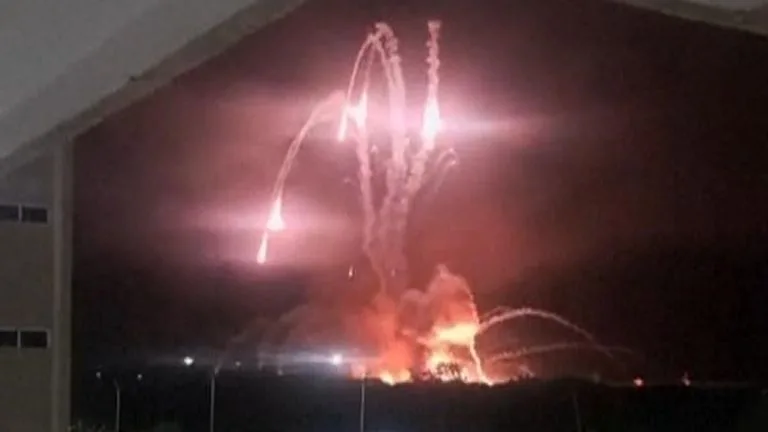
CARACAS/WASHINGTON — In a stunning military operation, US President Donald Trump has confirmed that Venezuelan President Nicolás Maduro and his wife, Cilia Flores, have been captured and flown out of the country. This follows a “large-scale strike” launched by US forces against strategic targets in Venezuela in the early hours of Saturday morning.

Key Highlights from Sky News & Reports:

  • The Strikes: At approximately 2:00 AM local time, at least seven major explosions were heard across the capital, Caracas. Low-flying aircraft were spotted, and columns of smoke were seen rising over the city.
  • Trump’s Announcement: Taking to Truth Social, President Trump stated: “The United States of America has successfully carried out a large scale strike against Venezuela and its leader, President Nicolas Maduro, who has been, along with his wife, captured and flown out of the Country.”
  • Infrastructure Damage: Reports indicate that the southern areas of Caracas are currently without electricity, and several military facilities have been targeted.
  • Context: The operation follows months of pressure from the Trump administration, including maritime strikes on vessels allegedly involved in drug trafficking in the Caribbean and Pacific.