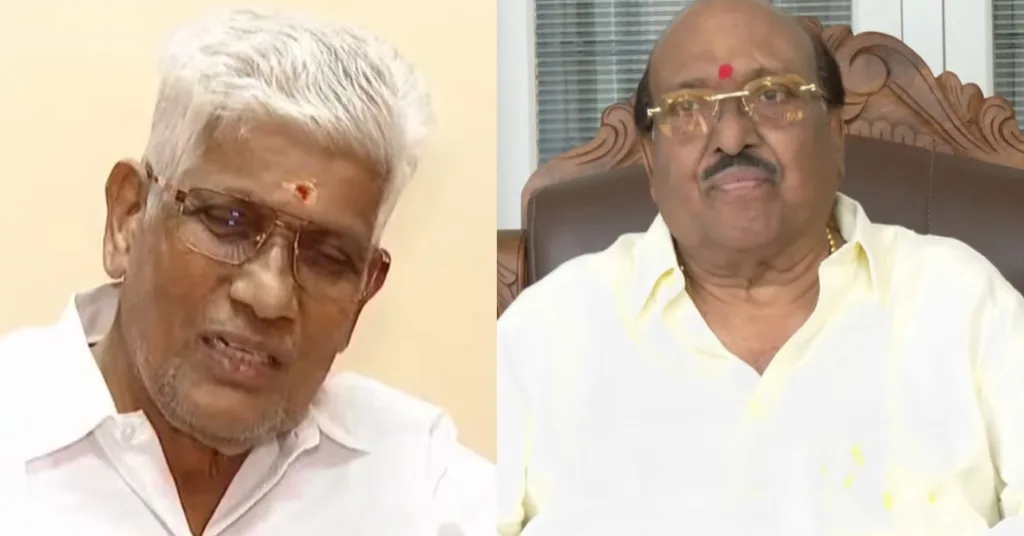
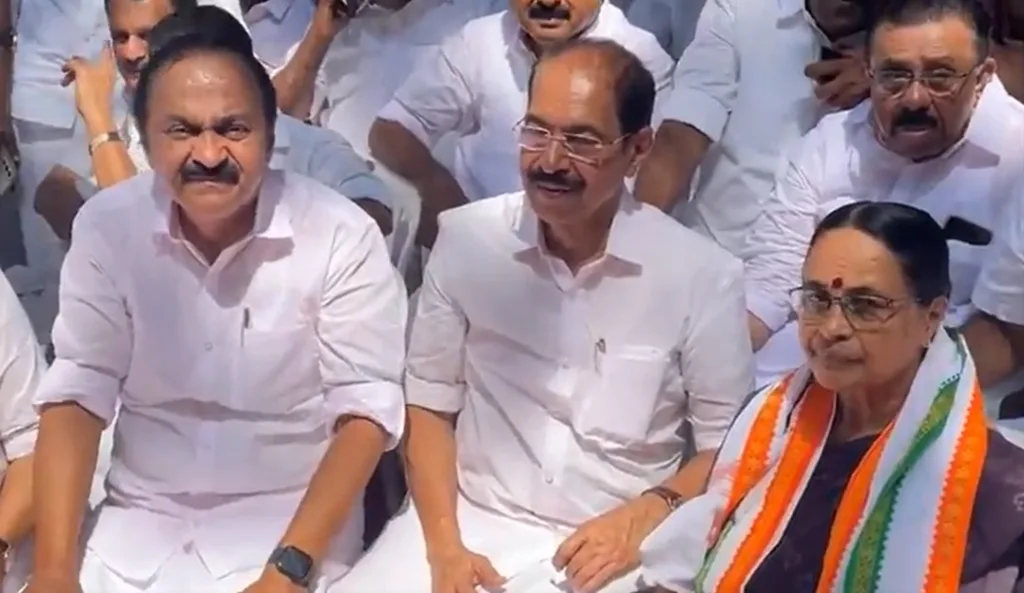
KOTTAYAM: NSS General Secretary G. Sukumaran Nair has strongly criticized Opposition Leader V.D. Satheesan.
Sukumaran Nair pointed out a double standard in Satheesan’s actions. Satheesan had previously said he would not visit or bow down to community organizations. However, he recently attended a church Synod meeting. Sukumaran Nair asked, “If you said you wouldn’t visit community leaders, why did you go to the Synod?”
Sukumaran Nair also said that the Congress party was wrong to let Satheesan attack community leaders like this.
Sukumaran Nair also responded positively to SNDP leader Vellappally Natesan. He agreed that it is time for the NSS and SNDP to stand together. He called this unity “the need of the hour.”
Sukumaran Nair clarified that in the past, unity failed because of disagreements over reservation rules, not because of the Muslim League as Vellappally had suggested. He added that those problems are now gone, and the NSS is ready to cooperate while maintaining its policy of equal distance from all political parties.
Social media has been abuzz with speculation that South Indian superstar Dhanush and Bollywood actress Mrunal Thakur are planning to get married. Viral reports suggested that the duo was set to tie the knot on February 14, 2026, coinciding with Valentine’s Day. However, fresh updates have put these rumours to rest.
What Sparked the Rumours? The speculation intensified recently after Mrunal Thakur shared a photo of her house on Instagram with the caption “Home” ❤️. Many fans interpreted this as a hint towards a new chapter in her personal life or a potential wedding preparation.
Additionally, the two actors had been spotted together at events earlier, including the premiere of ‘Son of Sardaar 2’ and Mrunal’s birthday party, which originally fueled the dating gossip.
The Truth Revealed According to the latest reports, there is no truth to the wedding claims. Sources close to Dhanush have completely dismissed the news, stating that the talks regarding a Valentine’s Day wedding are “completely false and baseless.” The source also requested fans and the media not to believe or spread such groundless rumours.
Mrunal Thakur’s Stance Mrunal Thakur has also previously addressed the link-up rumours. In an earlier interview, she clarified that Dhanush is just a “good friend” and admitted that she finds the dating rumours amusing. She emphasized that she is currently single and fully focused on her career.
Work Commitments Instead of a wedding, February is going to be a busy work month for Mrunal. She is gearing up for the promotions of her upcoming film, Do Deewane Shahar Mein, which is scheduled to release on February 20. Following this, she also has a Telugu film release lined up for March.
Verdict The news of a Dhanush-Mrunal wedding on February 14 is Fake. Fans can expect to see them on the big screen entertaining audiences, but reports of a real-life union are untrue.
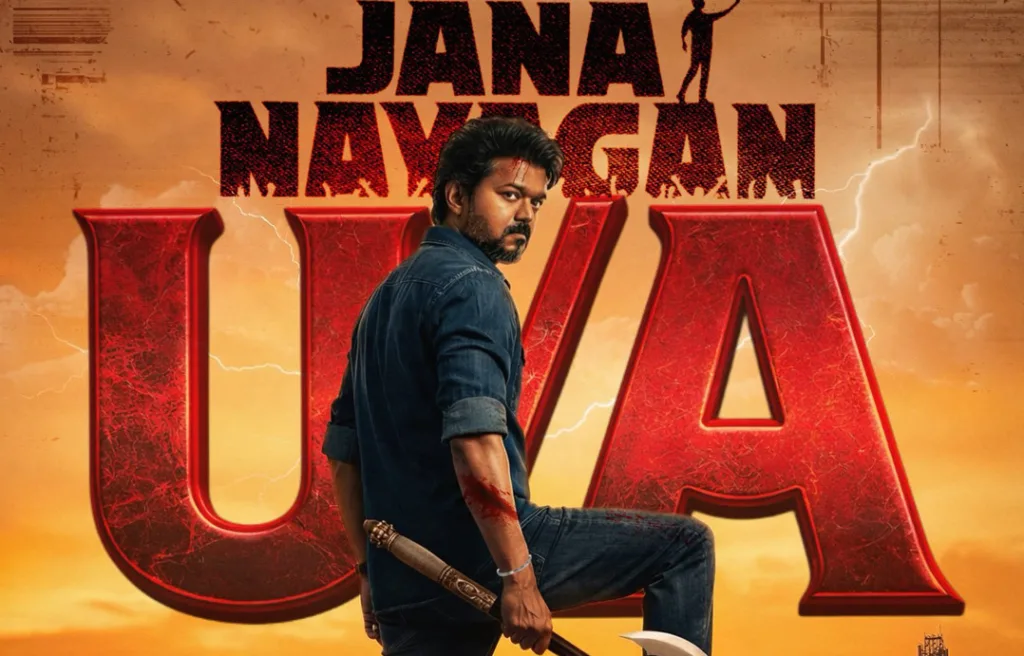
New Delhi: In a setback for actor Vijay’s film Jana Nayagan, the Supreme Court has refused to intervene in the movie’s release dispute. The Apex Court directed the producers to approach the Madras High Court instead, noting that the High Court is already handling the matter.
The Madras High Court is scheduled to hear the case on January 20. Until then, the uncertainty regarding the film’s release continues, leaving fans waiting for a final confirmed date.
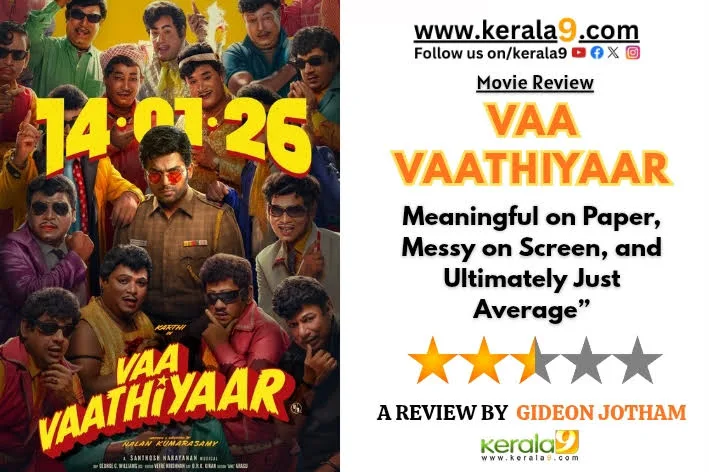
Vaa Vaathiyaar: A film that preaches loudly and listens to nothing, replacing complexity with convenient righteousness.
Film: Vaa Vaathiyaar
Director: Nalan Kumarasamy Producer: Gnanavel Raja Production Banner: Studio Green Language: Tamil Genre: Social Drama / Fantasy Runtime: 2 hrs 10 mins
A review by Gideon Jotham
Positives
Performance
Music
Intent
Control
Idealogy
concept
Psychological connection
Negatives
Predictability
Screenplay
Convenience
Direction
Repetition
Not everyone’s cup of tea
Story
Vaa Vaathiyaar is built on a high-concept idea rooted in nostalgia, hero worship, and moral inheritance. The story begins with a symbolic coincidence: a die-hard MGR devotee witnesses his idol’s death on screen at the exact moment his grandson is born. From that day, the child is raised as a moral extension of MGR’s ideology honesty, discipline, and social justice.
As the boy grows into adulthood, reality intervenes. He becomes morally inconsistent, opportunistic, and far removed from the ideals imposed on him. A series of circumstances then push him toward confrontation with injustice, triggering a transformation where he begins to embody the values his grandfather worshipped not just ideologically, but almost mythically.
On the surface, this premise feels ambitious. In practice, the story rarely moves beyond a familiar saviour narrativethat Tamil cinema has repeatedly explored. The ideological arc is predictable: corruption exists, the hero rises, the system resists briefly, and righteousness eventually prevails. There are no major deviations, reversals, or narrative risks.
The film introduces a fantasy element where the protagonist oscillates between his real self and an idealised persona inspired by MGR. While this could have opened space for psychological depth and internal conflict, the story treats it more as a theatrical device than a character-driven necessity. The transitions lack clear rules or emotional grounding, making them feel convenient rather than compelling.
What prevents the story from collapsing entirely is Karthi’s performance, which injects sincerity and emotional continuity into an otherwise mechanical structure. His ability to navigate contrasting shades gives the illusion of character complexity, even when the writing doesn’t fully support it.
Logical issues remain persistent. Power structures weaken too easily, resistance lacks credibility, and moral victories are achieved through rhetoric rather than consequence. The story repeatedly chooses emotional satisfaction over believable progression, undercutting realism for applause-ready moments.
Most critically, the story never questions its own ideology. The protagonist is rarely wrong, never truly challenged, and never forced to pay a price for his choices. This absence of moral ambiguity drains the narrative of dramatic tension and reduces it to affirmation rather than exploration.
Direction
Directed by Nalan Kumarasamy, Vaa Vaathiyaar marks a return after a long gap, carrying the baggage of expectations set by Soodhu Kavvum and Kadhalum Kadandhu Pogum. While traces of his signature wit and rhythmic staging remain, the film exposes a director torn between personal style and commercial obligation.
Nalan’s biggest achievement here is control. The film never feels amateurish or chaotic. Scenes are staged with clarity, performances are kept within tonal limits, and the narrative moves with surface confidence. This technical steadiness gives the illusion of strong direction.
But illusion is the key word.
Where earlier Nalan films thrived on irony, understatement, and character-driven humor, Vaa Vaathiyaar leans heavily into statement-making cinema. The direction prioritizes “moment creation” over storytelling scenes are designed to land applause rather than advance emotional or ideological complexity.
The fantasy transitions, especially when the protagonist shifts personas, reveal this weakness clearly. Instead of feeling psychologically motivated, these moments often come across as cinematic tricks visually loud but thematically thin. The director asks the audience to accept the fantasy without fully grounding it in internal logic, resulting in sequences that feel more like staged spectacles than narrative necessities.
Another major flaw lies in conflict staging. Authority figures and antagonists are framed in deliberately simplistic ways, making confrontations feel pre-decided. The camera often sides too obviously with the protagonist, removing tension instead of building it. Direction here does not allow space for uncertainty and without uncertainty, drama suffocates.
Nalan’s trademark dark humor does appear sporadically, but it feels restrained, almost cautious. It’s as if the film is afraid to fully commit to either satire or seriousness. This tonal hesitation weakens the director’s voice, making the film feel less like a Nalan Kumarasamy work and more like a well-packaged commercial product supervised by him.
Ironically, the director’s greatest limitation is his respect for the hero image. Instead of challenging it, he protects it. Instead of questioning legacy and hero worship, he reinforces it. That choice may satisfy fans, but it undercuts the intellectual sharpness Nalan is known for.
Screenplay
The screenplay of Vaa Vaathiyaar is built on a promising idea but collapses under its own convenience. While the premise allows room for psychological conflict, satire, and moral ambiguity, the writing repeatedly chooses ease over exploration.
The first half establishes characters and ideology efficiently, but not organically. Scenes feel designed to introduce points rather than develop situations. Character motivations are often explained through dialogue instead of being revealed through behavior, making the narrative feel instructed rather than discovered.
One of the screenplay’s major weaknesses is predictable progression. Every turn feels anticipated:
Conflicts arise on cue
Resolutions arrive through speeches
Opposition dissolves without real consequence
This lack of narrative resistance drains tension. The story doesn’t push back against the protagonist it clears a path for him.
The fantasy element, which should have been the screenplay’s strongest asset, is inconsistently handled. The transitions between personas are visually striking but dramatically underwritten. There is no clear internal rule governing these shifts, making them feel like narrative tools rather than psychological necessities. Instead of deepening character conflict, fantasy becomes a shortcut to elevate hero moments.
The second half suffers the most. Rather than tightening conflict, the screenplay begins to repeat itself similar confrontations, similar emotional beats, similar outcomes. Escalation is replaced with accumulation. As a result, the climax feels inevitable, not earned.
Perhaps the screenplay’s most damaging flaw is its refusal to question the hero. The protagonist is rarely wrong, never morally conflicted for long, and always vindicated. This removes dramatic ambiguity and flattens character depth. In a film that pretends to be socially conscious, this is a serious limitation.
Karthi’s performance compensates for many of these weaknesses, masking thin writing with conviction. But performance can only carry a screenplay so far. Strip away the actor’s charisma, and the script’s mechanical nature becomes impossible to ignore.
Music & Background Score
Composed by Santhosh Narayanan, the music of Vaa Vaathiyaar stands out as one of the film’s most effective technical elements and occasionally, its emotional crutch.
Santhosh Narayanan understands the film’s ideological weight and fantasy tone, and his score reflects that awareness. From the opening stretch itself, the background score establishes a mood that oscillates between nostalgia, irony, and restrained heroism. Unlike generic “mass” scoring, the music here carries texture and intent.
The songs are sparingly placed and largely avoid disrupting the narrative flow. Instead of functioning as commercial interruptions, they attempt to extend mood and character emotion. While none of the tracks are instantly iconic, they work within the film’s emotional ecosystem, reinforcing themes rather than overpowering them.
The background score is where Santhosh truly lifts the film. He uses rhythm and tonal variation to differentiate between the protagonist’s internal conflict and his larger-than-life persona. In several sequences, the score adds depth that the screenplay fails to provide, injecting tension and emotional urgency into otherwise predictable scenes.
However, this strength also exposes a weakness.
The music often does the heavy lifting the writing avoids. Emotional peaks feel impactful not because the scene earns them, but because the score insists on importance. In moments where silence or restraint could have added realism, the background music steps in to manufacture intensity.
There is also a slight overdependence on familiar Santhosh Narayanan patterns experimental beats, ironic undertones, and swelling crescendos. While effective, they don’t always feel specifically designed for this film, occasionally reminding us of his earlier works rather than creating a distinct sonic identity for Vaa Vaathiyaar
Performances
Karthi
Karthi is undeniably the backbone of Vaa Vaathiyaar and the film’s single most important asset. Playing dual shades the flawed, grounded Rameswaram and the idealised, almost mythic Ramachandran, he navigates tonal shifts with remarkable ease. What makes his performance stand out is not exaggeration, but control.
In scenes that could have easily slipped into caricature, Karthi opts for restraint. His transitions between realism and fantasy are smooth enough to maintain audience engagement, even when the screenplay doesn’t fully justify them. The confidence with which he switches personas recalls the ambition of classic dual-role performances, though here it is performance not writing that creates clarity.
That said, his portrayal of the MGR-inspired persona occasionally borders on artificiality. Certain mannerisms feel imposed rather than internalised. Still, Karthi’s natural screen presence and emotional intelligence prevent these moments from completely breaking immersion. Without him, this film simply would not function.
Rajkiran
Rajkiran plays the emotionally symbolic role of the grandfather a die-hard MGR loyalist whose belief system shapes the protagonist’s life. His performance is sincere and rooted, lending credibility to an otherwise ideologically loaded character.
However, the writing limits him. Once his ideological position is firmly established, the character is given little room to evolve. Rajkiran compensates with body language and emotional subtlety, but the role remains more symbolic than dramatic. He represents belief, not conflict and that limits his impact.
Sathyaraj
As the antagonist, Sathyaraj feels underutilised. His presence brings immediate authority, but the character lacks menace and depth. The villainy is written too simplistically, giving Sathyaraj little opportunity to explore nuance or psychological threat.
Even his physical presentation feels oddly restrained, almost sanitized. For an actor known for commanding antagonistic roles, this part feels like a mismatch more functional than formidable. It’s not a failure of performance, but a failure of conception.
Krithi Shetty
Krithi Shetty, making her Tamil debut, is given a role that barely scratches the surface of her potential. Her character exists primarily as emotional support and visual presence rather than a fully realised individual.
She performs competently within these limits, but the writing offers no real scope for expressive range. Even moments that hint at emotional depth are quickly abandoned. This is less a critique of her performance and more an indictment of how poorly written female characters are in the film.
Supporting Cast
Actors like Karunakaran and others deliver serviceable performances, mostly confined to functional roles exposition, reaction, or light comic relief. None are allowed to leave a lasting impression, largely because the screenplay doesn’t demand more from them.
Final Verdict
Vaa Vaathiyaar is a film driven more by conviction than complexity. It carries an ideologically charged premise, an experienced director, and a powerful lead performance yet never fully commits to exploring the uncomfortable questions it raises.
What works in the film works largely because of Karthi. His controlled, dual-shaded performance gives emotional continuity to a narrative that is otherwise predictable and structurally safe. Santhosh Narayanan’s music further elevates the mood, often compensating for weaknesses in writing and logical progression. The technical polish and confident staging ensure that the film remains watchable throughout.
However, the film repeatedly chooses comfort over challenge. The story relies heavily on familiar saviour tropes, the screenplay avoids moral ambiguity, and the direction protects the hero image instead of interrogating it. Conflicts resolve too easily, systems collapse too conveniently, and ideological victories feel pre-decided rather than earned.
The fantasy element, which could have deepened psychological tension, remains underexplored and inconsistently grounded. Supporting characters are underwritten, antagonistic forces lack credibility, and emotional peaks are often manufactured through music rather than narrative buildup.
In the end, Vaa Vaathiyaar is not a bad film but it is a safe one. It reassures instead of unsettling, affirms instead of questioning, and entertains without leaving a lasting intellectual or emotional aftertaste.
A film that wants to inspire, but never risks discomfort. A film that believes sincerity is enough, even when depth is missing.
Pearle Maaney and Srinish Aravind are the most popular celebrity couple on social media. Fondly called ‘Pearlish’ by fans, they share all their updates online. Now, a reply Pearle gave to someone who criticized her for always praising her husband is going viral.
Pearle mentions that someone criticized her saying she is always promoting and praising Srini. Sharing a beautiful picture with Srinish, the star opened her mind in response.
Full text of Pearle’s Instagram post: “He is Mine and I’m His One and Only. Someone Said… I’m always promoting him… always praising him… always talking about him… always Srini, Srini, Srini… well, I will be doing that with all my heart till my last breath. Coz I’m in Love with him… he is My World… so they better get used to it.”
Many fans have come forward appreciating Pearle for publicly expressing her undying love for her husband. Pearle and Srinish met and fell in love during Bigg Boss Malayalam Season 1. They have two children, Nila and Nitara.
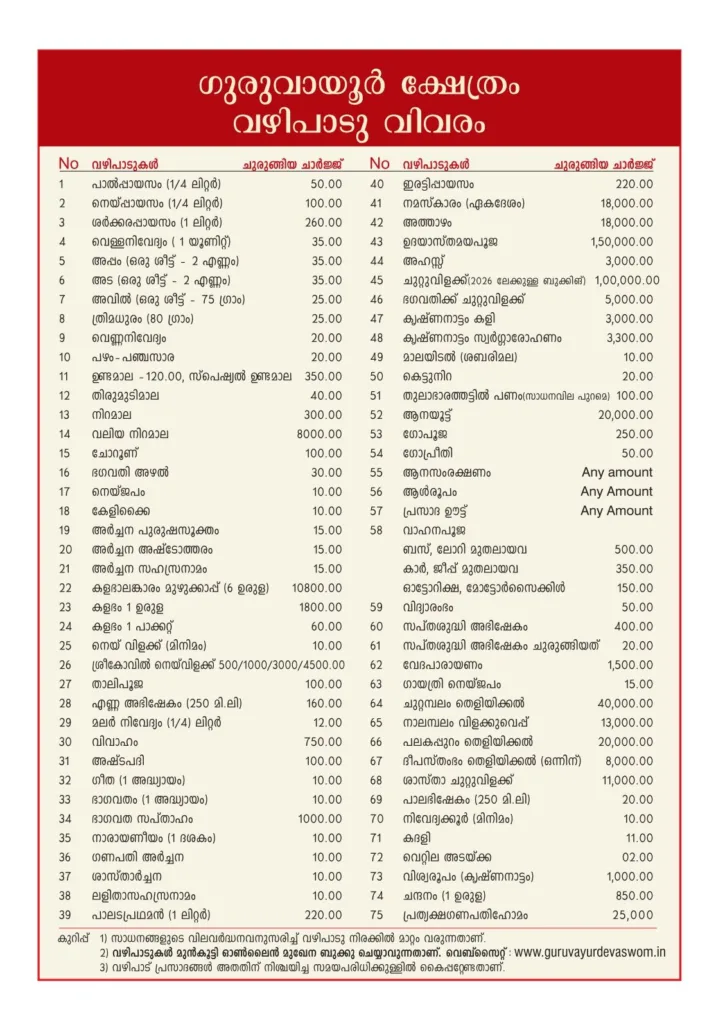
Check the updated Guruvayur Temple Vazhipadu list for 2026. Find official offering rates, Guruvayur Temple special darshan tickets, pooja timings, and step-by-step online booking details here.
No.
Offering (Vazhipadu)
Rate (₹)
1
Palpayasam (1/4 Liter)
50.00
2
Neypayasam (1/4 Liter)
100.00
3
Sarkkarapayasam (1 Liter)
260.00
4
Vellannivedyam (White Rice)
35.00
5
Appam (1 Sheet – 2 Nos)
35.00
6
Ada (1 Sheet – 2 Nos)
35.00
7
Avil (Beaten Rice)
25.00
8
Thrimadhuram
25.00
9
Vennannivedyam (Butter)
20.00
10
Pazham, Panchasara
20.00
11
Undamala (Garland)
120.00
11b
Special Undamala
350.00
12
Thirumudi Mala
40.00
13
Niramala
300.00
14
Valiya Niramala
8,000.00
15
Choroonu (Rice Feeding)
100.00
16
Bhagavathi Azhal
30.00
22
Kalabham (Full – 6 balls)
10,800.00
25
Ney Vilakku (Minimum)
10.00
26
Sreekovil Neyvilakku
500 / 4500
27
Thali Pooja
100.00
30
Vivaham (Marriage)
750.00
43
Udayastamana Pooja
1,50,000.00
45
Chuttuvilakku (Booking)
1,00,000.00
51
Thulabharam (Entry Fee)
100.00
58
Vahanapooja (Car/Jeep)
350.00
59
Vidyarambham
50.00
*Rates subject to change. Booking available at www.guruvayurdevaswom.in
How to Book Guruvayur Temple Special Darshan Tickets Online Booking ( VIP Tickets Online )
1.Visit the Official Portal: Go to https://guruvayurdevaswom.in/
2.Create an Account
3. Select Darshan ( from Menu Bar )
4. Select Sreekovil Ghee Lamp
5.Then Select Date
Then add details and book Sreekovil Ghee Lamp Darshan
Don’t forget to take A printed copy is mandatory to produce at the temple counter for verification.( Mobile Phone not allowed )
How to Book Guruvayur Temple Offerings Online
To make your visit smoother and avoid long queues at the counters, Guruvayur Devaswom provides an online booking facility for major offerings (Vazhipadu) like Choroonu, Thulabharam, and Udayastamana Pooja.
Steps to Book:
Visit the Official Portal: Go to https://guruvayurdevaswom.in/
Create an Account: Click on the registration link. You will need to provide a valid email, mobile number, and a digital copy of your ID proof (Aadhaar, etc.) along with a passport-size photo.
Login & Select Service: Once registered, log in and click on “Vazhipadu Booking.”
Choose Date & Offering: Select your preferred date. Browse the list of offerings and add them to your cart.
Enter Devotee Details: You must provide the Name and Star (Nakshatra) of the person for whom the offering is being performed.
Make Payment: Complete the transaction using online banking or cards.
Print Receipt: After payment, download the receipt. A printed copy is mandatory to produce at the temple counter for verification.
Important Guidelines:
⚠️ IMPORTANT NOTICE
The official information regarding offerings at Guruvayur Temple is provided here. Devotees are requested to be vigilant to avoid falling victim to scams or fake propaganda circulating regarding the offerings.
Thiruvananthapuram: In a significant political development in Kerala, former CPI(M) MLA and three-time representative of the Kottarakkara constituency, Advocate Aisha Potty, has officially joined the Indian National Congress.
She received her party membership from Opposition Leader V.D. Satheesan at a venue in Thiruvananthapuram on Tuesday. The move comes amidst ongoing discussions regarding cooperation within the United Democratic Front (UDF).
According to reports, Aisha Potty is likely to be fielded as the UDF candidate for the Kottarakkara constituency in the upcoming elections. A consensus on her candidature was reportedly reached during a meeting with the Opposition Leader held yesterday.
A Political Veteran Aisha Potty rose to prominence in Kerala politics after achieving a giant-killing victory against veteran leader R. Balakrishna Pillai. She served as the MLA for Kottarakkara for three consecutive terms. However, she was denied a seat by the CPI(M) in the previous election, which reportedly led to a distance between her and the Left leadership.
Leadership Reactions Welcoming her into the fold, Opposition Leader V.D. Satheesan described the event as a “moment of happiness.” Senior Congress leader K.C. Venugopal also remarked that significant changes are witnessing within the Congress party following the local body elections.
This move is seen as a strategic boost for the Congress in the Kollam district, particularly in the Kottarakkara region, ahead of future electoral battles.
Pennu Case Malayalam Movie Review in ONE WORD: A Simple and Watchable Comedy Thriller with a Well-Placed Twist
A Review by Arunjyothi R
LANGUAGE: Malayalam
DURATION: 01 Hours 52 Minutes
DIRECTOR: Febin Sidharth
GENRE: Comedy Drama
•POSITIVES:
1: Direction
2: Story
3: Comedies
4: Performance of actors
5: Climax Twist
6: Background Score
•NEGATIVES:
1: Predictable
2: Screenplay
3: Songs
STORY:
Subash can hardly contain his excitement as his wedding day finally arrives—an occasion many believed would never happen. Just as the celebrations peak, chaos erupts when a group of men storm the venue in Kannur, halting the ceremony with shocking allegations. The Kudiyanmala police step in, only to discover that the men are not there for the groom, but for the bride. They claim Bindu has married each of them at different times, deceiving them through an elaborate marriage scam. As CI Manoj takes charge of the case, a deeper truth begins to surface. Bindu, it turns out, is not her real name. She is Rohini. Under interrogation, Rohini traces her story back to Mysuru, where desperation drove her into her first scam while trying to raise money for her mother’s treatment. What she believed would be a one-time act soon spirals out of control when she falls under the grip of a local don, David, who uses threats to force her into committing repeated frauds. With the trail of evidence pointing only at Rohini, she finds herself cornered, bearing the full weight of the crime. Yet Manoj senses there is more to the case than meets the eye. Along with his team, he begins to pull at the loose threads, uncovering a wider racket that stretches beyond Rohini and leads towards political influence—bringing him face to face with Jeevan, a powerful figure with whom he shares an unresolved past.
REVIEW & ANALYSIS OF THE FILM:
Pennu Case begins on a quiet and controlled note, setting the tone for a film that chooses simplicity over loud drama. Director Febin Sidharth keeps the story grounded, allowing it to unfold through small moments, light humour, and familiar settings. The film never tries to oversell its premise and instead moves at a steady pace, making it an easy watch from the start.
One of the film’s strongest aspects is the way it treats its central character, Rohini. Despite revolving around marriage fraud, the film avoids painting her as a villain. Instead, it presents her as someone shaped by difficult circumstances. This approach helps the film stay balanced and prevents it from slipping into judgement or unnecessary moral preaching, which is refreshing for a film in this space.
The disrupted wedding sequence works as an effective entry point into the story. It instantly creates curiosity and pulls the viewer in. The police investigation that follows is kept simple, and the linear narration ensures that the film never becomes confusing. The humour sprinkled throughout, especially in the first half, keeps the mood light and helps the film move forward without feeling heavy.
However, as the story progresses, the film starts to feel a little too familiar. Many elements — the backstory, the investigation style, and even the character arcs — follow paths we have seen before. The police investigation, which could have added more tension, mostly stays on the surface. The film tells us about Rohini’s cons but rarely shows the cleverness behind them, which slightly reduces the thrill.
That said, the predictability also feels intentional. The makers seem to invite the audience to think ahead, to guess where the story might be going. This approach may not work for everyone, but it sets the stage for what the film is saving for its final stretch. The slow and ordinary build-up appears to be part of a larger plan.
The climax is where Pennu Case truly finds its footing. The twist, though not completely new as an idea, is handled smartly within the film’s setting. The way the withheld details fall into place makes the earlier simplicity feel meaningful. The intercuts leading to the reveal are well-executed, allowing the audience to slowly connect the dots rather than being hit with a sudden shock.
PERFORMANCE OF ACTORS:
Nikhila Vimal delivers a restrained performance that suits the film’s tone, even if the character feels underwritten at times. Her calm presence plays an important role in making the twist work, as it supports the film’s momentum. On the performance front, Nikhila Vimal gets a role that allows her to step away from her usual lively image. While her expressions during tense moments may remind some of the restrained style she is often criticised for, it never feels distracting here, mainly because the character has more layers to play with. She approaches Rohini with control and calm, choosing not to exaggerate the character’s inner conflict. This measured performance fits well with the film’s understated mood and helps the twist land effectively. Hakim Shahjahan turns out to be one of the film’s quiet strengths as CI Manoj. He brings a mix of dry humour and sensitivity to the role, making the character feel human rather than heroic. Shivajith, seen slightly outside his familiar space, makes his presence felt despite limited screen time, adding weight to the film’s conflict. The supporting cast delivers uneven results. Many of the grooms appear more as brief impressions than fully formed characters, serving the story without leaving much impact. Aju Varghese’s appearance is short but effective, while the Ramesh Pisharody–Abin Bino combination works naturally. Pisharody, in particular, knows when to hold back, letting the humour flow without forcing it.
CONCLUSION:
Overall, Pennu Case is a film that chooses restraint over spectacle and familiarity over risk. While much of its runtime unfolds in a deliberately ordinary manner and often feels predictable, the makers manage to hold things together with a controlled tone and a well-planned final act. The climax and twist, though not entirely new, are handled smartly within the film’s setting and reward patient viewing. With decent performances, a grounded approach, and a narrative that quietly comes together at the end, Pennu Case works as a passable thriller that may not excite throughout, but leaves behind a fairly satisfying aftertaste.
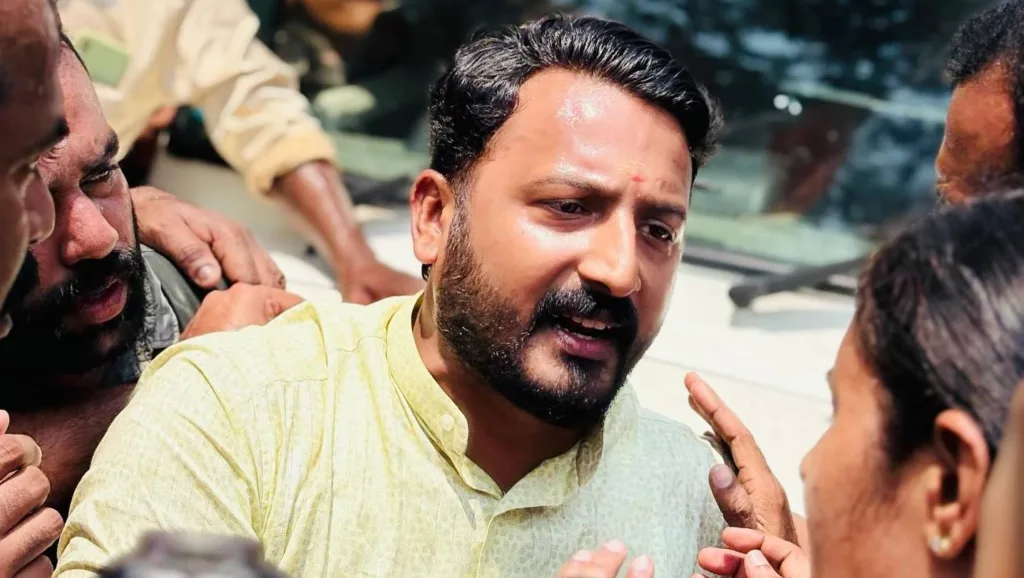
PALAKKAD/PATHANAMTHITTA: Palakkad MLA and Youth Congress State President Rahul Mamkootathil was arrested by the police in the early hours of Sunday in connection with a third sexual assault case registered against him.
A special investigation team from Pathanamthitta took the MLA into custody from the KPM Hotel in Palakkad around midnight. He has since been shifted to the Pathanamthitta AR Camp.
Details of the Arrest According to reports, an eight-member police team, which included female officers, arrived at the hotel in a covert operation. Although Rahul initially refused to step out of his hotel room, he eventually yielded to the police demand.
The New Case The arrest follows a fresh complaint received via email, marking the third such case filed against the MLA. Reports indicate that the complainant’s statement includes serious allegations, including verbal abuse during pregnancy and non-cooperation with a DNA test regarding the paternity of the fetus.
Background of Cases This is the third case registered against Rahul Mamkootathil in recent times:
First Case: The Kerala High Court had stayed his arrest.
Second Case: A trial court had granted him anticipatory bail.
Third Case: The police have now recorded his arrest in this latest incident.
The MLA is expected to be taken for a medical examination and further evidence collection. Meanwhile, Youth Congress workers have launched protests condemning the police action.