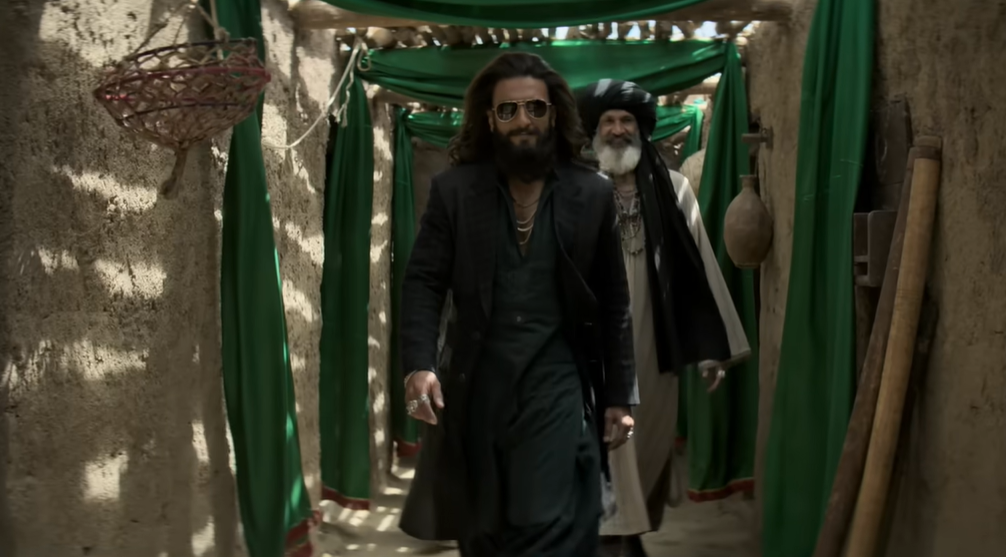
Mumbai: The wait is finally over. Following the historic box-office success of Dhurandhar, the makers have unveiled the highly anticipated teaser for its sequel, Dhurandhar: The Revenge. The first glimpse promises a darker, grittier, and more intense cinematic experience, with Ranveer Singh returning to the screen in a ruthless new avatar.
A Darker Shade of Revenge The teaser transports viewers to the chaotic streets of Lyari, where Ranveer Singh’s character, Indian undercover agent Hamza Ali Mazhari, is seen reigning supreme. Far removed from the conventional hero, Singh dominates every frame with a menacing silence and raw intensity. The visuals suggest a significant transformation for the character, who is now deeply embedded within the enemy’s underworld.
The teaser sets a chilling tone with the tagline, “With Love From Naya Hindustan,” signaling a shift from a covert mission to an all-out war.
Pan-India Release Confirmed Unlike its predecessor, which broke records as a Hindi-only release, Dhurandhar 2 is set to take over the national stage. Directed by Aditya Dhar, the film will be released in five languages: Hindi, Telugu, Tamil, Kannada, and Malayalam.
The film is slated to hit theatres on March 19, 2026.
The Legacy of Part 1 The expectations for the sequel are sky-high. The first installment of the franchise, Dhurandhar, created history by becoming the first Indian film to cross the ₹1,000 crore gross mark globally while being released in a single language. It joined the elite league of Indian cinema giants like Baahubali 2, KGF: Chapter 2, and Pushpa 2.
Star-Studded Cast & Crew Aditya Dhar returns to the director’s chair for this high-stakes spy thriller. While the first film featured an ensemble cast including R. Madhavan, Akshaye Khanna, Sanjay Dutt, and Arjun Rampal, the sequel focuses on the next chapter of the mission. The story continues to follow the Indian intelligence officer who has successfully infiltrated Pakistan’s political and criminal networks to dismantle a terror organization from the inside.
With a blood-red poster released just ahead of the teaser and the promise of “The Revenge,” Dhurandhar 2 is already gearing up to be one of the biggest cinematic events of the year.
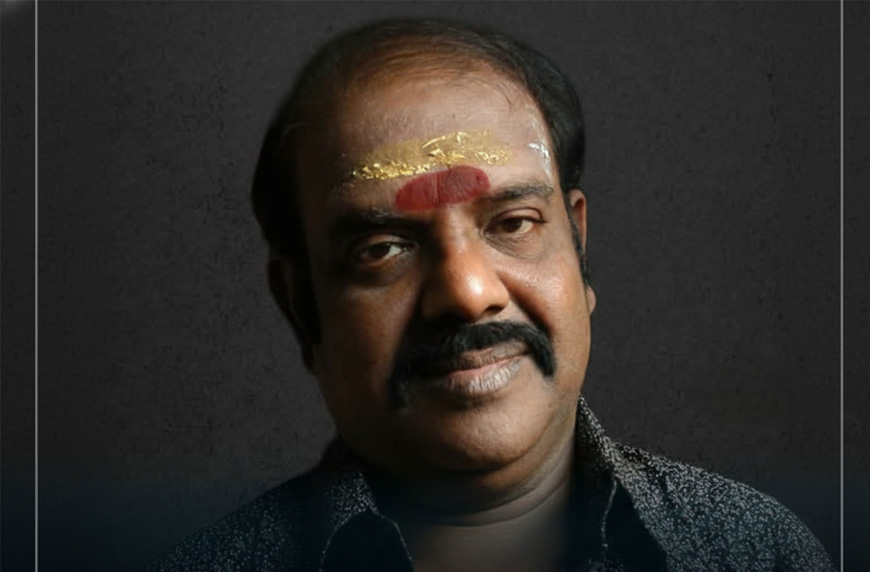
Chennai: Renowned Indian music director and composer S.P. Venkatesh, who played a pivotal role in the golden era of Malayalam cinema, passed away on Tuesday, February 3, 2026. He was 70 years old.
According to family sources, the veteran composer breathed his last at his residence in Chennai following a sudden cardiac arrest. His funeral is scheduled to be held on Wednesday in Alapakkam, Chennai.
A Career Defined by Melodies Born on March 5, 1955, S.P. Venkatesh was the son of the accomplished mandolin player Pazhani. He began his musical journey as a guitarist in 1971 under music director Vijay Bhaskar and later transitioned into music direction, making his independent debut in 1981 with the Telugu film Prema Yuddham.
While he worked across Tamil, Kannada, Telugu, Bengali, and Hindi films, he is most celebrated for his immense contribution to the Malayalam film industry (Mollywood). He became a household name with the 1986 blockbuster Rajavinte Makan, starring Mohanlal. The film’s background score and songs, particularly “Vinnile Gandharva Veenakal,” marked a turning point in his career and established him as a premier composer.
Major Contributions and Awards S.P. Venkatesh composed music for over 150 films and more than 500 songs. His work in the 1990s remains a benchmark for cinematic music in Kerala. Some of his most iconic works include:
Kilukkam (Songs like “Kilukil Pambaram”)
Spadikam
Minnaram
Johnnie Walker (The hit “Shanthamee Rathriyil”)
Indrajalam
Dhruvam
Manthrikam
In 1993, he was honored with the Kerala State Film Award for Best Music Director for his soulful compositions in the films Paithrukam and Janam.
Often credited as “Sangeetharajan,” he was known for his mastery of instruments like the mandolin and guitar, and for his ability to blend modern orchestral arrangements with deep, literary melodies.
The film fraternity and fans across South India have expressed deep grief over the loss of the maestro whose music defined the nostalgia of a generation.
South Indian star Amala Paul’s husband, Jagat Desai, has won the hearts of fans with a deeply personal and romantic social media post. Sharing a glimpse into their private life, Jagat posted a series of candid Videos of the actress that capture her in a light rarely seen by the public.
Accompanying the Videos, Jagat wrote a touching caption: “Different phases of my wife which I can only see ❤️, when they visited my hometown.”
The videos, taken during their visit to Jagat’s roots, show Amala in her most natural and relaxed element. Fans are praising the couple for their authenticity, with many noting that Jagat’s perspective captures a side of the actress that goes beyond her cinematic persona. Since their marriage and the birth of their son, Ilai, the couple has been frequently sharing beautiful moments of their journey together.
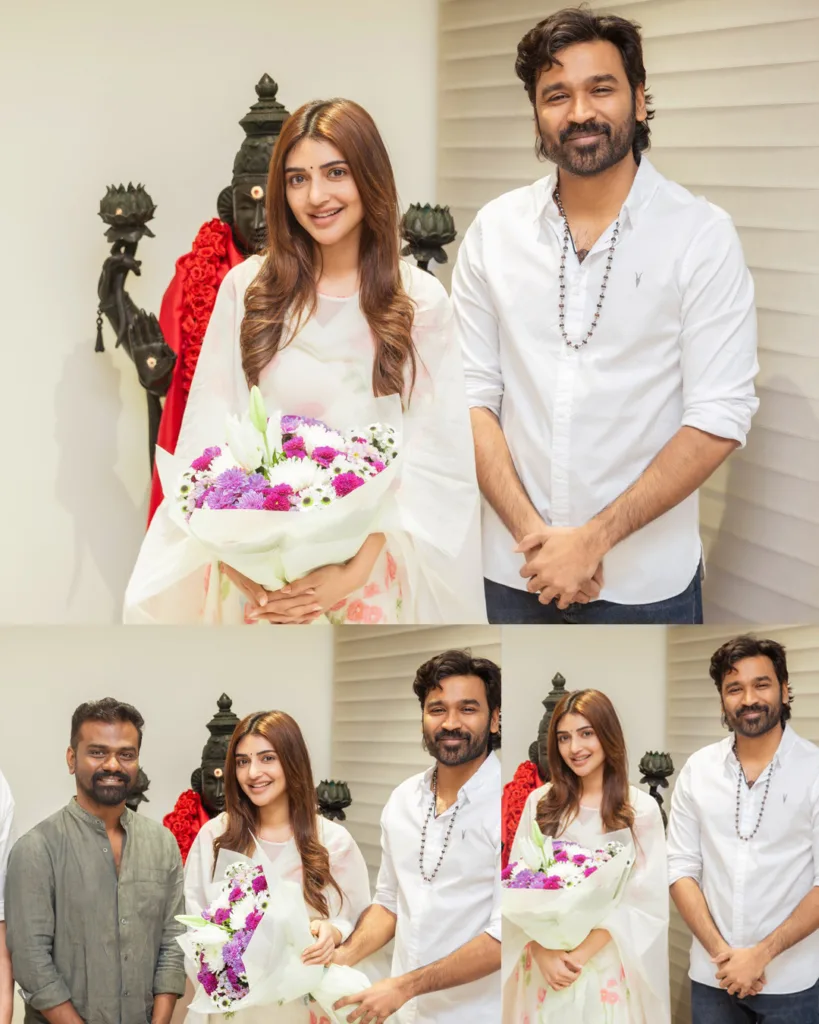
CHENNAI: The official announcement regarding the female lead for Dhanush’s 55th film, tentatively titled #D55, has sent ripples through the South Indian film industry. Tollywood sensation Sreeleela has been officially cast to play the female lead opposite Dhanush, marking the first time the two stars will share the screen.
The project is helmed by director Rajkumar Periyasamy, who is currently basking in the massive success of his previous blockbuster, Amaran. This collaboration is being touted as a “grand new beginning” and is produced by Dhanush’s own Wunderbar Films in association with RTake Studios.
Key Highlights of the Project:
Lead Cast: Dhanush and Sreeleela.
Direction: Rajkumar Periyasamy (Amaran fame).
Music: The film will feature music by the young sensation Sai Abhyankkar, known for his viral chartbuster “Katchi Sera.”
Earlier today, the production house officially welcomed Sreeleela on board with a social media post that read: “Welcoming the dazzling damsel @sreeleela14 on board #D55!”
The film has already generated massive hype due to its power-packed technical crew and the fresh pairing of Dhanush and Sreeleela.
ONE WORD: An Entertaining and Engaging Horror-Comedy Packed with Laughs and Fun
A Review by Arunjyothi R
LANGUAGE: MALAYALAM
DURATION: 02 Hours 08 Minutes
DIRECTOR: Vijesh Panathur
GENRE: Comedy Horror
•POSITIVES:
1: Direction
2: Story
3: Screenplay
4: Entertaining Comedies
5: Performance of actors
6: Background Score
7: Cinematography
8: Editing
•NEGATIVES:
1: Predictability
2: Average action sequences
3: Vibes of the films like Romanjam and Adi Kapyare Koottamani
4: Emotional arch could have been better
STORY:
Prakambanam begins in a men’s college hostel in Kochi, where Sidhu (Ganapathi), Punyalan (Sagar Surya), and Shankaran (Ameen) are final-year students enjoying a loud and carefree hostel life filled with alcohol and fun. Sidhu is deeply involved in student politics and is desperate to win the college elections before he graduates. Punyalan, the son of Christian preachers, is in love with Vedika (Sheethal Joseph), while Shankaran moves through hostel life with a relaxed and playful attitude.
The narrative takes a sharp turn when Sidhu learns about the death of his grandmother ( Mallika Sukumaran). The funeral becomes more than a ritual—it quietly exposes the religious and political ideological cracks within the family. Sidhu’s father remains detached from the Hindu customs his mother followed with devotion, creating an uncomfortable contrast. Before leaving, his grandfather (PP Kunhikrishnan) hands Sidhu the ashes, requesting that they be taken to Kashi.
Unwilling to carry ashes openly in a hostel setting, Sidhu transfers them into a small powder bottle and keeps it hidden in his room. Back at the hostel, the story shifts gears. Punyalan stumbles upon the bottle and, mistaking it for drugs, snorts its contents. From this bizarre mistake, Prakambanam finally embraces its core idea. Punyalan begins displaying unsettling behavioural changes, at times slipping into the persona of Sidhu’s conservative grandmother, setting the stage for a strange, darkly comic chain of events that drives the film forward.
REVIEW & ANALYSIS OF THE FILM:
POSITIVES:
1: Direction:
One of the biggest strengths of Prakambanam is its direction. Handling a comedy–supernatural–horror thriller is not easy, but the director manages to maintain a fine balance between humour and horror without losing control at any point. The making quality feels polished and confident, and the film never slips into excess or confusion. What works best is how the director keeps the narrative engaging throughout, ensuring that neither comedy nor horror overpowers the other.
Casting is another area where the director scores big. Every actor seems perfectly suited for their role, and the performances feel well-utilised according to the script’s needs.
The director clearly understands the strengths of his cast and places them smartly within the narrative. The comedy portions are particularly effective, with humour flowing naturally from situations rather than forced jokes. From start to finish, the film keeps delivering laughs while smoothly carrying the horror element along with it.
The script, also handled by the director, is entertaining and sharp. The film keeps moving forward with continuous events, ensuring there is no lag. Clever cuts and tight execution leave no space for boredom, and the film demands full attention from the audience. At no point does it feel slow or dragged, and the smooth linking of scenes makes the flow convincing and enjoyable. Even the horror portions are handled smartly—nothing feels exaggerated or overstretched. While minor logical questions may exist, the engaging execution never gives the viewer time to overthink them. The way the horror begins, escalates, and is eventually handled feels neat, believable, and entertaining.
SCRIPT:
1: STORY:
The story of Prakambanam works on multiple levels while still keeping its core simple and accessible. What begins as a fun, chaotic hostel tale slowly expands into something more layered, bringing together student politics, friendship, family relationships, and belief systems. The film smartly uses everyday situations and youthful energy to build its world, making the characters and their actions feel natural. The supernatural element doesn’t arrive suddenly; instead, it grows organically from the story’s emotional core, giving the narrative a steady and believable progression. This gradual shift helps the audience stay connected while enjoying the humour and surprises along the way.
What truly strengthens the story is how it mixes emotion and ideology with comedy and horror. Themes like generational thinking, cultural practices, and personal faith are woven into the narrative without slowing it down or making it heavy. The grandmother’s presence becomes more than just a plot device—it adds meaning and direction to the supernatural turn of events. Even as the film moves into chaos and madness, the story remains clear about where it is heading. By the final act, all the elements come together smoothly, delivering a conclusion that feels complete, entertaining, and true to the tone the film establishes from the beginning.
2: SCREENPLAY:
The screenplay of Prakambanam is one of its strongest assets, carefully shaped to fit the tone of a comedy horror thriller while staying rooted in emotions. Right from the beginning, the writing captures the chaos and warmth of hostel life, especially the bond between friends. The friendship among the lead characters feels natural and lived-in, making their jokes, arguments, and support for each other believable. This emotional base helps the audience connect with the characters before the supernatural elements enter the story. The scenes are placed with clarity, and the flow from one event to the next feels smooth and organic.
One of the screenplay’s biggest strengths is how it balances humour, horror, and friendship without losing focus. The comedy often comes from the friends’ reactions to unexpected situations, while the horror elements slowly creep in, creating contrast. The emotional support they show each other during moments of fear and confusion adds depth to the narrative. Instead of relying on over-the-top scares, the screenplay uses timing and character-driven moments to maintain engagement. Each event builds on the previous one, and the strong friendship bond makes even the chaotic situations enjoyable and relatable.
As the film moves into the second half, the screenplay deepens both the chaos and the emotional stakes. The friendships are tested as fear and confusion grow, yet their unity remains the backbone of the story. This emotional connection keeps the audience invested, even during the most absurd or tense moments. The buildup leads neatly into a satisfying climax where humour, horror, and friendship come together. By connecting supernatural elements with genuine emotional bonds, the screenplay ensures that Prakambanam remains entertaining, heartfelt, and engaging till the end.
3: ENTERTAINING COMEDIES:
The entertaining comedy in Prakambanam is one of its biggest highlights and plays a major role in keeping the film lively throughout. The humour is mostly situational and character-driven, especially rooted in the hostel setting and the easy friendship between the characters. Everyday hostel moments, casual conversations, misunderstandings, and the carefree attitude of the students naturally create laughs without feeling forced. The film avoids loud or artificial jokes, allowing the comedy to flow smoothly from the situations, which makes the humour feel fresh and relatable.
What works even better is how the comedy is smartly blended with the horror elements. Just when scenes begin to turn tense or mysterious, humour steps in at the right moment, easing the fear without breaking the narrative flow. The characters’ reactions to the supernatural situations are particularly amusing, turning confusion and panic into laugh-worthy moments. The comedy remains clean and inclusive, making it enjoyable for both youth and family audiences. By maintaining this balance, Prakambanam ensures that the laughs never feel repetitive and that the film stays engaging and entertaining till the very end.
4: BACKGROUND SCORE:
The background score of Prakambanam plays a crucial role in shaping the film’s overall experience, especially in balancing comedy and horror. In the lighter moments, the score complements the humour with playful and lively tunes that enhance the fun without overpowering the scenes. These musical cues help maintain the film’s energetic pace and support the situational comedy, making the jokes land more effectively. When the film moves into its horror portions, the background score smartly shifts in tone. Instead of using loud or repetitive sounds, it relies on subtle beats and eerie notes to build tension. This approach creates curiosity rather than fear, pulling the audience deeper into the situation. During key horror scenes, especially in the later portions and climax, the music heightens suspense while still allowing space for humour to exist. The score keeps the audience alert and engaged, making them curious about what will happen next. By carefully controlling mood and rhythm, the background score becomes an essential storytelling tool, enhancing both the thrill and entertainment value of Prakambanam.
5: CINEMATOGRAPHY AND EDITING
The cinematography in Prakambanam plays a key role in enhancing both the emotional and supernatural layers of the film. The choice of camera angles and movements is well thought out, especially in scenes involving tension and fear. Smooth camera movements help maintain the flow of the narrative, while carefully framed horror shots add to the atmosphere without going over the top. The exorcism sequence stands out in particular, where lighting is used smartly to create an eerie yet controlled mood. Shadows, low-key lighting, and focused illumination add depth to the scene and increase its intensity. Close-up shots are effectively used to capture the emotions and acting skills of the central characters, allowing the audience to feel their fear, confusion, and emotional struggle. These visual choices are well matched to the situations, helping evoke the right emotions at the right moments.
The editing further strengthens the film’s grip by maintaining a steady and engaging pace throughout. The overall duration never feels dragging or boring, and the running time feels well balanced for the genre. Scenes are tightly cut, ensuring that nothing feels unnecessary or overstretched. Every sequence contributes to the narrative, keeping the momentum intact. The transitions between scenes, especially during horror moments, are smooth and gripping, helping to build tension without causing confusion. There are no jarring cuts or mismatched edits, allowing the story to flow naturally. This clean and focused editing ensures that the audience remains fully engaged, making Prakambanam a crisp and well-paced cinematic experience.
NEGATIVES FELT:
1: One of the noticeable drawbacks of Prakambanam is its predictability at certain points. While the film remains entertaining, some plot developments and character turns can be easily guessed in advance, especially for viewers familiar with the comedy-horror genre. A few situations follow a familiar pattern, reducing the element of surprise. This predictability slightly weakens the impact of key moments, as the audience often knows where the scene is heading even before it fully unfolds.
2: The action sequences are another area where the film feels just average. Though the staging and locations for these scenes are well chosen and visually appealing, the stunt choreography lacks the punch needed to leave a strong impression. The action moments serve their purpose within the story but fail to create a lasting impact or excitement. With more inventive choreography and tighter execution, these sequences could have elevated the tension and energy, especially during high-stakes moments.
3: Another issue is the familiar vibe the film carries, reminding viewers of popular Malayalam films like Romancham and Adi Kapyare Koottamani. The hostel setting, character dynamics, and overall ambience feel similar, making parts of the film seem less fresh. While Prakambanam adds its own supernatural twist, the similarities in tone and setup might give a sense of déjà vu. Though this familiarity doesn’t ruin the experience, it does reduce the film’s originality to some extent.
PERFORMANCE OF ACTORS:
Sagar Suriya delivers the standout performance of the film as Punyalan, and his portrayal easily becomes the film’s biggest strength. The way he shifts between light-hearted moments and intense horror is impressive and consistently engaging. His transformation during the horror portions is genuinely chilling and keeps the audience hooked. Sagar completely surrenders himself to the character, and that commitment is visible in every frame. His facial expressions are sharp, his dialogue delivery is perfectly timed, and the emotional weight he brings to Punyalan adds depth to the narrative. The balance he maintains between fear, madness, and controlled intensity makes his performance memorable and elevates the overall impact of the film.
Ganapathi, as Sidharth, shines with a natural and effortless performance. He handles the horror sequences with conviction while smoothly transitioning into emotional and humorous moments. His combination scenes with Mallika Sukumaran stand out, as they manage to evoke laughter, fear, and emotional warmth all at once. His dialogue delivery feels organic, and his sense of timing works well, especially in lighter scenes. The camaraderie he shares with Sagar Suriya and Al Ameen adds charm to the film and enhances the friendship dynamics portrayed on screen.
Al Ameen proves to be a major asset in the comedy portions. His performance feels refreshingly natural, and his expressions during scary situations create humour without turning over-the-top. He understands the tone of the film well and delivers comedy in a restrained yet effective manner. His reactions during horror moments are funny and relatable, making the audience connect instantly. The chaos-driven climax benefits greatly from his presence, as his performance brings genuine laughs while still staying true to the film’s mood.
Mallika Sukumaran delivers a strong and engaging performance, effortlessly balancing humour and horror. Her character demands versatility, and she rises to the occasion with ease. The depth in her voice and her controlled modulation add power to several key scenes. She commands attention whenever she appears on screen, and her presence strengthens both the emotional and dramatic layers of the film. Her performance remains impactful right till the final moments, leaving a lasting impression.
Rajesh Madhavan, appearing in an extended cameo as the exorcist, adds a refreshing mix of seriousness and humour. His screen presence brings energy to the exorcism and climax sequences, creating several laugh-out-loud moments without breaking the tension. Azeez Nedumangad delivers a notable performance, especially in the latter portions, where his humour enriches the narrative. Subin Tarzan also fits perfectly into his role, contributing significantly to the comedy with well-timed performances and memorable moments. Together, the supporting cast strengthens the film and adds layers of entertainment to the overall experience. Sheethal Joseph plays a crucial role and delivers a restrained, natural performance that blends well with the film’s tone.
CONCLUSION:
So, Prakambanam stands out as an engaging horror-comedy that understands its genre well and delivers consistent entertainment. Ganapathi, Sagar Suriyas, and Al Ameen function effectively as the film’s core, each bringing emotion, performance depth, and humour in balanced measure. Supported by controlled direction, an energetic screenplay, well-timed comedy, and an impactful background score, the film keeps the momentum intact throughout. While predictability and familiar genre elements slightly limit its freshness, Prakambanam remains a fun, engaging theatrical experience. I’d easily recommend it as a light, entertaining watch that works well with a crowd.
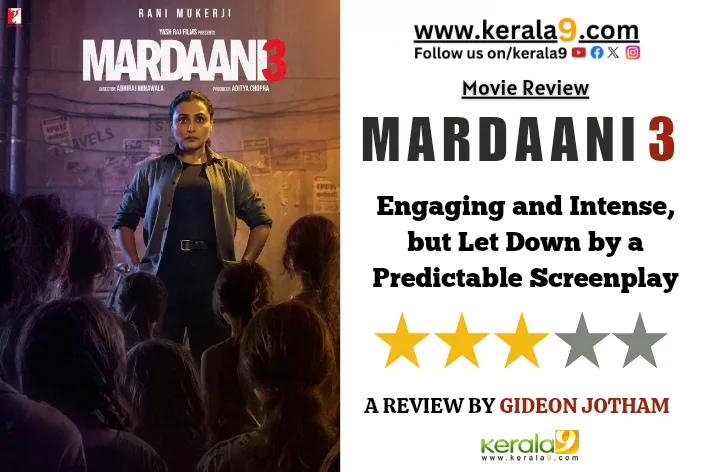
Film: Mardaani 3 Director: Abhiraj Minawala Producer: Aditya Chopra Language: Hindi Genre: Crime Thriller / Social Drama Runtime: 2h 10 minutes
A review by Gideon Jotham
Positives
Story
Emotion
Message
Background score
Intensity
Realistic treatment
Strong theme
Negatives
Slow moments
Predictable scenes
Weak twists
Routine screenplay
Less surprise
Repetitive pattern
Limited high points
Story
Mardaani 3 opens with the abduction of two young girls from a rural village. Believed to be from a poor background, the case is initially treated as another ignored statistic until it is revealed that one of the girls is the daughter of a powerful government official.
Parallelly, the film introduces Shivani Shivaji Roy in a high-risk operation, busting an international drug-trafficking ring involving women and minors. The introduction establishes her not as a heroic figure, but as a cop constantly walking into a filthy society that prefers to ignore.
When the kidnapping case reaches her desk, Shivani begins an investigation that uncovers a disturbing underworld operating under the guise of a beggar network. At the centre of this system is a woman known as Amma, who exploits abducted children, turning suffering into profit.
As the investigation deepens, a horrifying truth emerges the children are not merely being trafficked, but used in illegal medical experiments. The case takes a tragic turn when the influential official’s daughter is found dead, while the other girl survives, revealing that this crime cuts across class, not just poverty.
Before Shivani can fully expose the network, she is unofficially suspended due to political pressure. Refusing to step back, she continues the investigation off the books with a small trusted team.
The final act exposes the true mastermind operating above Amma, someone protected by power, money, and the system itself. In a brutal climax, Shivani dismantles the network, kills Amma, and brings down the man behind it, rescuing the remaining children.
The film closes not with celebration, but with a warning, leaving behind a clear lead for Mardaani 4, suggesting the battle is far from over.
Direction
The direction in Mardaani 3 stays firmly rooted in the cinematic language established in the first two films. The filmmaker once again avoids commercial shortcuts; there are no glam shots, no background-score-driven heroism, and no attempt to convert Shivani Shivaji Roy into a larger-than-life cop.
Much like Mardaani and Mardaani 2, the storytelling relies on realism: quiet tension, uncomfortable silences, and scenes that allow brutality to sink in rather than explode on screen. The camera often lingers instead of cutting away, forcing the audience to sit with the horror instead of escaping it.
The investigative portions are staged with procedural honesty. Interrogations feel restrained, fieldwork feels exhausting, and the emotional weight comes from accumulation rather than dramatic twists. This continuity makes the film feel tonally consistent with the franchise.
However, the familiarity is also the film’s biggest limitation.
After two installments, the directorial approach begins to feel predictable. Certain beats the discovery scene, the moral confrontation, the emotional pause before retaliation unfold exactly as expected. The film rarely takes visual or narrative risks, choosing safety over experimentation.
While this keeps the seriousness intact, it also prevents Mardaani 3 from reaching the raw impact of Mardaani 2. The direction maintains intensity but doesn’t escalate it.
Still, the director deserves credit for not diluting the franchise. Even in its safer moments, the film never loses its moral spine. It remains focused on victims rather than spectacle, a choice that preserves the soul of Mardaani, even if it limits its evolution.
Screenplay
The screenplay of Mardaani 3 remains engaging throughout, largely because the narrative never loses momentum. The investigation moves steadily, scenes transition smoothly, and the emotional stakes keep the audience invested.
However, the major drawback lies in its predictability.
Most narrative turns can be anticipated well before they unfold. The placement of twists follows familiar patterns, making several reveals feel expected rather than shocking. Instead of surprising the audience, the screenplay often confirms what they have already guessed.
The dialogues further contribute to this predictability. Many lines feel easily assumable, with conversations heading toward outcomes that are apparent even before they are spoken. As a result, moments that were meant to land as impactful occasionally lose their intensity.
While the intent behind the writing is strong, the lack of narrative misdirection weakens the tension. The film tells its story clearly, sometimes too clearly, leaving little room for uncertainty or psychological unpredictability.
In a franchise known for disturbing realism, the screenplay plays it safe when it needed to take sharper risks.
Music & Sound Design
The music and background score in Mardaani 3 work effectively in building tension. The score complements the film’s dark tone, especially during investigation sequences, where it subtly heightens unease without overpowering the visuals.
Unlike commercial thrillers, the music is used with restraint, allowing silence and ambient noise to carry emotional weight. This approach suits the grounded nature of the franchise and supports the seriousness of the narrative.
However, the sound design does not always match the strength of the background score.
At several points, the layering of ambient sounds feels inconsistent. Certain scenes that demanded deeper atmospheric immersion, particularly in tense or emotionally heavy moments, lacked the sonic impact needed to fully pull the audience in.
While the score elevates the film, the overall sound design misses opportunities to intensify realism and dread.
Strong music, decent background score, but sound design could have pushed the experience further.
Performance
Rani Mukerji delivers a controlled and restrained performance as Shivani Shivaji Roy. She remains convincing in the role, maintaining the authority and seriousness that the character demands.
However, the performance does not reach the intensity seen in Mardaani 2. While she is effective in emotional and investigative scenes, fewer moments truly stand out or leave a lasting impact.
The portrayal feels familiar, competent, and steady, but lacking the raw edge that once made the character deeply unsettling. Instead of elevating the film, the performance blends into the narrative.
It works for the story, but it doesn’t redefine the character.
Final Verdict
Mardaani 3 stays true to the franchise’s soul. It is serious, socially relevant, and emotionally rooted, refusing to dilute its intent for commercial comfort. The film succeeds in keeping the audience engaged and reminds us once again why the Mardaani series stands apart from typical cop thrillers.
However, the film also plays it safe.
With a predictable screenplay, easily anticipated dialogues, and familiar narrative turns, it lacks the shock value and raw intensity that made Mardaani 2 deeply unsettling. While the direction remains consistent and the background score effective, the film rarely surprises.
Rani Mukerji delivers a steady performance, but not one that elevates the film beyond its limitations. The intent is powerful, but the execution doesn’t fully push boundaries.
Mardaani 3 is a good film, necessary, sincere, and watchable, but it doesn’t redefine the franchise. It reinforces what already exists instead of taking it to the next level.
Bengaluru: CJ Roy (57), the founder and chairman of the prominent real estate firm Confident Group, was found dead at his office in Bengaluru on Friday. Initial reports indicate that he died by suicide after shooting himself.
Details of the Incident: The incident occurred on Friday afternoon at the Confident Group’s headquarters located near Richmond Circle, Bengaluru. According to sources, Roy shot himself using his licensed handgun inside his private cabin.
The incident took place while officials from the Income Tax (IT) Department were conducting extensive searches across his various offices and residences following allegations of tax evasion.
Attempted Rescue: Upon hearing the gunshot, staff members and officials rushed to his cabin and immediately transported him to Narayana Health City. However, doctors declared him brought dead.
About CJ Roy: CJ Roy was a well-known figure in the real estate sector, having established the Confident Group, which has a massive presence in Kerala and Karnataka with numerous luxury apartment and villa projects. Beyond real estate, he was also active in film production and was a prominent figure in the business community.
Police Investigation: The Bengaluru Police have arrived at the scene and initiated an investigation. The body has been shifted for a post-mortem examination. While the exact motive remains under investigation, it is suspected that the pressure from the ongoing raids and financial allegations led to this extreme step.
Disclaimer: Suicide is never a solution. If you or someone you know is struggling with mental health issues or emotional distress, please reach out to professional helplines for support.
On the occasion of his wedding anniversary, veteran lyricist and musician Kaithapram Damodaran Namboothiri has shared a touching note on social media, dedicating his life’s achievements to his wife, Devi.
In a candid post, the Padma Shri awardee opened up about the strength behind his successful journey, stating without hesitation that his wife is the pillar of his personal and professional life.
A Partnership of Success
Kaithapram emphasized that his success story truly began after his marriage. He noted that every milestone he has achieved—spanning his career, art, music, cinema, and awards, including the prestigious Padma Shri—rightfully belongs to Devi as well.
“I can say without a doubt that ours is a successful married life. My success in life began from that day,” Kaithapram wrote.
A Pillar of Strength
The lyricist also touched upon his health struggles, acknowledging his wife’s unwavering support. He revealed that for the past 15 years, it has been Devi’s efforts that have helped him manage his health condition and provided him with the energy to move forward.
He further praised her management of their household, from the education and careers of their children to maintaining the spiritual atmosphere of their home, symbolized by the eternal lamp of Goddess Mookambika.
Bond with the Industry
Kaithapram also highlighted the warm relationship his wife shares with his colleagues in the film industry. He mentioned that close friends like Sreenivasan, Sathyan Anthikad, Murali, Lohithadas, Sibi Malayil, Jayaraj, and Kamal consider Devi as their own sister.
Recalling fond memories, he added, “Dasettan (K.J. Yesudas) has visited our home many times and has happily accepted Devi’s hospitality.”
He concluded the note by dedicating the achievements of this anniversary entirely to his “beloved Devi,” adding that many of his songs became famous through her name.
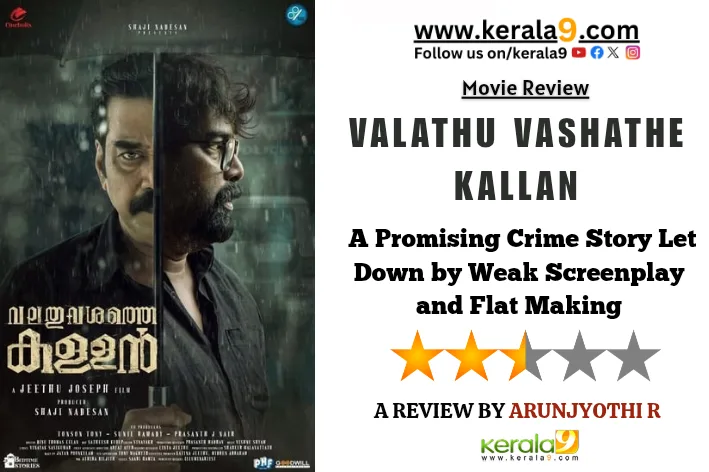
ONE WORD: A Promising Crime Story Let Down by Weak Screenplay and Flat Making
A Review by Arunjyothi R
LANGUAGE: MALAYALAM
DURATION: 138 Minutes
DIRECTOR: Jeethu Joseph
GENRE: Crime Drama Thriller
•POSITIVES:
1: Story
2: Performance of Actors
3: Background Score
4: Second half
•NEGATIVES:
1: Direction
2: Screenplay
3: First half
4: Slow paced
5: Colour grading
6: Editing
STORY:
Valathu Vasathe Kalam starts with a shocking incident—the sudden disappearance of Irene Samuel, a law student and social worker with a strong sense of justice. The case is assigned to CI Antony Xavier, a calm and careful officer known for his sharp approach. As the investigation progresses, hope turns into horror when Irene’s body is found within days, turning a missing-person case into a shocking crime that affects everyone deeply.
The tragedy hits Irene’s father, Samuel, hard. A quiet hacker by nature, he is crushed by the loss and struggles to accept the truth. Unable to wait for answers, he begins his own search for the person behind his daughter’s death, stepping into dangerous situations where right and wrong are unclear. His personal investigation runs alongside the official one, adding more tension to the story.
Just when the investigation seems straightforward, the film takes an unexpected turn. CI Antony Xavier finds himself personally involved, facing a race against time where his duty as an officer clashes with his emotions. With the life of his only family member at stake, the story becomes a tense thriller, where every discovery increases the danger and every choice has serious consequences.
REVIEW & ANALYSIS OF THE FILM:
1: Direction:
Jeethu Joseph is a name that instantly raises expectations, especially when it comes to mystery and crime thrillers. Over the years, he has mastered the art of building tension, planting clever twists, and delivering satisfying payoffs. Naturally, Valathu Vasathe Kalam came with high hopes. The trailer cuts and the casting choices hinted at a solid investigative thriller, promising another engaging ride. Unfortunately, this time, the film doesn’t fully live up to that promise.
The first major drawback lies in the making and direction. While Jeethu Joseph clearly has all the right elements in place for a gripping crime thriller—secrets, twists, time pressure, and moral conflicts—the execution feels surprisingly flat. The film struggles to create an emotional bond with the characters, which is crucial for a story of this nature. As a result, even serious moments fail to leave a strong impact. The first half, in particular, takes too long to set up the main conflict, and this slow build ends up feeling more dragging than intriguing.
Things do pick up in the second half, where the narrative is filled with unexpected developments and a time-bound puzzle that should ideally keep the audience hooked. Twists arrive one after another, and on paper, they sound interesting. However, the tension never really peaks. The film misses that edge-of-the-seat thrill, making several key reveals feel more routine than shocking. Instead of lingering in the mind, the twists pass by with a “that’s okay” reaction.
The emotional core of the film is another missed opportunity. The story demands a strong sentimental connection, especially given its personal stakes, but this aspect is handled in an average manner. The emotions are stated, but not deeply felt, which weakens the overall impact. Even when the film reaches its climax, though the final reveal is decently staged and logically unfolds well, it doesn’t deliver a fully satisfying closure.
2: Script:
Valathu Vasathe Kalam sets itself firmly in the space of a murder mystery crime thriller, and the intention is clear right from the start. The script is shaped with care, giving the investigation a steady flow while introducing personal stakes and moral conflicts. The story begins on an intriguing note and quickly establishes the core mystery, creating curiosity around the crime and the people involved. The incidents are written neatly, and the progression of clues shows clear planning. The time-bound puzzle element adds urgency and fits well within the thriller format, while the ending manages to close the narrative in a fairly satisfying and logical manner.
Despite this strong foundation, the film struggles to maintain suspense at a consistent level. The screenplay does not fully tap into the potential of the story, often slowing down at moments that should have been tense. Several scenes feel stretched, causing a lag that weakens the overall grip of the narrative. Emotional depth, which is crucial in a murder mystery driven by personal loss, remains underdeveloped. As a result, the audience observes the events from a distance rather than feeling pulled into the danger and urgency of the investigation.
The film clearly aims for a cat-and-mouse style thriller, filled with twists, turns, and layered revelations. The second half, in particular, is packed with events and unexpected developments, but the constant flow of information sometimes feels overwhelming rather than thrilling. Predictable stretches also reduce the impact of key moments. While the suspense is present in theory, the execution fails to create that edge-of-the-seat tension that defines a truly gripping crime thriller. The reveal scenes, instead of delivering a rush of excitement, feel restrained and pass without leaving a lasting impression.
Dialogues are mostly simple and grounded, keeping the film away from unnecessary melodrama. They work fine within the investigative portions, but it is in the emotional scenes that the writing truly shines. Conversations involving the father stand out, effectively expressing love, care, and emotional pain, and briefly adding the depth the film otherwise misses. In the end, Valathu Vasathe Kalam remains a decent murder mystery with suspenseful intentions, but the lack of strong emotional engagement and a tighter screenplay prevents it from becoming the impactful thriller it set out to be.
OTHER NEGATIVES FELT:
One of the biggest issues with Valathu Vasathe Kalam is its uneven pacing, which significantly affects the overall viewing experience. The first half is notably slow and takes an extended amount of time to establish the main conflict, making the narrative feel stuck in a loop. Instead of gradually building suspense, the film spends too much time on surface-level detailing, causing several scenes to drag without adding emotional or narrative depth. This slow pacing results in a lag that often turns into boredom, as the audience is not given enough emotional hooks to stay invested. The lack of strong emotional connection between the characters further weakens these portions—relationships are introduced, but not explored deeply enough for the audience to feel their weight. As a result, the tension that should naturally arise from a murder investigation fails to take hold in the early stages.
Several scenes feel unnecessarily stretched, often repeating information rather than sharpening the suspense or revealing new layers to the characters. This repetition creates a sense of stagnation, where the story moves forward in theory but not in impact. Even when the film transitions into the second half—where the pace should ideally tighten and the urgency of the investigation should intensify—certain portions continue to unfold slowly. The emotional depth still feels limited, and the characters’ inner conflicts are not explored enough to raise the stakes. This dilutes the urgency of the investigation and breaks the rhythm expected from a crime thriller, making the film feel longer than it actually is.
The editing plays a key role in this sluggish feel. The first half, in particular, clearly needed sharper cuts to keep the narrative crisp and engaging. While the scene-to-scene transitions are handled neatly and do not feel abrupt, the overall trimming is inadequate, allowing the film to linger too long on moments that do not add much value. The colour grading further adds to the film’s drawbacks. The visual tone feels inconsistent, with dark and inaccurate colour mixing that fails to enhance the mood. Instead of supporting the suspenseful atmosphere, the dull palette makes several scenes look flat and visually tiring. Together, the slow pace, stretched editing, and off-balance colour grading weaken the impact of the film and prevent it from fully functioning as an effective crime thriller.
PERFORMANCE OF ACTORS:
Biju Menon, as CI Antony Xavier, is undoubtedly the backbone of Valathu Vasathe Kalam. He carries the film with ease, and his strong screen presence often becomes the film’s biggest strength. His sharp dialogue delivery adds weight to the investigative portions, while his controlled body language suits the role of a seasoned officer. The tension, urgency, and eagerness to crack the case are well reflected in his performance. Equally impressive is his emotional acting, especially in scenes involving family, where the father–son dynamic is portrayed with warmth and restraint. Even when the narrative slows down, Biju Menon’s performance keeps the film watchable.
Joju George delivers a powerful performance, dominating the screen whenever he appears. His character adds a fresh layer of suspense to the narrative, and he plays it with the right balance of intensity and mystery. The father–daughter bond is portrayed convincingly, making his emotional breakdowns feel raw and genuine. Joju handles the darker shades of his character with confidence, maintaining a brooding tone throughout the film. The way he performs the morally complex portions and emotional scenes makes his character engaging to watch and adds depth to the overall investigation.
Lena, as Theresa Samuel, has limited screen time but makes
a strong impact, especially in the second half. Her phone conversation scene with Biju Menon stands out as one of the more thrilling moments in the film. As a grieving mother, she brings in genuine emotion, particularly in the scene where she comes face to face with her daughter’s death. Her chemistry with Joju George works well, lending credibility to the family dynamic. Lena handles her role with maturity and ensures that her character leaves a mark despite the constraints.
The supporting cast does complete justice to their roles. Leona Lishoy as ASI Vidhya Shekar brings sincerity and confidence to her character, sharing good screen space with Biju Menon and fitting well into the investigation setup. Irshad, as HC Johny Vincent, is effective and dependable, while Vyshnavi Raj as Irene Samuel and K. R. Gokul as Phillip Antony serve their parts convincingly. The teamwork among the investigation officers feels natural, and the interactions add realism to the procedural portions. Overall, the performances stand strong and remain one of the more consistent aspects of the film.
CONCLUSION:
Overall, Valathu Vasathe Kalam feels like a rare misstep in Jeethu Joseph’s otherwise impressive journey as a maker of mystery and crime thrillers. Known for his tight writing and gripping suspense, this time things didn’t quite fall into place for him. Despite having a strong premise and all the required elements for a compelling murder mystery, the film struggles with engagement, emotional depth, and sustained tension. The average screenplay and uneven pacing hold the film back, even though the performances—especially by Biju Menon and Joju George—do their best to lift the material.
I would recommend Valathu Vasathe Kalam mainly for fans of Jeethu Joseph and viewers who enjoy slow-burn investigative thrillers driven by performances rather than thrills. It may not deliver the signature edge-of-the-seat experience expected from the director, but it still offers a few solid moments and a decently executed climax. This time, Jeethu Joseph doesn’t fully hit the mark, making the film a one-time watch rather than a memorable addition to the genre.
THIRUVANANTHAPURAM: The cricketing fever has hit the capital city of Kerala as the Indian and New Zealand cricket teams arrived in Thiruvananthapuram on Thursday for the final showdown of their T20 International series.
The teams touched down via a special chartered flight ahead of the 5th T20I, scheduled to take place this Saturday at 7:00 PM at the Greenfield International Stadium, Karyavattom.
The ‘Sanju’ Mania
A massive crowd of cricket enthusiasts gathered outside the Trivandrum International Airport, chanting the name of their local hero, Sanju Samson. The Kerala Cricket Association (KCA) officials, led by Treasurer T. Ajith Kumar, accorded a grand traditional welcome to the players.
For Sanju Samson, this match is more than just a homecoming; it is a critical test. The wicketkeeper-batter has struggled in the ongoing series, managing only 40 runs across the first four matches. With the T20 World Cup just around the corner, this match on his home turf is widely seen as a final opportunity to cement his place in the squad.
World Cup ‘Dress Rehearsal’
While India has already clinched the series with a dominant 3-1 lead, the stakes remain high. This match serves as the final “dress rehearsal” for the Men in Blue before the marquee T20 World Cup begins next month. Both teams are expected to field strong XIs to fine-tune their strategies.
High Security and Luxury Stays
In light of the high-profile visit, the city has been placed under a thick security blanket.
Team India is staying at the luxurious Leela Raviz in Kovalam.
Team New Zealand is hosted at the Hyatt Regency in the city center.
Strict traffic regulations and parking arrangements have been put in place around the Karyavattom area to manage the expected full-house crowd.
Fan Expectations
Despite the series outcome being decided, ticket sales suggest a packed stadium. The primary attraction remains Sanju Samson. Fans are hopeful that the familiar conditions of the Greenfield Stadium will help the dashing batter regain his explosive form and end the series on a high note.