
Home Blog Page 46

Ashakal Aayiram Review: An Emotion-Driven Family Drama Elevated by Strong Performances and Narrative Treatment

0

Ashakal Aayiram: 

ONE WORD: An Emotion-Driven Family Drama Elevated by Strong Performances and Narrative Treatment

A Review by Arunjyothi R 

LANGUAGE: MALAYALAM 

DURATION: 02 Hours 12 Minutes 

GENRE: Family Drama 

•POSITIVES:

1: Direction 

2: Performance of Jayaram and Kalidas Jayaram 

3: Screenplay 

4: Good Situational Humours

5: Well established emotional arch 

6: Background Score 

7: Climax  

8: Cinematography 

•NEGATIVES:

1: Predictability 

2: Familiar story backdrop  

3: Duration of the film 

4: Slight drag at some points 

STORY

Ashakal Aayiram revolves around dreams that arrive late—and the conflicts they create. Ajeesh (Kalidas Jayaram) is a young man passionately chasing his ambition of becoming a film actor. His father Hariharan (Jayaram), a medical representative, leads a routine middle-class life, struggling to meet daily expenses while silently carrying the weight of unfulfilled aspirations. Their relationship is calm but distant, shaped by unspoken expectations and financial realities.

Life takes an unexpected turn when a film shoot happens near their house, drawing huge crowds for the arrival of popular star Sumith Raghavan. Due to a sudden situation, Hariharan and his neighbour are selected as junior artists. On set, Sumith struggles to act comfortably in front of the public, leading to repeated takes. During one such moment, a casual joke from the neighbour makes Hariharan laugh, which catches Sumith’s attention and hurts his ego. An argument breaks out publicly, and in a moment of arrogance, Sumith challenges Hariharan to perform the scene in a single take if he truly believes acting is easy.

To ease the tension and prevent further disruption, the film crew persuades Hariharan to accept the challenge. What follows is a surprising turn of events—Hariharan delivers a powerful and natural performance that stuns the director, crew, and gathered crowd. The moment goes viral on social media, and to calm the situation and dilute the controversy around the star, the crew offers Hariharan a proper role in the film. His performance is widely appreciated, receiving strong applause in theatres and earning him unexpected popularity.

Encouraged by the response, Hariharan decides to pursue acting seriously and quits his job, stepping into a world he had never imagined for himself. However, this sudden rise creates emotional distance at home. Ajeesh, who has been struggling for opportunities, finds himself overshadowed by his own father’s success. What began as a moment of pride slowly turns into insecurity and resentment, leading to clashes between the two.

REVIEW & ANALYSIS OF THE FILM

POSITIVES

1: Direction

G Prajith, who earlier delivered the popular Oru Vadakan Selfie, handles Ashakal Aayiram with clarity and emotional control. His primary intention—to present a full-fledged family drama rooted in emotions and a strong father–son bond—is clearly visible throughout the film. He focuses more on feelings than gimmicks, allowing the story to flow naturally. The emotional arcs are carefully shaped, and the drama never feels exaggerated or artificial, which works strongly in the film’s favour.

The making style suits the genre well. Prajith understands how to build emotions gradually—introducing conflicts softly, allowing them to grow, and finally letting them explode at the right moments. Sentimental scenes are handled with restraint, avoiding melodrama, while still ensuring they connect with the audience. He balances emotional depth with engagement, making sure the film never feels dull despite its familiar setting. The pacing of emotional beats, silences, and reactions is thoughtfully designed.

One of the director’s biggest strengths is how he uses Jayaram and Kalidas Jayaram together. Their chemistry feels organic and lived-in. Prajith smartly places their confrontations, fun moments, and emotional exchanges to strengthen the screenplay. The climax, in particular, carries a strong emotional impact because of how well he stages the performances. Even lighter moments between the father and son are placed effectively to lift the narrative. The film has many occurrences and plot points, yet almost everything feels connected, leading to a satisfying and emotionally fulfilling ending.

2. Performance of Jayaram and Kalidas Jayaram

Jayaram delivers a deeply moving and restrained performance as Hariharan, portraying the emotional journey of an ordinary man discovering an unexpected second chance at his dreams. His acting is rooted in subtle expressions rather than loud dramatics, making the character feel realistic and relatable. From moments of quiet frustration and self-doubt to scenes of pride and emotional fulfilment, Jayaram maintains complete control over his performance. His dialogue delivery is precise, his emotional modulation is impressive, and his screen presence carries immense weight, especially during emotionally charged sequences.

Kalidas Jayaram complements his father with a mature and emotionally layered performance as Ajeesh. He convincingly portrays the internal conflict of a son who admires his father yet struggles with insecurity as his own dreams begin to fade. Kalidas excels in expressing anger, disappointment, and helplessness through silence and body language. His emotional scenes never feel forced, and his reactions feel honest, particularly during confrontations and breakdown moments. The vulnerability he brings to the character makes Ajeesh’s journey emotionally engaging.

The chemistry between Jayaram and Kalidas is the backbone of the film. Their father–son bond feels natural and lived-in, enhancing both the emotional and lighter moments. Their fun, situational exchanges add warmth, while their intense confrontations carry raw emotional power. Both actors deliver standout performances in the climax, where emotions peak and performances reach their strongest point. Together, they elevate the emotional impact of the film, making their relationship the most memorable aspect of Ashakal Aayiram.

3: SCREENPLAY

The screenplay stands out with its well-written emotional structure. The father–son bond is established effectively from the beginning, giving the audience enough time to understand their relationship, expectations, and silent conflicts. The emotional arc grows naturally, making the audience invest in both characters. The script is filled with ongoing situations, and most of them are well connected, leading smoothly into the next occurrence. Nothing feels forced or randomly inserted. Each scene contributes to character development or emotional progression. From the first half to the climax, the narrative remains engaging, with the emotional payoff arriving at the right time.

The emotions carry the film strongly. Dialogues are simple yet powerful, especially in father–son scenes, with several moments that genuinely move the audience—particularly during the climax. Situational comedy works well in the first half and feels organic rather than deliberately inserted. The cute and light moments between the father and son are nicely written, adding warmth to the narrative.

Scenes showcasing determination, passion, failure, and giving up are handled maturely, pushing the story forward naturally. The surprises in Jayaram’s character during the climax are presented convincingly without feeling unnatural. The screenplay also beautifully captures a father’s love, fear, hope, and emotional struggle, which becomes one of the film’s major strengths. Even the antagonist character is written effectively, serving the story without overpowering it.

4: Good Situational Humour & Well-Established Emotional Arc

The situational humour works well and blends naturally with the narrative. Instead of forced jokes, the film relies on character-driven humour and everyday situations, especially involving the father–son dynamic. These moments bring relief, add charm, and make the characters more relatable without disturbing the emotional flow. The emotional journey of the film is carefully constructed. The gradual shift from a routine middle-class life to emotional conflict and reconciliation feels smooth and believable. The emotions are layered, allowing the audience to connect deeply with both characters. The film maintains emotional consistency throughout, ensuring that conflicts don’t feel sudden or shallow. Each emotional moment builds upon the previous one, making the climax emotionally rewarding and impactful.

5: CLIMAX 

The climax is beautifully crafted and stands as one of the film’s strongest highlights. The emotional focus remains firmly on the father–son relationship, and the scenes are staged with sensitivity and restraint. Jayaram and Kalidas Jayaram deliver powerful performances, allowing emotions to flow naturally without excessive dialogues or dramatic exaggeration. The emotional tension that has been building throughout the film finds a meaningful release here, making the payoff satisfying and heartfelt. Kalidas shines with an intense and emotionally charged performance in the final stretch, capturing vulnerability, pain, and emotional maturity with remarkable control. Jayaram complements this with a restrained yet deeply affecting portrayal, making their combination work exceptionally well. The surprise appearance of Asha Sarath adds an additional emotional layer, strengthening the impact of the final moments. The climax carries genuine emotional weight, bringing tears to many and leaving the audience with a sense of closure, warmth, and emotional fulfilment.

6: CINEMATOGRAPHY, EDITING & BACKGROUND SCORE:  

The cinematography is simple but effective, serving the story well. Close-up shots add emotional depth and highlight the acting strengths of Jayaram and Kalidas. Visuals never distract from the narrative and remain grounded throughout. Editing is decent, with smooth transitions between scenes, though the runtime could have been slightly trimmed for better impact. The background score plays a crucial role in lifting the emotional scenes. The use of music enhances key moments without overpowering them. The placement of a song from Jayaram’s old hit films is particularly effective, creating a nostalgic, emotional, and joyful moment inside the theatre. The climax is beautifully elevated by the background score, making the scenes more touching and memorable.

 NEGATIVES FELT

1. Predictability

One of the noticeable drawbacks of Ashakal Aayiram is its predictable narrative structure. Many major plot developments, especially concerning the rise of Hariharan and the emotional conflict between father and son, can be anticipated well in advance. For viewers familiar with family dramas, the trajectory of the story rarely offers surprises. While the emotional execution remains effective, the lack of narrative unpredictability slightly reduces the overall impact and suspense.

2. Familiar Story Backdrop

The film unfolds within a familiar and often-explored backdrop of middle-class family struggles, generational conflict, and unfulfilled dreams. Several scenes and emotional beats follow patterns commonly seen in similar genre films. This sense of déjà vu makes certain moments feel routine rather than fresh. Although strong performances elevate the material, the familiar setting and storytelling approach prevent the film from standing out as a truly unique experience.

3. Duration of the Film

The runtime feels a bit stretched, particularly in the middle portions. Some scenes tend to linger longer than necessary, slightly affecting the pacing. A tighter edit could have sharpened the narrative and made the emotional beats land more effectively. Trimming repetitive emotional exchanges and a few transitional sequences would have resulted in a more compact and impactful viewing experience.

4. Slight Drag at Some Points

There is a noticeable drag in a few portions of the film, especially in the first half and select scenes in the second half. Certain sequences feel prolonged without adding much to character development or story progression. These moments slow down the narrative flow and briefly test the audience’s patience. While the film regains momentum later, a more controlled pacing could have improved the overall engagement.

CONCLUSION:

Ashakal Aayiram is an emotionally driven family drama that finds its strength in sincere storytelling and powerful performances. G Prajith’s direction keeps the focus firmly on emotions, allowing the father–son relationship to evolve naturally. Jayaram and Kalidas Jayaram deliver deeply convincing performances, and their chemistry gives the film its emotional backbone. The screenplay, supported by an effective background score, ensures steady engagement, leading the narrative toward a well-earned emotional high point.

The climax stands out as the film’s most impactful segment, bringing together performance, emotion, and music seamlessly. The father–son moments in the final stretch are handled with sensitivity and emotional weight, leaving a strong impression and providing a satisfying sense of closure. Despite a predictable storyline, familiar setting, and a slightly stretched runtime, the film succeeds in touching the heart. Ashakal Aayiram may not break new ground, but it offers a warm, emotional, and memorable experience, especially for viewers who appreciate heartfelt family dramas with a strong and emotionally rewarding climax.

RATING: 3.5/5

A Review by Arunjyothi. R

India Crushes England to Lift 6th ICC U19 World Cup Title

0

In a historic showdown in Harare, Team India clinched their sixth ICC U19 World Cup title, defeating England by a massive 100-run margin. The final was defined by a record-breaking performance from 14-year-old prodigy Vaibhav Suryavanshi.

Match Highlights:

  • A Mountain of Runs: After winning the toss and choosing to bat, India posted a colossal total of 411/9 in 50 overs, setting the record for the highest team total in an U19 World Cup Final.
  • Suryavanshi’s Masterclass: Opener Vaibhav Suryavanshi played a knock for the ages, smashing 175 runs off just 80 balls. His innings, which included 15 fours and 15 sixes, is now the highest individual score in the tournament’s final history. He reached his century in just 55 balls.
  • Solid Support: Captain Ayush Mhatre (53), Abhigyan Kundu (40), and a quick-fire unbeaten 37 from Kanishk Chauhan helped propel India to their record score.
  • England’s Chase: Chasing a daunting 412, England fought bravely but were bowled out for 311 in 40.2 overs. Caleb Falconer stood tall with a brilliant century (115), but the target proved too steep.
  • The Bowling Attack: R.S. Ambarish led the Indian attack with 3 wickets, while Deepesh Devendran, Ayush Mhatre, and Kanishk Chauhan claimed 2 wickets each to seal the victory.

Vaibhav Suryavanshi was named both Man of the Match and Player of the Tournament for his sensational run. This victory cements India’s dominance in youth cricket, extending their record to six World Cup triumphs.

Malayalam Actor Maniyanpilla Raju Arrested and Granted Bail in Hit-and-Run Case

0

Thiruvananthapuram: Noted Malayalam actor and producer Maniyanpilla Raju was arrested by the Museum Police on Friday in connection with a hit-and-run accident that left two youngsters injured. The actor was later released on bail after completing the necessary legal formalities.

The Incident The accident occurred late Thursday night, around 10:00 PM, in front of the Trivandrum Club. According to police reports, a car (Registration No. KL 01 CJ 04) driven by the actor collided with a motorcycle carrying two youths. Instead of stopping to help the victims, the vehicle reportedly sped away from the scene.

The injured individuals, identified as Nivedith Krishna and Sooraj, were rushed to private hospitals. Nivedith suffered leg fractures, while Sooraj sustained injuries to his spine.

Police Investigation The Museum Police initiated an investigation after tracking the vehicle’s registration details, which were listed under the name Sudheer Kumar Raju (the actor’s official name). Although the actor’s name was not initially mentioned in the FIR, the police confirmed his involvement after he surrendered at the station on Friday morning. He was charged with dangerous driving and causing hurt by an act endangering life.

Actor’s Response Speaking to the media after his arrest, Maniyanpilla Raju admitted to the lapse but clarified the circumstances. “It is true that I didn’t stop, and that was a mistake. The bike actually hit the back of my car. Being a cancer patient, I panicked when I heard the loud noise and immediately left the spot. However, I did call a friend shortly after to inform them about the incident,” the actor stated.

After his statement was recorded and a medical examination was conducted, the actor was granted bail as the offences were bailable.

A Promise Kept: Avinissery Khadi Unit Repays ₹40 Lakh Loan Provided by Suresh Gopi

0

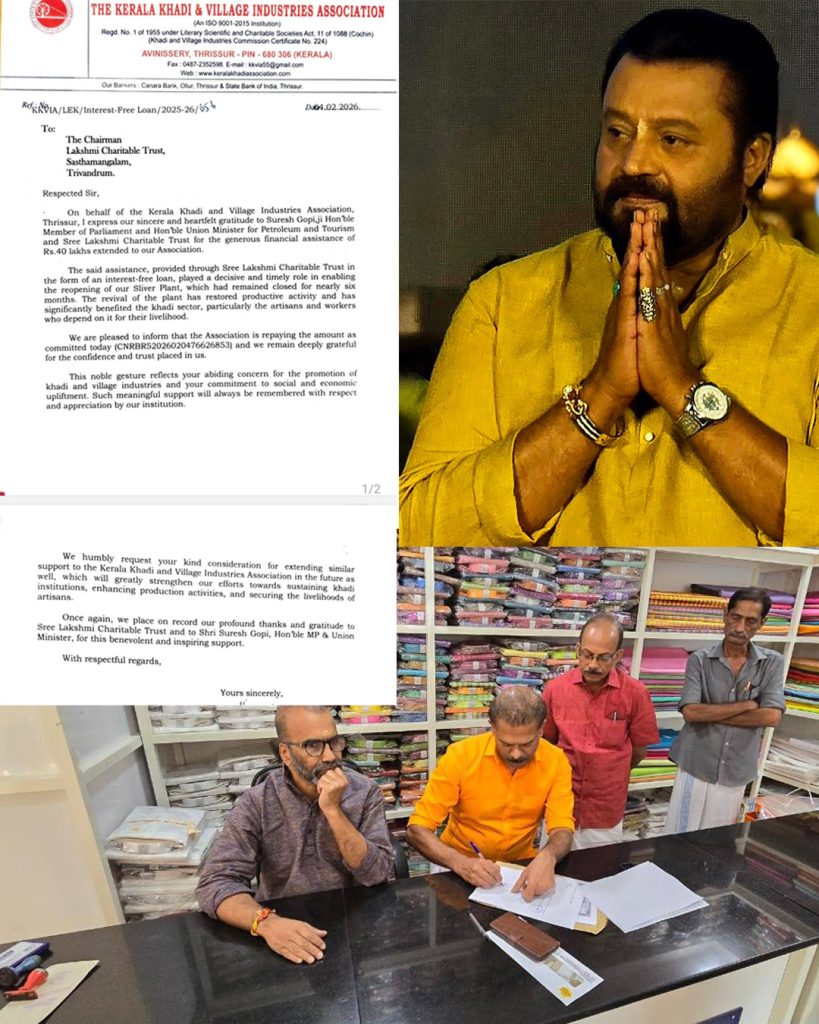
In a remarkable example of resilience and integrity, the Avinissery Khadi Village Industries Association has fully repaid a ₹40 lakh interest-free loan provided by actor and Union Minister Suresh Gopi. The fund, which was sanctioned a year ago through a charitable trust named after his late daughter, was instrumental in reviving the unit’s ‘Sliver Plant’ that had been shut down for over six months.

Suresh Gopi took to social media to express his deep satisfaction and pride regarding the development. He noted that the survival of over 1,800 workers was his primary concern when he stepped in to help.

“The satisfaction some moments bring to the heart is beyond words,” the actor shared. “Exactly a year ago, I provided a ₹40 lakh interest-free loan to reopen the Sliver Plant at the Avinissery Khadi unit. My only prayer then was that the livelihood of more than 1,800 workers should not be cut off.”

A Triumph of Hard Work

The actor emphasized that this was more than just a financial transaction. He credited the administrative committee’s vision and the relentless hard work of the employees for the successful turnaround of the institution.

“I bow my head before the determination of those workers who shed their sweat to bring back a collapsing institution,” Suresh Gopi added, congratulating the staff and administration for their sincerity and for honoring their word by repaying the amount on time.

The revival of the Avinissery Khadi unit is seen as a significant boost to the local traditional industrial sector, proving that timely intervention and collective effort can breathe life back into struggling enterprises.

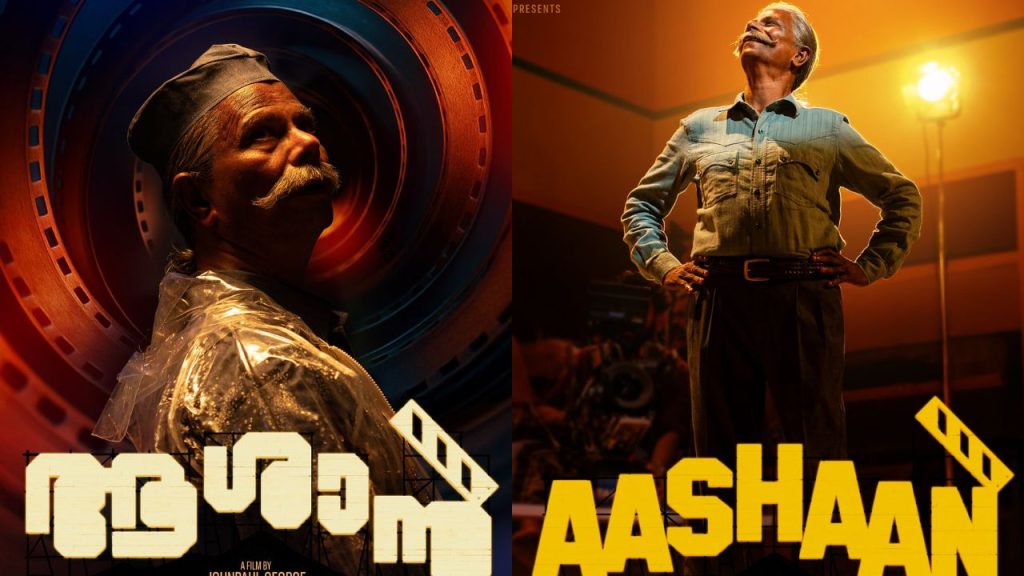
Aashaan Malayalam Movie Review | Indrans, Joemon Jyothir | Rating & Verdict

0

AASHAAN A Review by Arunjyothi R 

ONE WORD: An Honest Attempt That Gradually Loses Its Way in Writing and Pacing

LANGUAGE: MALAYALAM 

DURATION: 02 Hours 40 Minutes 

DIRECTOR: Johnpaul George    

GENRE: Comedy Drama   

•POSITIVES:

1Production Quality 

2Performance of Indrans

3: Performance of every actors 

4Music and Background Score 

5: Art Department 

7: VFX 

8Situational Comedies 

•NEGATIVES:

1Direction  

2Story and Screenplay  

3: Melodramatic Second Half 

4: Emotional arch lacks depth 

5: Slow paced 

6: Editing 

7: Movie lags at many areas 

STORY

Anand is a true cinema lover who dreams of directing a feature film one day. He is also good at VFX, but his only chance to enter the film industry comes when he starts assisting popular director KRS. Once known for back-to-back hits, KRS is now struggling after many flops. Hoping to make a strong comeback, he takes a big risk by selling his own property to produce a new film. The story needs a special location, a flat with a circular design. The crew searches everywhere but fails to find one. Anand then suggests a flat where his friend lives, solving a major problem for the team. Because of this, Anand officially joins the project as an assistant director. But the flat is under the control of Aashan, a well-known and friendly person in the community, who also dreams of working in cinema. Through his friend, Anand meets Aashan and requests help. Aashan agrees to give the flat for shooting, but only on one condition, he wants a role in the film. Without informing the director, Anand agrees. Soon, Anand and Aashan become close friends, connected by their love for movies and shared dreams. When the shooting begins, things slowly start to fall apart. Problems increase, pressure builds, and the reality of the film industry hits hard. Anand and Aashan face many struggles as they try to hold on to their dreams, learning that cinema is not just about passion, but also about sacrifice and survival.

REVIEW & ANALYSIS OF THE FILM Aashaan: 

POSITIVES

1. Production Quality

Aashaan maintains a commendable level of production quality throughout its runtime. Even though the film is made within a limited budget, the makers ensure that it never looks compromised. The visual clarity, lighting choices, and overall presentation feel controlled and well-planned. Every technical department works within its limits, giving the film a clean and polished finish that supports the realistic tone.

As both director and producer, John Paul George shows clear responsibility in handling the film’s production values. The film avoids unnecessary extravagance and instead focuses on consistency and quality. This approach helps the audience stay engaged and gives the film a professional look, especially important for a story set within the filmmaking world.

2. Performance of Indrans

Indrans delivers one of the most emotionally effective performances in Aashaan. His acting is subtle yet powerful, relying heavily on facial expressions, body language, and silence rather than loud dialogue. In the emotional scenes, he conveys pain, disappointment, and helplessness with remarkable ease. A slight change in his eyes or posture is enough to communicate what the character is going through, making these moments deeply believable. These scenes stand out because of how naturally Indrans internalizes emotion instead of projecting it.

One of the film’s most memorable aspects is the Kathakali-related portions, where Indrans brings grace and dignity to the performance. His involvement in these scenes feels authentic and respectful, adding cultural depth to the character. The humour scenes involving Indrans also work well, as his timing is effortless and never forced. Even in lighter moments, he maintains realism and avoids caricature. The humiliation scene, in particular, is handled brilliantly—Indrans portrays shame, confusion, and quiet anger with great restraint. Without overdoing the emotion, he makes the audience feel the weight of the moment. This scene alone shows his mastery as an actor and becomes one of the film’s strongest highlights.

3. Performances of Joemon Jyothir and Supporting Actors

Joemon Jyothir delivers a refreshing and convincing performance, proving that he is capable of much more than just humour roles. While he is already known for his comic timing, Aashaan gives him the space to explore emotional depth, and he uses it effectively. His expressions feel natural and unforced, especially in scenes that demand vulnerability and inner conflict. He handles emotional moments with restraint, avoiding exaggeration, which suits the realistic tone of the film. His dialogue delivery is another strong point. Joemon maintains clarity and emotional balance, making even simple lines feel meaningful. The character represents the dreams and struggles of a young filmmaker trying to find his place in the industry, and Joemon portrays this journey with honesty. The frustration, hope, desperation, and silent determination are clearly visible in his performance. More importantly, his acting adds strength to the film whenever the narrative slows down. Through his sincere performance, Joemon Jyothir becomes a key emotional support for the film, making the character relatable and believable despite the screenplay’s limitations.

The supporting cast and lead actors deliver uniformly good performances. No character feels out of place, and the acting remains realistic and controlled throughout. The actors clearly understand the film’s tone and avoid overacting, which helps maintain the film’s grounded nature. What stands out is how the performances help the film survive its weaker writing. Even during slow or melodramatic scenes, the actors manage to hold the viewer’s attention. Their sincerity and commitment add value to the narrative and prevent the film from completely losing its emotional grip.

4. Music and Background Score

The music of Aashaan, composed by John Paul George, carries a familiar emotional texture of the song in Guppy and Ambili. While it may remind audiences of his earlier works, the songs fit well within the film’s mood. They are soft, pleasant, and easy on the ears, adding emotional support rather than dominating the narrative. The background score is used carefully and effectively. It enhances key moments without becoming overpowering or distracting. This restrained use of music aligns well with the film’s realistic approach and helps maintain emotional continuity across scenes.

5. Art Department

The art department plays an important role in shaping the film’s setting. The circular flat and shooting environments are designed with attention to detail, making them feel natural and functional rather than artificial. These spaces add credibility to the film’s behind-the-scenes filmmaking theme.

The interiors and props reflect realism and support the characters’ world. The art direction quietly strengthens the storytelling by creating believable spaces where the drama unfolds. This subtle but effective work adds depth to the film’s visual experience.

6. VFX

Considering the film’s limited budget, the VFX work is impressive and well-executed. The effects are clean, stable, and properly blended into the scenes without drawing unnecessary attention. The makers focus on quality rather than quantity, which works in the film’s favour.

The climax sequences, in particular, showcase well-handled VFX that add visual impact. The technical team clearly understands their limitations and delivers effects that look convincing. This smart and controlled approach enhances the overall production value of the film.

7. Situational Comedy

The situational comedy in Aashaan, especially in the first half, adds a light and refreshing touch. The humour is subtle and situational rather than loud or forced. These moments bring small smiles and help ease the seriousness of the film’s theme. Though the comedy is not meant to create continuous laughter, it works well within the narrative. It helps establish characters and situations naturally, making the early portions engaging and watchable. This gentle humour plays a key role in making the first half enjoyable.

 NEGATIVES FELT: 

 1. Direction

John Paul George returns with Aashaan after Guppy and Ambili, choosing a subject that revolves around film shooting and the filmmaking process. While this idea is interesting on paper, it automatically limits the film’s reach. Audiences who are familiar with cinema, shooting locations, and the behind-the-scenes world may find the concept engaging. However, for general viewers, the incidents and situations may feel less relatable and emotionally distant. The major issue with the direction is not the making style but the narrative grip. John Paul George’s realistic approach works initially, but the film moves on a flat emotional graph. 

The story neither rises to impactful highs nor falls into gripping conflicts. This steady, almost stagnant flow reduces audience involvement. The director’s choice to stay away from commercial elements further weakens the film’s ability to hold attention for its full runtime. In the second half, the direction slips into melodrama at several points. These moments feel forced and repetitive, affecting the viewing experience. The promising beginning slowly fades due to predictability and lack of emotional depth. Though the director tries to portray struggle and pain, the emotional connection fails to fully translate on screen. The lack of strong scene connectivity also affects the flow, as events occur one after another without leaving a lasting impact.

2. Story and Screenplay

The story of Aashaan has the basic elements needed for a good emotional drama. Dreams, struggles, ambition, and cinema itself form a strong foundation. However, the execution of these ideas remains strictly average. The writing does not explore these themes deeply, resulting in a surface-level emotional experience. The film had the potential to be a moving feel-good drama, but the script fails to extract that emotional strength.

Predictability is a major issue throughout the film. From beginning to end, most events can be easily guessed. Predictability alone is not a problem, but here it becomes an issue because the screenplay lacks engaging moments to compensate for it. There are very few scenes that surprise or emotionally move the audience, making the narrative feel monotonous.

The screenplay is one of the weakest aspects of the film. Anand and Aashaan are the central characters, and the story focuses on their dreams and struggles. However, the emotional depth of these characters is not fully developed. Scenes are written in a way that maintains the same emotional tone throughout, without building tension or attachment. Even the climax, which should have created a strong impact, feels underwhelming. Apart from the VFX, the emotional payoff remains minimal.

3. Melodramatic Second Half

The second half of Aashaan heavily depends on melodrama, which becomes one of the film’s biggest drawbacks. Emotional moments are repeatedly stretched, making several scenes feel forced rather than organic. Instead of allowing emotions to flow naturally, the film often pushes them too hard, reducing their impact. What could have been subtle and powerful ends up feeling predictable and emotionally exhausting.

This melodramatic approach also affects the film’s realism. Since the first half maintains a grounded tone, the sudden emotional heaviness in the later portions feels inconsistent. These repeated emotional beats slow down the narrative and weaken audience engagement. If handled with more restraint, the second half could have felt far more effective and believable.

4. Emotional Arc Lacks Depth

The film focuses on dreams, ambition, and struggle, but the emotional journey of the characters lacks sufficient depth. While the audience understands what Anand and Aashaan want, the film fails to make us strongly feel their inner conflicts. Their pain, frustration, and desperation are shown on screen, but they rarely translate into a deep emotional connection.

The emotional progression of the characters remains mostly flat throughout the film. There are no strong emotional peaks or turning points that leave a lasting impact. Because of this, even important moments fail to resonate deeply. Stronger emotional writing and more layered character development could have significantly improved the film’s emotional strength.

5. Slow Pace

Pacing is a major issue, especially in the second half of the film. Many scenes take longer than necessary to reach their point, resulting in a sluggish narrative flow. The lack of urgency in the storytelling makes the film feel longer than its actual runtime, testing the patience of the audience.

This slow pace could have worked if the scenes offered strong emotional or narrative payoffs, but that rarely happens. Instead, the film spends too much time establishing events without pushing the story forward. A tighter screenplay and more focused scene execution would have greatly enhanced the film’s rhythm.

6. Lag in Many Portions

The combined effect of slow pacing, melodrama, and average screenplay results in noticeable lag at several points in the film. Certain scenes feel repetitive and unnecessary, adding little value to the overall narrative. These lags disrupt the flow and reduce viewer engagement. The lag becomes more evident in the second half, where scenes could have been trimmed or edited more sharply. With better editing choices and tighter storytelling, the film could have maintained a more engaging tempo. Unfortunately, these frequent lags weaken the overall impact of Aashaan and hold it back from reaching its full potential.

7.  Editing

Editing is one of the areas where Aashaan clearly needed more refinement. Several scenes run longer than necessary, even when they do not add much emotional or narrative value. A tighter edit could have improved the film’s pacing and helped maintain audience interest, especially in the second half. Transitions between scenes felt okay, mismatched feel was not felt but the film required a sharper and more decisive editing approach. Many moments that repeat the same emotional beat could have been trimmed or merged. Instead of building momentum, the editing often allows scenes to linger, which weakens their impact. A more aggressive edit would not only have reduced the runtime but also strengthened the emotional weight of key scenes by keeping the storytelling focused and crisp.

8. Lag in Many Portions

Lag is a recurring issue throughout the film, becoming more noticeable as the story progresses. This lag is mainly caused by slow pacing, stretched scenes, and repetitive emotional moments. Several sequences feel like they exist only to fill time rather than move the story forward. As a result, the audience may feel disengaged during these portions.

The lag is particularly evident in the second half, where the film struggles to maintain narrative energy. Scenes that could have been resolved quickly are prolonged, reducing the overall impact of important events. With better editing and tighter screenplay execution, these lags could have been easily avoided. Unfortunately, these prolonged moments weaken the film’s grip and affect the overall viewing experience.

CONCLUSION:

Aashaan is a film driven more by intent than impact. It carries a genuine affection for cinema and the filmmaking process, which reflects in its solid production values, neat technical execution, and well-thought-out art direction. The performances, especially by Indrans and Joemon Jyothir, become the film’s strongest pillars. Their restrained acting, emotional honesty, and natural screen presence add weight to several scenes and keep the narrative grounded even when the writing falters. The film’s subtle humour and realistic tone further add to its sincerity.

At the same time, Aashaan struggles to rise beyond its limitations. The screenplay remains predictable, the pacing slows considerably in the second half, and melodramatic stretches dilute the emotional effect. The lack of a strong emotional build and tighter editing results in frequent lags, making the experience uneven. I would recommend Aashaan to viewers who appreciate realistic, character-driven films and stories rooted in the world of cinema. For those looking for engaging drama or commercial excitement, this may feel underwhelming. Overall, it is an honest attempt that works in parts but falls short of becoming truly memorable.

Aashaan Movie RATING: 2.5/5

A Review by Arunjyothi. R

Ramadan 2026 Start: Expected Start Date in India, Kerala Timings, Calendar

0
Ramadan

The holy month of Ramadan 1447 AH is approaching. As the Islamic calendar is lunar-based, the exact start date depends on the sighting of the crescent moon (Hilal). Based on astronomical calculations, here is the projected schedule for Ramadan 2026 in India.

Ramadan 2026 Expected Start Date

While the final confirmation will come from local Hilal Committees, the following dates are tentatively observed:

  • Moon Sighting Attempt (29th Shaban): Wednesday, February 18, 2026.
  • Expected First Day of Fasting: Thursday, February 19, 2026.
  • Alternate Start Date: If the moon is not sighted on Wednesday, the first fast will be observed on Friday, February 20, 2026.

In Kerala, religious authorities often align with the moon sighting in Saudi Arabia and the Gulf. If the moon is sighted there on February 17, some regions in Kerala may begin fasting on February 18, 2026.


Key Dates in the Ramadan 2026 Calendar

EventExpected Date (Subject to Moon Sighting)
First Day of RamadanFebruary 19, 2026
Start of Last 10 NightsMarch 10, 2026
Laylat al-Qadr (27th Night)March 16 or 17, 2026
Eid-ul-Fitr 2026March 20 or 21, 2026

Ramadan Timings for Kerala (District-wise)

Fasting begins at dawn (Sehri) and ends at sunset (Iftar). Below are the approximate timings for the first week of Ramadan in major Kerala cities:

Kochi (Cochin)

  • Sehri (Ends): 05:33 AM
  • Iftar (Starts): 06:34 PM

Kozhikode (Calicut)

  • Sehri (Ends): 05:35 AM
  • Iftar (Starts): 06:35 PM

Thiruvananthapuram (Trivandrum)

  • Sehri (Ends): 05:29 AM
  • Iftar (Starts): 06:33 PM

Malappuram

  • Sehri (Ends): 05:34 AM
  • Iftar (Starts): 06:35 PM

Ramadan 2026 Frequently Asked Questions (FAQ)

1. Why does the Ramadan date change every year?

The Islamic calendar follows the lunar cycle, which is roughly 10–11 days shorter than the Gregorian solar calendar. This causes Ramadan to move forward by about 10 days each year.

2. When is the first Taraweeh prayer?

The first Taraweeh prayers are held on the night the moon is sighted, immediately preceding the first day of fasting.

3. When is the last date to pay Zakat al-Fitr?

Zakat al-Fitr (Fitrah) must be paid before the Eid-ul-Fitr prayer so that the less fortunate can also celebrate the festival.

4. Will there be a holiday for Ramadan start?

In 2026, the expected start date of February 19 coincides with Chhatrapati Shivaji Maharaj Jayanti, which is a public holiday in several Indian states.

Sabarimala Gold Theft Case: Prime Accused Unnikrishnan Potty Granted Bail; Set to be Released Today

0

KOLLAM: Unnikrishnan Potty, the first accused in the Kattilappally case connected to the Sabarimala gold theft, has been granted bail by the Kollam Vigilance Court. The court granted ‘Statutory Bail’ as the investigation team failed to submit the charge sheet even after 90 days since his arrest.

Reports indicate that Potty is expected to be released from jail by this evening. The bail has been granted under strict conditions.

Key Bail Conditions:

  • He must not enter the Pathanamthitta district.
  • He must surrender his passport to the court.
  • He must not attempt to influence witnesses.
  • He must appear before investigating officers whenever required.

Other co-accused in the case, including Murari Babu, S. Sreekumar, and Sudheesh Kumar, had already received bail earlier. While criticism has arisen regarding the investigation team’s failure to file the charge sheet on time, the High Court had previously observed that granting statutory bail would not hinder the ongoing probe, noting that the investigation was moving in the right direction.

Meanwhile, there are indications that the Enforcement Directorate (ED) may question Unnikrishnan Potty in the coming days following his release.

Former Mavelikkara MLA and Senior Congress Leader M. Murali Passes Away

0

Thiruvananthapuram: Senior Congress leader and former MLA of Mavelikkara, M. Murali (73), has passed away. He breathed his last while undergoing treatment at a private hospital in Thiruvananthapuram.

M. Murali represented the Mavelikkara constituency in the Legislative Assembly for four consecutive terms from 1991 to 2006. He entered the political arena in 1969 through the Kerala Students Union (KSU). Over the years, he held several key positions, including KSU Alappuzha District President, State Vice President, Youth Congress State General Secretary, and KPCC General Secretary. At the time of his passing, he was an All India Congress Committee (AICC) member and the State Chairman of the Rajiv Gandhi Panchayati Raj Sangathan.

Notably, he was the first Senate member of Mahatma Gandhi University. He also served on the board of directors for various organizations, including KSEB, KSFE, KSRTC, and the Youth Welfare Board.

He was the son of the late K.P. Madhavan Pillai and V.K. Rajamma of Vaippuvila, Cherukol, Mavelikkara. He is survived by his wife, Prof. K.S. Ramadevi (Devaswom Board College), and children: Dr. Mithun, Mridul, and Mrinal.

Ranveer Singh Unleashes Fury in ‘Dhurandhar 2’ Teaser: “With Love From Naya Hindustan”

0

Mumbai: The wait is finally over. Following the historic box-office success of Dhurandhar, the makers have unveiled the highly anticipated teaser for its sequel, Dhurandhar: The Revenge. The first glimpse promises a darker, grittier, and more intense cinematic experience, with Ranveer Singh returning to the screen in a ruthless new avatar.

A Darker Shade of Revenge The teaser transports viewers to the chaotic streets of Lyari, where Ranveer Singh’s character, Indian undercover agent Hamza Ali Mazhari, is seen reigning supreme. Far removed from the conventional hero, Singh dominates every frame with a menacing silence and raw intensity. The visuals suggest a significant transformation for the character, who is now deeply embedded within the enemy’s underworld.

The teaser sets a chilling tone with the tagline, “With Love From Naya Hindustan,” signaling a shift from a covert mission to an all-out war.

Pan-India Release Confirmed Unlike its predecessor, which broke records as a Hindi-only release, Dhurandhar 2 is set to take over the national stage. Directed by Aditya Dhar, the film will be released in five languages: Hindi, Telugu, Tamil, Kannada, and Malayalam.

The film is slated to hit theatres on March 19, 2026.

The Legacy of Part 1 The expectations for the sequel are sky-high. The first installment of the franchise, Dhurandhar, created history by becoming the first Indian film to cross the ₹1,000 crore gross mark globally while being released in a single language. It joined the elite league of Indian cinema giants like Baahubali 2, KGF: Chapter 2, and Pushpa 2.

Star-Studded Cast & Crew Aditya Dhar returns to the director’s chair for this high-stakes spy thriller. While the first film featured an ensemble cast including R. Madhavan, Akshaye Khanna, Sanjay Dutt, and Arjun Rampal, the sequel focuses on the next chapter of the mission. The story continues to follow the Indian intelligence officer who has successfully infiltrated Pakistan’s political and criminal networks to dismantle a terror organization from the inside.

With a blood-red poster released just ahead of the teaser and the promise of “The Revenge,” Dhurandhar 2 is already gearing up to be one of the biggest cinematic events of the year.

Legendary South Indian Music Director S.P. Venkatesh Passes Away at 70

0

Chennai: Renowned Indian music director and composer S.P. Venkatesh, who played a pivotal role in the golden era of Malayalam cinema, passed away on Tuesday, February 3, 2026. He was 70 years old.

According to family sources, the veteran composer breathed his last at his residence in Chennai following a sudden cardiac arrest. His funeral is scheduled to be held on Wednesday in Alapakkam, Chennai.

A Career Defined by Melodies Born on March 5, 1955, S.P. Venkatesh was the son of the accomplished mandolin player Pazhani. He began his musical journey as a guitarist in 1971 under music director Vijay Bhaskar and later transitioned into music direction, making his independent debut in 1981 with the Telugu film Prema Yuddham.

While he worked across Tamil, Kannada, Telugu, Bengali, and Hindi films, he is most celebrated for his immense contribution to the Malayalam film industry (Mollywood). He became a household name with the 1986 blockbuster Rajavinte Makan, starring Mohanlal. The film’s background score and songs, particularly “Vinnile Gandharva Veenakal,” marked a turning point in his career and established him as a premier composer.

Major Contributions and Awards S.P. Venkatesh composed music for over 150 films and more than 500 songs. His work in the 1990s remains a benchmark for cinematic music in Kerala. Some of his most iconic works include:

  • Kilukkam (Songs like “Kilukil Pambaram”)
  • Spadikam
  • Minnaram
  • Johnnie Walker (The hit “Shanthamee Rathriyil”)
  • Indrajalam
  • Dhruvam
  • Manthrikam

In 1993, he was honored with the Kerala State Film Award for Best Music Director for his soulful compositions in the films Paithrukam and Janam.

Often credited as “Sangeetharajan,” he was known for his mastery of instruments like the mandolin and guitar, and for his ability to blend modern orchestral arrangements with deep, literary melodies.

The film fraternity and fans across South India have expressed deep grief over the loss of the maestro whose music defined the nostalgia of a generation.