Ferrari has officially ushered in a new era of automotive excellence with the reveal of the Ferrari Luce, the brand’s first-ever fully electric vehicle (EV). Meaning “light” or “illumination” in Italian, the Ferrari Luce is not just a shift in powertrain; it is a masterclass in how luxury performance can coexist with sustainable technology.
Jony Ive and LoveFrom: A Five-Year Design Collaboration
In a historic move, Ferrari partnered with LoveFrom, the creative collective founded by legendary former Apple designer Sir Jony Ive and Marc Newson. This five-year collaboration has culminated in an interior that defies modern EV trends.
While many competitors are moving toward massive, all-encompassing touchscreens, the Luce prioritizes tactile luxury. The cabin features:
Machined Aluminum Controls: Satisfying physical buttons, dials, and toggles.
Corning Fusion5 Glass: Used for the instrument face and the innovative “E Ink” key.
Aviation-Inspired Ergonomics: A cockpit designed for maximum driver engagement.
Ferrari Luce Performance and Specs
While the full technical suite will be detailed closer to the May 2026 launch, early reports indicate the Luce will be a quad-motor beast.
Feature
Specification (Estimated)
Model Name
Ferrari Luce
Powertrain
Quad-Motor Electric (AWD)
Horsepower
1,000+ hp
0-100 km/h (0-62 mph)
2.5 Seconds
Top Speed
310 km/h (193 mph)
Battery Capacity
122 kWh
Estimated Range
530+ km (330 miles)
The “Ritual” of the Ferrari EV
Ferrari is ensuring that the soul of the “Prancing Horse” remains intact despite the lack of a V12 roar. The Luce introduces a startup ritual where a physical glass key is docked into the center console, triggering a choreographed light sequence that “transfers life” to the vehicle. This focus on the “human-machine interface” (HMI) sets the Luce apart from the clinical feel of many modern EVs.
Why the Ferrari Luce Matters for the EV Market
The reveal in San Francisco confirms that Ferrari isn’t just building an electric car to meet regulations—they are redefining the high-performance EV category. By choosing the name “Luce,” Ferrari signals that electrification is a way to “illuminate” the future of driving pleasure.
With Love Movie Review: Emotionally Rooted, Sharply Written, A Romantic Journey That Feels Complete
Film Name: With Love Director: Madhan
Duration: 2hr 21mins
Language: Tamil
Genre: Romcom
A Review by Gideon Jotham
Positives:
1: Story
2: Screenplay
3: Performance of actors
4: Direction
5: Humour
6: Cinematography
7: Music and Background Score
8: Character arc
9: Sound design
10: Emotional connection
Negatives:
Prediectablity (doesn’t matters)
Story
The story begins with an arranged-marriage meeting. Sathya goes to meet Monisha in a normal, formal setting, expecting the usual questions and small talk. During their conversation, they realise something unexpected they were schoolmates. He was a senior, she was a junior.
As they talk more, they start sharing their school-time love stories. Both of them had innocent feelings for someone back then, but neither had the courage to express it. Those loves remained unsaid and unfinished. The conversations bring back a strong school-time vibe pure, simple, and emotional.
Monisha then suggests something unusual. Instead of directly deciding on marriage, she asks Sathya to travel with her. She wants to revisit those unsaid feelings, to understand whether what they felt was really love. They treat the journey like a date talking, travelling, remembering, and slowly opening up. The story follows this journey and shows where it finally leads them.
The story itself is not new. It follows a familiar romantic template. But what makes it work is the emotional honesty. Many people can relate to having an unfinished love from their past and wondering “what if”.
The film does not depend on dramatic twists or big conflicts. It depends entirely on conversations and emotional connection. If the characters feel real, the film works. If not, it becomes predictable.
The strength of the film is its simplicity and relatability. The weakness is that it takes a safe path. The ending matters a lot because the story is not about whether they get married, but about whether the journey truly changes them.
Overall, it is a gentle romantic film that connects through memory, missed chances, and emotional truth. It may not feel new, but it feels familiar and that is why it works.
Direction
The film is directed by Madhan, and his direction is the backbone of the film. The story itself follows a familiar romantic structure, but Madhan’s control over execution makes it engaging and emotionally effective.
One of the strongest aspects of the direction is pacing. The film moves at a calm, steady rhythm, but never feels slow. Madhan understands that this story depends on conversations and emotional discovery, so he allows scenes to breathe. He avoids rushing key moments and resists the temptation to add artificial drama. This balance keeps the audience invested without testing their patience.
Another major strength is character handling. Sathya and Monisha are carefully shaped characters, not just romantic leads. The director clearly defines where they start emotionally and where they end. Their changes happen through interaction, reflection, and silence not through loud confrontations. This gradual evolution makes their journey believable.
The character sketches are tight and consistent throughout the film. Each scene adds a layer either revealing a past wound, a hesitation, or a growing emotional clarity. There are no random scenes inserted just for mood or visuals. Everything serves character and narrative purpose.
Madhan’s direction also shows strong restraint. He avoids melodrama, avoids overuse of background score, and avoids spoon-feeding emotions. Instead, he trusts the actors and the screenplay to do the work. This restraint is what gives the film its grounded, realistic feel.
Most importantly, the direction stays focused. Even during the travel portions, the film never loses sight of its emotional core. The journey is not treated as sightseeing; it is treated as a space where emotional truths surface. This clarity of intent is what makes the screenplay and direction feel tightly bound together.
Overall, Madhan’s direction elevates a simple, familiar story into a deeply engaging experience. It may not aim to surprise the audience with novelty, but it succeeds by being honest, controlled, and emotionally precise.
Screenplay
The screenplay is the film’s strongest pillar. Even though the core idea is familiar, the writing keeps the narrative tight, focused, and emotionally engaging. There are no unnecessary subplots, no distractions, and no scenes that exist just to fill runtime.
The biggest strength of the screenplay is its scene construction. Most scenes are conversation-driven, but they never feel repetitive. Each dialogue exchange either:
reveals something new about the past, or
pushes the relationship slightly forward, or
exposes an internal conflict within the characters.
Because of this, the film never feels stagnant even though it avoids dramatic twists.
The screenplay handles the arranged-marriage setup smartly. It starts formally and slowly shifts into personal territory without feeling abrupt. This transition is crucial, and the writing makes it believable. The rediscovery of their school connection is not treated as a dramatic reveal, but as a natural emotional trigger.
Another strong point is the way the screenplay treats unsaid love. Instead of romanticising it blindly, the writing allows doubt, awkwardness, and emotional hesitation. The journey becomes a narrative device where suppressed emotions surface organically. Travel is not used as a visual escape, but as emotional space.
The character arcs are clearly written. Sathya and Monisha don’t suddenly change; they evolve through conversation, silence, and shared memory. Their emotional progression feels earned because the screenplay respects time and emotional realism.
What the screenplay smartly avoids is melodrama. There are no forced conflicts, no dramatic misunderstandings, and no exaggerated emotional breakdowns. This restraint gives the film its grounded tone. However, this is also a risk because without strong performances, the screenplay would feel flat. The writing demands subtle acting and precise direction.
Overall, the screenplay succeeds because it knows its limits. It does not try to reinvent romance. Instead, it focuses on emotional truth, clean structure, and character-driven storytelling. The tight writing ensures that a simple story remains engaging till the end.
Performances
The performances play a major role in holding the film together, especially because the screenplay depends heavily on conversations and emotional subtlety.
Abishan Jeevinth makes his debut as a lead actor in this film, and his performance is both impressive and relatable. He does not try to “perform” in a loud or dramatic way. Instead, he keeps his acting natural and grounded. His expressions, body language, and silences feel honest, which makes the character easy to connect with. Many viewers can see parts of themselves in Sathya, and that is where Abishan succeeds the most. For a debut lead performance, he shows strong control and emotional maturity.
Anaswara Rajan once again proves why she is considered a natural performer. She carries her character with ease and confidence throughout the film. Her reactions feel spontaneous, her attitude feels real, and her emotional shifts are handled smoothly. She brings warmth and charm to Monisha without making the character feel artificial. Beyond performance, her screen presence adds life to the film she becomes the emotional anchor and the “cutie pie” factor without reducing the character to just that.
The chemistry between the two actors feels organic. Their interactions are comfortable and believable, which is essential for a film driven by dialogue and shared memories. Neither actor overpowers the other; instead, they complement each other well.
Music & Songs
The music and songs play a subtle but important role in the film. Instead of dominating the narrative, the music stays in the background and supports the emotions already present in the scenes. This restraint works well for a story that depends more on conversations and inner feelings than dramatic moments.
The songs are placed carefully and do not interrupt the flow of the film. They blend naturally into the narrative, often reflecting memory, nostalgia, and emotional hesitation rather than pushing the audience to feel something forcefully. This makes the listening experience pleasant and emotionally aligned with the story.
The background score is used with control. Silence is given importance, and the music enters only when required. This helps maintain the film’s realistic tone and avoids melodrama. Emotional scenes are allowed to stand on their own, with music acting as support rather than a crutch.
What works best is how the music complements the journey portions of the film. It enhances the mood of travel and reflection without turning the film into a montage-driven romance. The overall soundscape feels soft, familiar, and emotionally honest.
However, the music does not aim to be instantly catchy or chart-topping. Its strength lies in mood and emotional continuity rather than standalone impact. This may not appeal to audiences looking for loud or memorable commercial numbers, but it suits the film’s tone well.
Overall, the music and songs stay true to the film’s emotional core simple, restrained, and effective adding depth without taking attention away from the story or performances.
Cinematography & Editing
The cinematography supports the film’s emotional tone rather than trying to stand out on its own. The visuals are kept natural and grounded, matching the realistic nature of the story. There is no unnecessary stylisation or overuse of dramatic lighting. Instead, the camera stays close to the characters, allowing the audience to connect with their emotions.
Frames are composed to emphasise intimacy. Many shots rely on close-ups and medium shots, especially during conversations, which helps capture small expressions and silent reactions. This approach works well because the film depends heavily on subtle emotional shifts rather than big dramatic moments.
The travel portions are shot with simplicity. Locations are used to create mood, not spectacle. The visuals never feel like postcard shots; they feel lived-in and real. This keeps the focus on the characters instead of distracting the audience with visual excess.
Editing plays a crucial role in maintaining the film’s rhythm. The cuts are clean and invisible, allowing scenes to flow naturally. Conversations are not chopped aggressively, and pauses are retained where needed. This patience in editing strengthens the emotional impact and keeps the film immersive.
The editor understands the importance of timing. Scenes end at the right moment before they become repetitive and transitions between past recollections and present interactions feel smooth. There is no sense of drag, even though the film moves at a calm pace.
Together, the cinematography and editing work in harmony with the direction and screenplay. Neither tries to overpower the film. Their strength lies in restraint, clarity, and emotional consistency.
Final Verdict: 5/5
This film proves that a familiar story can still work when handled with clarity, restraint, and emotional honesty. It doesn’t rely on twists or high drama; instead, it trusts its direction, screenplay, and performances to carry the experience.
The biggest strength lies in its tight execution, well-paced scenes, clearly defined character arcs, natural performances, and controlled technical choices. Every department understands the film’s tone and stays within it. Nothing feels forced or excessive.
However, the film also plays it safe. Audiences looking for novelty, strong conflict, or dramatic highs may find it predictable. Its impact depends entirely on emotional connection rather than narrative surprise.
If you connect with the characters and the idea of unsaid love, the film works deeply. If not, it remains a well-made but modest romantic drama.
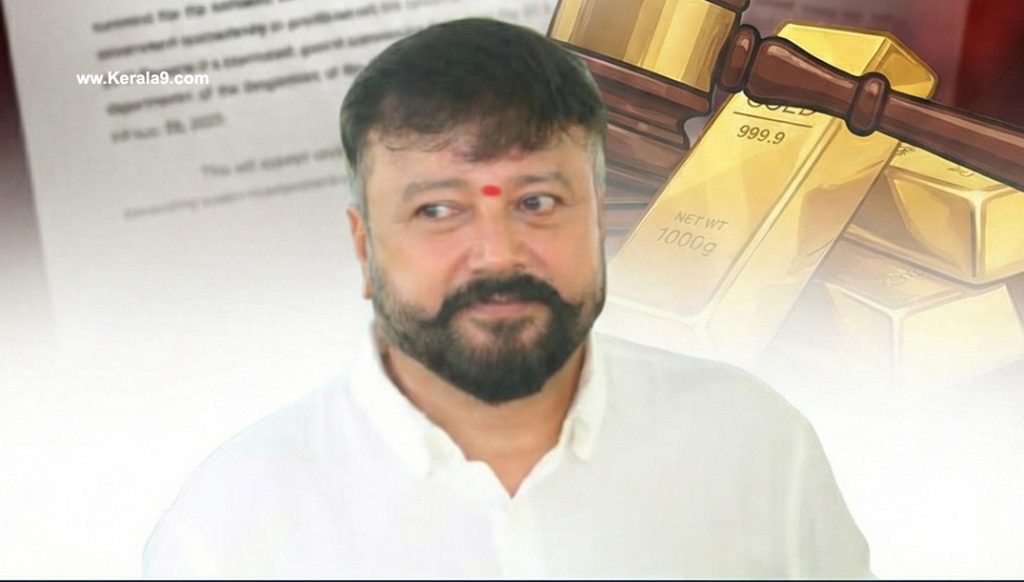
Kochi: The Enforcement Directorate (ED) has issued a summons to popular actor Jayaram in connection with the alleged gold theft case at Sabarimala. The actor has been directed to appear before the agency on Tuesday, February 17.
The ED is seeking clarification regarding Jayaram’s alleged relationship with Unnikrishnan Potty, an accused in the case involving gold irregularities. Previously, the Special Investigation Team (SIT) had also questioned the actor.
Key Details of the Case: The summons follows a report by the Devaswom Vigilance wing, which indicated irregularities in the gold used for the re-installation of the temple’s flagstaff (Kodimaram).
Missing Gold: A preliminary probe reportedly found a shortage of approximately 30 sovereigns (approx. 233 grams) of gold.
The Discrepancy: The Devaswom Board had procured 9.16 kg of gold from Customs for the flagstaff plating. Additionally, devotees donated over 412 grams, including 80 grams from a film star and 247 grams from a producer. Records show that while 9.57 kg was available, only 9.34 grams were officially recorded as used, leaving a significant portion unaccounted for without proper documentation.
Vigilance Probe: The Vigilance report suggests the scale of the irregularity could be higher as the specific quantities of gold donated by 27 other individuals were not recorded.
A special team led by the SP, under the orders of Vigilance Chief Manoj Abraham, is set to investigate the matter further.
KASARAGOD: Social media influencer Chinnu Pappu was found dead at her residence in Kasaragod on Monday. She was a native of Adoor.
According to reports, she was found hanging inside her rented quarters in Kasaragod. Although she was rushed to the hospital, she was declared dead on arrival.
The police have registered a case and an investigation is underway to ascertain the cause of death.
(Disclaimer: Suicide is not the solution to any problem. If you are facing mental health struggles, please seek help from a professional. You can contact the ‘Disha’ helpline at 1056 or 0471-2552056.)
When Dhyan Sreenivasan takes the microphone, laughter is usually guaranteed. But when you add Fahadh Faasil to the mix, it becomes a viral moment. A recent stage interaction between the two stars at the Blue Hill Foundation event has left fans in splits.
The “Script Narration” Story During his speech, Dhyan recalled an incident from years ago when he visited the set of Maheshinte Prathikaaram to pitch a story to Fahadh.
“About five or six years ago, I went to narrate a story to him. Instead of listening, he started telling me a story back! By the time he was done advising me, I felt like there was no point in doing movies at all,” Dhyan joked, implying he was playfully discouraged by Fahadh.
Fahadh’s “Mass” Reply Not one to stay silent, Fahadh Faasil immediately grabbed the mic and gave a witty counter-reply that brought the house down.
“It wasn’t six years ago; it was ten years ago! And that story he started telling me back then… he still hasn’t finished telling it!” Fahadh quipped, poking fun at Dhyan’s storytelling skills.
The “Third Account” Request Dhyan also shared a piece of advice he received from a friend of his father, Sreenivasan. The advice was to maintain three bank accounts: one for personal expenses, one for paying taxes, and a third one exclusively for charity to find true happiness.
In his signature style, Dhyan jokingly requested Fahadh Faasil—who is currently one of the biggest stars in India—to activate that “third account” for charity, hinting at the actor’s massive success and remuneration.
The video of their candid and funny exchange is now trending across social media platforms.
ANOMIE Review: A Brilliant Concept Trapped Inside Its Own Hesitation.
A Review by Aaliya Ansar
RELEASE DATE: 06/02/2026
LANGUAGE: Malayalam
DURATION: 2hours 32minutes
DIRECTOR: Riyas Marath
GENRE: Sci-Fi/ Triller
Positives:
1: Unique Concept
2: VFX
3: Detailed Research
4: Performance of actors
5: Climax
6: Cinematography
7: Colour grading
Negatives:
1: Underutilization
2: Pacing
3: Imbalance
4: Repetitive emotional balance
5: Thriller Elements Lack Urgency
5: Inconsistent
Story
Anomie’s cramped apartment setting in Kochi beautifully portrays two very different ways of dealing with the tragedy that has befallen their lives. While Zaara seeks to move forward by stepping out into the world, riding her bike every day, Ziyaan does exactly the opposite, stuck in a cycle of medication he cannot escape.
New gears are turned in the plot as it is revealed that Ziyaan died due to suicide. However, as the news sinks in, one realizes that things just do not add up. What began as a character study of the grieved family gradually transitions into a mystery novel as Zaara starts to explore the untapped angles of her brother’s life.
In parallel with this, we are also introduced to Jibran, a cop also haunted by a case he could never close. During the investigation of Ziyaan’s death, Jibran senses that this was not a tragedy by chance, as the action unfolds in a palpable and heavy tension, skipping the fast-paced action scenes in the film.
REVIEW & ANALYSIS OF THE FILM:
Anomie: The Equation of Death is an entry into the world of psychological thrillers, but Anomie does so rather patiently—and when one watches this film, often in a manner that suggests the filmmakers believe the audience has an equal reservoir to draw on. Anomie is a film set within a confined apartment in Kochi, where the atmosphere is slowly constructed in a state of silence, stillness, and emotional weight. While the filmmaker does a wonderful job of setting the atmosphere, there are times when the stillness stretches to a degree where the audience might think the film is not just being serious, but is actually meditating.
The performances are also among the strongest aspects of the film. The character of Ziyaan convincingly portrays the ideas of unresolved tragedy and emotional breakdowns. He delivers a performance that seems to be internalized and subdued, which works well in this film. Zaara is the emotional contrast to Ziyaan’s character, portraying the ideas of movement and the attempt to keep a semblance of normalcy in the midst of tragedy. Jibran’s character brings in the investigative aspect of the film, which creates an element of surprise and intrigue, and also carries emotional scars, since, as any rational individual would tell you, emotional well-being is not something this film is concerned with portraying in any of its characters.
From a directional standpoint, Riyas Marath has a very defined artistic vision, which is more heavily aligned with a storytelling sense of mood rather than the conventional elements associated with a thriller narrative. He does make great use of the apartment setting to effectively create a sense of claustrophobia within the narrative, much in the same way that the characters are confined to their own sanity throughout the story. At times, the direction feels almost too confident in its approach to pacing, particularly in a slow-burn sense, to the point where some scenes drag on well beyond the need for the story to progress them, making the viewing experience feel almost an endurance effort on the viewer rather than an immersion experience.
The change in genre from psychological drama to thriller is managed well, but the movie does seem a little undecided as far as the genre is concerned. The mystery is certainly revealed at a good pace, and the emotional content is well developed. However, in terms of the thriller genre, the movie could have shown a little more urgency and determination in some scenes related to the investigation. The movie does seem more keen on maintaining the atmosphere than in building narrative tension. Overall, a great work of craftsmanship that could have had a little more movement in terms of the narrative.
The level of concern with emotional depth and exploration of the mind is significant in the screenplay of Anomie, as it enhances the plot through the mood, behavior, and inner conflict of the characters instead of adhering to the plot progression method. The screenplay wonderfully explores the coping strategies of the characters, especially through the emotional detachment of the characters, Zaara, and Ziyaan. In general, the dialogues are quite natural and subtle, refraining from dramatization unnecessarily.At the same time, the screenplay also suffers from a measure of narrative clarity. While the emotional layers are well developed, there are times when the screenplay circles around the same emotions without moving the story forward. Accordingly, the investigative aspects offer the intrigue needed, yet there are times when the screenplay is hesitant to further develop the thriller potential of the work. As a result, the narrative feels like it is being stretched instead of expanded for the film.The film clearly wants to be a work of atmosphere and introspection, but this is at the expense of pacing and clarity within the work itself.
The cinematography excels in playing on the use of closed spaces, dim lighting, and deliberately posed shots to bring forth the emotional numbness of the two main characters, bringing the Kochi apartment to a kind of witness role in the psychological meltdown that follows. The use of natural lighting, particularly the morning light, helps imbue the story with some sense of realism and provides a beautiful contrast between the bleakness and the emotional numbness. The stark contrast in Zaara’s outdoorsy movements and the closed-quarters existence that is imposed upon Ziyaan does manage to effectively convey the psychological state of the two leads without resorting to unnecessary dialogue sequences. The film’s focus on static poses and deliberately posed movements does, however, feel to be just a shade too committed, as if the film is determined to sit and ponder the meaning of life a little longer than the viewer is comfortable watching. Even as it does feel to be just slightly too indulgent in the stillness, the cinematography is one of the film’s undeniable strengths and manages to pull the viewer effectively into the heavy emotional landscape that the film presents.
The pacing of the edits is faithful to the philosophy behind a slow burn, where narrative interest takes a strict backseat to emotional continuity. The cuts are seamless, almost invisible, allowing scenes to bleed into one another with a calmness that’s simply impressive, as if the editor were of a mind that time was merely a social construct. There are some emotional scenes that are given as much space as they need, sometimes so much that they feel as though they’ve fetched a long-term apartment in the narrative. Though these scenes do allow the performances and emotions to land, they’re so drawn out that some sequences feel as though the film is less progressing narrative than simply politely taking a break to admire its mood.The investigation scenes, which should almost certainly inject more momentum, are cut at a similar level of restraint as if suspense itself was requested to slow down and take a moment to reflect upon life choices. Perhaps a slightly tighter approach in cutting could have raised the suspense considerably and spiked the structure of the narrative approach. However, the film continues to indulge in this pacing at admirable consistency. Though overindulgent at times in these long scenes of lingering, the editing does approach a level of tonal consistency and support for the psychological nature of the work well, even if the approach it takes feels to be done so emotionally.
The background music and the score in Anomie are minimalist, opting for understatement rather than dramatic presentation. Rather than constantly directing the audience’s emotions, the film’s soundtrack is quiet in the background, giving space to the role of silence, too, in the betterment of the psychological themes of the film, as the minimalist sound design effectively complements the emotional detachment of the characters in the story. The film does not utilize unduly loud music, which suits the film’s overall understated themes.However, at some points, the background score realistically appears to be too apprehensive, afraid to take the bold step and leave an emotional mark. While this approach has benefited some scenes, there are moments, especially during the mystery-packed scenes, where a bit of emphasis could have helped the overall tension build-up from its music perspective. The background score continues to remain fitting to the overall mood and tone of the scenes, without crossing that edge to make it stand out and define the scenes away from its emotional support status.
Despite all these limitations, the movie has managed to deliver an experience that is haunting and full of depth. This is, however, not intended to be a thriller movie, and the pace and story also convey a sense of psychological and emotional exploration. While the movie can be appreciated from an intellectual point of view, especially to fans of slow movies, the common viewer might end up appreciating the movie but not necessarily getting full entertainment out of it.
SO WHAT’S HOT:
1: Brilliant & Unique Concept
The movie takes the risk of exploring new cinematic territories by offering a scientific concept that feels distinct from the norm established in most thrillers. It is liberating to see a movie that prefers to bank on research and logic instead of dramatic cliches.
2: Detailed Research & Conceptual Depth
The amount of work that has gone into developing the scientific and psychological basis of the story is evident. There is confidence demonstrated in presenting its ideas in an organized and believable fashion.
3:Decent VFX Execution
The film succeeds in achieving this effect properly, and this shows that they really wanted to implement what they said they would in interviews instead of leaving it as a several-interview-later promise.
SO WHAT DIDN’T WORK OUT:
1: Underutilized Scale of the Concept
The movie poses a concept that has tremendous storytelling potential, but instead of delving deeper into the idea, the story navigates the concept with the same care an individual might take when holding a cup of coffee on a crowded bus. The scope is enormous, yet the story wanted to remain comfortably small, in a sense that seems afraid the ambition might get too ambitious itself.
2:Delayed Conceptual Payoff
A lot of the scientific and thematic brilliance is saved until the very end, which creates the feeling that the film was holding back the good stuff, or at least, it was the surprise gift—but just as you’re about to leave the party, that gift is presented in the final five minutes. The revelations made in the film may be interesting, but it is a slightly uneven feel thanks to the information dump towards the end.
3: Inconsistent Narrative Momentum
The slow pace initially evokes curiosity, but the movie eventually develops a rhythm that is less like telling a story and more like taking a long, reflective breath. Some scenes are extended to such a leisurely place that they seem to be competing for emotional awards.
4:Overdependence on Mood Over Plot Progression
The film is very committed to the tone, sometimes to the point where the plot appears to take a backseat, as if the film is more concerned with ensuring that the mood is kept rather than the plot progressing into something of substance.
5: Thriller Elements Lack Urgency
Despite wearing the tag of a mystery thriller, the investigation sequences unwind with admirable calmness, as if suspense itself was told to keep its emotions in check. The tension builds up gradually and seldom reaches a level that really grips the audience.
6. Missed Opportunity for Experiential Storytelling
The prospect promises sufficient power to construct both a visually and ideologically expansive cinematic experience, yet the film settles on revealing larger themes only in brief flashes. The experience is akin to being offered a peek at a great scientific experiment through a slightly ajar door.
7. Repetitive Emotional Beats
The movie revisits the same emotional content again and again, almost as if to say, “Just in case you forget, everyone is still sad.” While thematic consistency is maintained, revisiting emotional content slightly detracts from the novelty of the journey itself.
CONCLUSION:
The movie deserves genuine appreciation for its visionary thinking and for finally moving out of the conventional storytelling comfort zone. The concept itself feels fresh, with notable effort in detailed research, especially an attempt to present its idea through a scientific and logical backdrop rather than relying on cinematic exaggeration. Though it sounds pretty intelligent, the attempt to introduce a relatively new narrative approach is commendable, with clear confidence provided by the makers to travel with complex themes. Technically, the film also needs some appreciation for convincingly executing the visual effects, which prove that the creative vision was not just written on paper but was practically detailed with decent technical support.
However, while it presents an interesting idea, it often seems to be holding its own potential with surprising reservation. There is scope for expansion in the story that would have allowed for this interesting concept to be explored on a grander, more immersive level, but it seems determined to keep all this potential locked away politely. There is room for the scientific and conceptual content to be explored, which it does gradually before heavily focusing on it for the climax, as if the film realized it has some strong ideas to include before the credits roll.
This film, without a question, excels in creating a sensation around a new and different premise and offers wonderful glimpses of artistic brilliance, but it also leaves the viewer with the nagging feeling that the entire experience could have been much more if the ideas had been further developed and explored throughout the film instead of saving them for the very last stretch, which ends the film with an intellectually stimulating yet somewhat dissatisfying feeling, as if promising a grand revelation in the world of science and still having to sit through the entire lecture to get to it.
Final Verdict
The film is a bold attempt at a psychological drama that incorporates scientific and investigative aspects, accompanied by good performances and thoughtfulness in the technical aspects of filmmaking. The film offers a new and interesting concept, well-researched and well-intentioned in terms of creative brainstorming. However, the film could have delved deeper into the potential it offered and was saved for the latter parts of the film, with a slightly slower pace and repetitive moments slightly affecting the otherwise good film.Recommended for those who enjoy slow-paced, mood-driven psychological thrillers, this film might seem a bit slow and restrained for those expecting it to be fast-paced and thrilling.
DUBAI – Indian educator and social activist Rouble Nagi has been named the winner of the prestigious Global Teacher Prize 2026. The announcement was made during the World Government Summit in Dubai, where she was awarded the USD 1 million prize in recognition of her transformative impact on education in India’s most underserved communities.
Transforming Slums into Classrooms
Rouble Nagi, through her Rouble Nagi Art Foundation, has spent years bridging the educational gap for children in rural areas and urban slums. Her most celebrated initiative, “Living Walls of Learning,” uses art as a tool for literacy. By painting vibrant educational murals on abandoned walls and shanties, she transformed entire neighborhoods into open-air classrooms.
To date, Nagi has established over 800 learning centers across 100 communities. Her innovative approach has not only brought children into the fold of formal education for the first time but has also successfully reduced school dropout rates by over 50 per cent.
Empowering the Future
Beyond primary education, Nagi has trained hundreds of local educators, creating a sustainable model of community-led growth. Upon receiving the award, she expressed her commitment to scaling her mission.
A Vision for Digital Literacy
Nagi plans to utilize the $1 million prize money to establish a free training institute focused on vocational skills and digital literacy. This new venture aims to empower millions of young people across India with the technical skills required for the modern job market, ensuring that geography does not dictate a child’s destiny.
The Global Teacher Prize, organized by the Varkey Foundation in collaboration with UNESCO, continues to highlight the vital role teachers play in shaping a better world.
New Delhi / Washington D.C. — In a definitive move to reshape global supply chains, India and the United States have officially unveiled an Interim Trade Framework. This agreement marks a critical milestone toward a comprehensive Bilateral Trade Agreement (BTA), aimed at fostering reciprocal trade and deepening strategic ties between the world’s two largest democracies.
The deal centers on a “give-and-take” model: India will open its vast domestic market to American industrial and agricultural goods, while the US will provide significant tariff relief and sectoral access to Indian exporters.
Key Highlights: What the US Gains
India has committed to dismantling several long-standing trade barriers to make American products more competitive.
Industrial Goods: India will eliminate or sharply reduce tariffs on almost all US industrial products.
Agricultural Access: Duties will be slashed on a variety of US food products, including:
Animal feed (DDGs and red sorghum)
Tree nuts and fresh fruits
Soybean oil, wine, and spirits
Regulatory Reforms: India has agreed to resolve non-tariff barriers within six months, specifically targeting medical devices and ICT (Information and Communication Technology) products, aligning them with international standards.
Major Wins for Indian Exporters
The United States has offered a structured roadmap for tariff relief that benefits India’s core export sectors.
Lower Reciprocal Tariffs: For now, the US will apply a 18% reciprocal tariff on Indian goods, including textiles, leather, chemicals, and machinery—a significant drop from previous levels.
Zero-Tariff Roadmap: Once the interim deal is fully implemented, the US will remove tariffs entirely on:
Generic Pharmaceuticals (subject to ongoing reviews)
Gems and Diamonds
Aircraft and Aircraft Parts
Metals & Auto Parts: India will receive relief from national security tariffs on aircraft parts made with steel and aluminum, alongside a preferential quota for auto parts.
The $500 Billion Commitment
Perhaps the most ambitious part of the framework is India’s indication to purchase $500 billion worth of US goods over the next five years. This massive procurement plan includes:
Energy: Oil, gas, and coking coal.
Aviation: Commercial aircraft and parts.
Tech: Data center equipment and high-end Graphics Processing Units (GPUs) for AI development.
Strategic Realignment: The China Factor
While not explicitly named in the joint statement, the agreement is widely viewed as a move to counter the “non-market practices of third countries”—a clear reference to China. Both nations have pledged to collaborate on investment screening, export controls, and supply chain resilience to ensure economic security.
What’s Next?
The interim framework is set for rapid rollout. Negotiators from both sides will continue working toward a final Bilateral Trade Agreement (BTA), which is expected to include more robust rules on digital trade and further reductions in compliance hurdles for businesses.
As Prime Minister Modi noted, this deal strengthens the “Make in India” initiative by opening doors for MSMEs and farmers to a $30 trillion US market.
Thiruvananthapuram: Following the resolution of disputes between the KSRTC and the Thiruvananthapuram Corporation, the rescheduled electric bus services officially commenced operations today. Thiruvananthapuram Mayor V.V. Rajesh flagged off the inaugural service.
The first bus began its journey from Kulasekharam in the Mayor’s ward (Kodunganoor) to East Fort. The service, which started at 7:30 AM, covers the route via Kuruvikkad, Thittamangalam, Kunnanpara, and Kundamankadavu.
Key Highlights:
New Routes: Electric bus services are being launched on 23 side roads within the Corporation limits.
Context: The services were rescheduled following discussions between the Mayor and Transport Minister K.B. Ganesh Kumar, settling earlier disagreements regarding route selection and operations.
Timing: The buses are scheduled to operate primarily during peak hours in the morning and evening. The selected routes are largely on side roads that previously lacked sufficient KSRTC coverage.
Mayor V.V. Rajesh expressed his satisfaction in fulfilling the promise made to the public to improve connectivity in these areas.
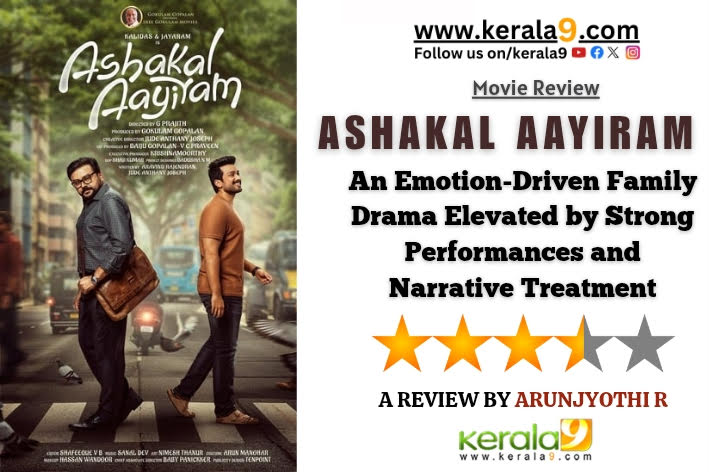
ONE WORD: An Emotion-Driven Family Drama Elevated by Strong Performances and Narrative Treatment
A Review by Arunjyothi R
LANGUAGE: MALAYALAM
DURATION: 02 Hours 12 Minutes
GENRE: Family Drama
•POSITIVES:
1: Direction
2: Performance of Jayaram and Kalidas Jayaram
3: Screenplay
4: Good Situational Humours
5: Well established emotional arch
6: Background Score
7: Climax
8: Cinematography
•NEGATIVES:
1: Predictability
2: Familiar story backdrop
3: Duration of the film
4: Slight drag at some points
STORY:
Ashakal Aayiram revolves around dreams that arrive late—and the conflicts they create. Ajeesh (Kalidas Jayaram) is a young man passionately chasing his ambition of becoming a film actor. His father Hariharan (Jayaram), a medical representative, leads a routine middle-class life, struggling to meet daily expenses while silently carrying the weight of unfulfilled aspirations. Their relationship is calm but distant, shaped by unspoken expectations and financial realities.
Life takes an unexpected turn when a film shoot happens near their house, drawing huge crowds for the arrival of popular star Sumith Raghavan. Due to a sudden situation, Hariharan and his neighbour are selected as junior artists. On set, Sumith struggles to act comfortably in front of the public, leading to repeated takes. During one such moment, a casual joke from the neighbour makes Hariharan laugh, which catches Sumith’s attention and hurts his ego. An argument breaks out publicly, and in a moment of arrogance, Sumith challenges Hariharan to perform the scene in a single take if he truly believes acting is easy.
To ease the tension and prevent further disruption, the film crew persuades Hariharan to accept the challenge. What follows is a surprising turn of events—Hariharan delivers a powerful and natural performance that stuns the director, crew, and gathered crowd. The moment goes viral on social media, and to calm the situation and dilute the controversy around the star, the crew offers Hariharan a proper role in the film. His performance is widely appreciated, receiving strong applause in theatres and earning him unexpected popularity.
Encouraged by the response, Hariharan decides to pursue acting seriously and quits his job, stepping into a world he had never imagined for himself. However, this sudden rise creates emotional distance at home. Ajeesh, who has been struggling for opportunities, finds himself overshadowed by his own father’s success. What began as a moment of pride slowly turns into insecurity and resentment, leading to clashes between the two.
REVIEW & ANALYSIS OF THE FILM:
POSITIVES:
1: Direction:
G Prajith, who earlier delivered the popular Oru Vadakan Selfie, handles Ashakal Aayiram with clarity and emotional control. His primary intention—to present a full-fledged family drama rooted in emotions and a strong father–son bond—is clearly visible throughout the film. He focuses more on feelings than gimmicks, allowing the story to flow naturally. The emotional arcs are carefully shaped, and the drama never feels exaggerated or artificial, which works strongly in the film’s favour.
The making style suits the genre well. Prajith understands how to build emotions gradually—introducing conflicts softly, allowing them to grow, and finally letting them explode at the right moments. Sentimental scenes are handled with restraint, avoiding melodrama, while still ensuring they connect with the audience. He balances emotional depth with engagement, making sure the film never feels dull despite its familiar setting. The pacing of emotional beats, silences, and reactions is thoughtfully designed.
One of the director’s biggest strengths is how he uses Jayaram and Kalidas Jayaram together. Their chemistry feels organic and lived-in. Prajith smartly places their confrontations, fun moments, and emotional exchanges to strengthen the screenplay. The climax, in particular, carries a strong emotional impact because of how well he stages the performances. Even lighter moments between the father and son are placed effectively to lift the narrative. The film has many occurrences and plot points, yet almost everything feels connected, leading to a satisfying and emotionally fulfilling ending.
2. Performance of Jayaram and Kalidas Jayaram
Jayaram delivers a deeply moving and restrained performance as Hariharan, portraying the emotional journey of an ordinary man discovering an unexpected second chance at his dreams. His acting is rooted in subtle expressions rather than loud dramatics, making the character feel realistic and relatable. From moments of quiet frustration and self-doubt to scenes of pride and emotional fulfilment, Jayaram maintains complete control over his performance. His dialogue delivery is precise, his emotional modulation is impressive, and his screen presence carries immense weight, especially during emotionally charged sequences.
Kalidas Jayaram complements his father with a mature and emotionally layered performance as Ajeesh. He convincingly portrays the internal conflict of a son who admires his father yet struggles with insecurity as his own dreams begin to fade. Kalidas excels in expressing anger, disappointment, and helplessness through silence and body language. His emotional scenes never feel forced, and his reactions feel honest, particularly during confrontations and breakdown moments. The vulnerability he brings to the character makes Ajeesh’s journey emotionally engaging.
The chemistry between Jayaram and Kalidas is the backbone of the film. Their father–son bond feels natural and lived-in, enhancing both the emotional and lighter moments. Their fun, situational exchanges add warmth, while their intense confrontations carry raw emotional power. Both actors deliver standout performances in the climax, where emotions peak and performances reach their strongest point. Together, they elevate the emotional impact of the film, making their relationship the most memorable aspect of Ashakal Aayiram.
3: SCREENPLAY:
The screenplay stands out with its well-written emotional structure. The father–son bond is established effectively from the beginning, giving the audience enough time to understand their relationship, expectations, and silent conflicts. The emotional arc grows naturally, making the audience invest in both characters. The script is filled with ongoing situations, and most of them are well connected, leading smoothly into the next occurrence. Nothing feels forced or randomly inserted. Each scene contributes to character development or emotional progression. From the first half to the climax, the narrative remains engaging, with the emotional payoff arriving at the right time.
The emotions carry the film strongly. Dialogues are simple yet powerful, especially in father–son scenes, with several moments that genuinely move the audience—particularly during the climax. Situational comedy works well in the first half and feels organic rather than deliberately inserted. The cute and light moments between the father and son are nicely written, adding warmth to the narrative.
Scenes showcasing determination, passion, failure, and giving up are handled maturely, pushing the story forward naturally. The surprises in Jayaram’s character during the climax are presented convincingly without feeling unnatural. The screenplay also beautifully captures a father’s love, fear, hope, and emotional struggle, which becomes one of the film’s major strengths. Even the antagonist character is written effectively, serving the story without overpowering it.
4: Good Situational Humour & Well-Established Emotional Arc
The situational humour works well and blends naturally with the narrative. Instead of forced jokes, the film relies on character-driven humour and everyday situations, especially involving the father–son dynamic. These moments bring relief, add charm, and make the characters more relatable without disturbing the emotional flow. The emotional journey of the film is carefully constructed. The gradual shift from a routine middle-class life to emotional conflict and reconciliation feels smooth and believable. The emotions are layered, allowing the audience to connect deeply with both characters. The film maintains emotional consistency throughout, ensuring that conflicts don’t feel sudden or shallow. Each emotional moment builds upon the previous one, making the climax emotionally rewarding and impactful.
5: CLIMAX
The climax is beautifully crafted and stands as one of the film’s strongest highlights. The emotional focus remains firmly on the father–son relationship, and the scenes are staged with sensitivity and restraint. Jayaram and Kalidas Jayaram deliver powerful performances, allowing emotions to flow naturally without excessive dialogues or dramatic exaggeration. The emotional tension that has been building throughout the film finds a meaningful release here, making the payoff satisfying and heartfelt. Kalidas shines with an intense and emotionally charged performance in the final stretch, capturing vulnerability, pain, and emotional maturity with remarkable control. Jayaram complements this with a restrained yet deeply affecting portrayal, making their combination work exceptionally well. The surprise appearance of Asha Sarath adds an additional emotional layer, strengthening the impact of the final moments. The climax carries genuine emotional weight, bringing tears to many and leaving the audience with a sense of closure, warmth, and emotional fulfilment.
6: CINEMATOGRAPHY, EDITING & BACKGROUND SCORE:
The cinematography is simple but effective, serving the story well. Close-up shots add emotional depth and highlight the acting strengths of Jayaram and Kalidas. Visuals never distract from the narrative and remain grounded throughout. Editing is decent, with smooth transitions between scenes, though the runtime could have been slightly trimmed for better impact. The background score plays a crucial role in lifting the emotional scenes. The use of music enhances key moments without overpowering them. The placement of a song from Jayaram’s old hit films is particularly effective, creating a nostalgic, emotional, and joyful moment inside the theatre. The climax is beautifully elevated by the background score, making the scenes more touching and memorable.
NEGATIVES FELT:
1. Predictability
One of the noticeable drawbacks of Ashakal Aayiram is its predictable narrative structure. Many major plot developments, especially concerning the rise of Hariharan and the emotional conflict between father and son, can be anticipated well in advance. For viewers familiar with family dramas, the trajectory of the story rarely offers surprises. While the emotional execution remains effective, the lack of narrative unpredictability slightly reduces the overall impact and suspense.
2. Familiar Story Backdrop
The film unfolds within a familiar and often-explored backdrop of middle-class family struggles, generational conflict, and unfulfilled dreams. Several scenes and emotional beats follow patterns commonly seen in similar genre films. This sense of déjà vu makes certain moments feel routine rather than fresh. Although strong performances elevate the material, the familiar setting and storytelling approach prevent the film from standing out as a truly unique experience.
3. Duration of the Film
The runtime feels a bit stretched, particularly in the middle portions. Some scenes tend to linger longer than necessary, slightly affecting the pacing. A tighter edit could have sharpened the narrative and made the emotional beats land more effectively. Trimming repetitive emotional exchanges and a few transitional sequences would have resulted in a more compact and impactful viewing experience.
4. Slight Drag at Some Points
There is a noticeable drag in a few portions of the film, especially in the first half and select scenes in the second half. Certain sequences feel prolonged without adding much to character development or story progression. These moments slow down the narrative flow and briefly test the audience’s patience. While the film regains momentum later, a more controlled pacing could have improved the overall engagement.
CONCLUSION:
Ashakal Aayiram is an emotionally driven family drama that finds its strength in sincere storytelling and powerful performances. G Prajith’s direction keeps the focus firmly on emotions, allowing the father–son relationship to evolve naturally. Jayaram and Kalidas Jayaram deliver deeply convincing performances, and their chemistry gives the film its emotional backbone. The screenplay, supported by an effective background score, ensures steady engagement, leading the narrative toward a well-earned emotional high point.
The climax stands out as the film’s most impactful segment, bringing together performance, emotion, and music seamlessly. The father–son moments in the final stretch are handled with sensitivity and emotional weight, leaving a strong impression and providing a satisfying sense of closure. Despite a predictable storyline, familiar setting, and a slightly stretched runtime, the film succeeds in touching the heart. Ashakal Aayiram may not break new ground, but it offers a warm, emotional, and memorable experience, especially for viewers who appreciate heartfelt family dramas with a strong and emotionally rewarding climax.