Home Blog Page 59

Sarvam Maya Review: An Engaging, Feel-Good Supernatural Comedy That Works as a Family Entertainer

0

Sarvam Maya Review: An Engaging, Feel-Good Supernatural Comedy That Works as a Family Entertainer

ONE WORDAn Engaging, Feel-Good Supernatural Comedy That Works as a Family Entertainer

A Review by Arunjyothi R 

LANGUAGE: MALAYALAM

DURATION: 02 Hours 27 Minutes 

DIRECTOR: Akhil Sathyan 

GENRE: Horror Comedy  

•POSITIVES:

1: Direction 

2: Story, Screenplay and Dialogues 

3: Performance of Nivin Pauly 

4: Performance of Riya Shibu 

5: Feel good moments 

7: Comedies 

8: Music and Background Score 

9: Cinematography 

10: Editing 

•NEGATIVES:

1: Predicible 

2: Some issues in character development 

3: Resemblance of the film Vismayathumbathu

STORY

Prabhendu stands at the heart of Sarvam Mayam, born into a respected Namboothiri household famous for conducting sacred rituals across countries. But he never fits that world. He questions faith, avoids traditions, and finds comfort only in melodies. Music is his true calling, and he earns a living by performing with a small singing troupe. This difference pushes him to the margins of his own home, leaving him emotionally distant from everyone except his father’s elder brother, the one soul who understands him.

Life outside is no easier. His musical dreams fail to take shape, money remains scarce, and a big chance to go abroad slips away after a harsh rejection. With nowhere else to turn, he returns unwillingly to the ancestral house. What follows is unexpected. Despite mocking beliefs and customs, he is dragged into age-old ceremonies and spirit-related practices, working alongside his quirky cousin.

During one such ritual, Prabhendu comes face to face with something he never believed in — a harmless, lost soul. She isn’t frightening or loud, but calm, puzzled, and unaware of who she once was. Slowly, an unusual bond forms. He names her Delulu, a playful tag for something unreal, and their silent companionship begins to change him.

As days pass, Prabhendu is forced to confront buried pain — broken ties, shaken dreams, and the emptiness behind his disbelief. At the same time, the wandering spirit searches for meaning and peace, hoping to complete what her life left undone. Together, their paths blur the line between logic and belief, turning Sarvam Mayam into a gentle, thoughtful tale about healing, acceptance, and the many ways people look for truth..

REVIEW & ANALYSIS OF THE FILM

Sarvam Maya, which loosely translates to everything is an illusion, lives up to its philosophical title with understated confidence. Released during the Christmas season, the film arrives as a welcome relief from the wave of loud, violent, and hyper-masculine cinema dominating contemporary screens. Instead of relying on shock value or exaggerated spectacle, the film embraces softness, humour, and emotional calm. Blending fantasy, comedy, and mild supernatural elements, this Nivin Pauly–starrer chooses warmth over intensity and reflection over chaos. It is a film that invites the audience to slow down, breathe, and simply feel.

At its core, Sarvam Maya is not interested in scaring its viewers or overwhelming them with dramatic conflict. The film gently touches upon themes of belief, grief, faith, and emotional healing without turning preachy or heavy-handed. The narrative constantly leans towards comfort and reassurance, making it feel less like a dramatic confrontation and more like a quiet conversation. In an era where films often compete to be louder and darker, Sarvam Maya feels like pressing a pause button — a calm interlude in a noisy cinematic landscape.

One of the film’s biggest strengths lies in its grounded setting. The world Akhil Sathyan builds feels familiar and lived-in, filled with ordinary homes, casual conversations, and everyday routines. This sense of realism allows the fantasy elements to blend seamlessly into the narrative instead of standing apart as spectacle. The humour flows naturally from situations and character reactions rather than forced punchlines. Much of it lands effectively, creating moments of genuine laughter. However, when the film ventures into emotional territory, the subtlety seen in the lighter sections slightly fades. Certain sentimental moments feel overly verbalised, giving the film a slightly manufactured feel-good tone rather than an entirely organic one. Still, these moments soften rather than damage the overall experience.

The chemistry between Nivin Pauly and Aju Varghese is another major highlight. Their long-standing off-screen friendship clearly translates onto the screen, adding authenticity and ease to their interactions. Aju Varghese brings consistent humour, especially as supernatural elements slowly disrupt their ordinary lives. Whether placed in chaotic ritual settings or absurd modern-day situations, their shared scenes strike a balance between fantasy and relatability. This camaraderie not only fuels comedy but also acts as an emotional anchor, keeping the film grounded even when it explores unreal spaces.

The screenplay frequently introduces imaginative sequences to maintain engagement. Moments such as supernatural rituals unfolding in unexpected ways or humorous social observations woven into the narrative work well and elevate the film’s entertainment value. These sequences often keep the audience involved and amused. However, not every creative choice is equally effective. A few scenes feel slightly stretched or unnecessary, momentarily clashing with the film’s gentle tone. While these detours reflect ambition, they occasionally disrupt the narrative rhythm and dilute the film’s emotional consistency.

One of the most refreshing creative decisions in Sarvam Maya is its complete rejection of conventional horror tropes. There are no jump scares, ominous background effects, or exaggerated visual tricks. The ghost is presented as a contemporary, current generation look and presence — casual, confused, and emotionally accessible. She is unsure of her own existence, and this uncertainty becomes the foundation of an unusual friendship with the protagonist. Director Akhil Sathyan’s preference for sync sound enhances the realism, making even the supernatural moments feel lived-in and natural. The humour arises logically from the situation, ensuring that laughter feels earned rather than engineered.

From a filmmaking perspective, Akhil Sathyan shows a clear sense of control and intent. Despite being only his second directorial outing, there is visible structure in the way scenes are built and emotions are layered. His storytelling style relies heavily on conversational writing, silences, and situational humour rather than dramatic twists. The scripting prioritises character interactions over plot-driven momentum, allowing moments to unfold gently. However, as the film progresses towards its emotional resolution, the writing becomes more dialogue-heavy. This shift slightly weakens the minimalism that defines the earlier portions of the film.

Importantly, Akhil Sathyan smartly avoids turning the ghost into a metaphor-heavy or moralising figure. Instead, she is portrayed as someone still trying to understand her new state of being. This choice helps the film steer clear of predictable supernatural clichés. However, the desire to maintain a consistently gentle tone occasionally makes the film predictable. The minimal conflicts and safe emotional beats ensure comfort but limit narrative surprise.

Sarvam Maya does not aim to be intellectually dense or layered with philosophical complexity. Its strength lies in emotional simplicity and accessibility. The humour is soft, human, and inclusive, appealing across age groups. The story progresses through small but meaningful moments rather than dramatic turning points. While the first half sets the mood effectively and builds curiosity, the second half feels slightly stretched, even though the core narrative movement happens there. A more even distribution of emotional shifts could have strengthened the film’s pacing.

There is also a sense of self-indulgence in the way the story unfolds. Akhil Sathyan allows scenes to breathe and moments to linger, which creates a calm viewing experience. This approach strongly echoes the comforting storytelling style of his father, Sathyan Anthikad. While this brings warmth and familiarity, it also makes the film somewhat predictable. The two central characters are well-developed, but the supporting cast lacks depth. Characters like Preity Mukhundhan’s remain underwritten, limiting emotional investment beyond the leads.

The film also carries noticeable thematic and tonal similarities to earlier Malayalam films such as Vismayathumbathu and Meghasandesam. Like those films, Sarvam Maya explores a gentle supernatural presence intertwined with emotional healing and romance. The ghost-as-companion dynamic and the calm, poetic treatment of fantasy evoke memories of these earlier works. While this familiarity may feel comforting to some viewers, others may find the core idea slightly derivative. The film does not fully reinvent the genre but instead offers a softer, modernised version of a familiar narrative style.

Performance-wise, Nivin Pauly emerges as the emotional heartbeat of the film. There is a lightness to his performance that reminds audiences why he was once considered one of Malayalam cinema’s most charming stars. He does not overplay vulnerability, allowing the character to breathe naturally. His comic timing, casual body language, expressive restraint, and relaxed screen presence make the character deeply likable. Nivin Pauly in his comfort zone remains a gift to watch. Riya Shibu, making an impressive debut, complements Nivin Pauly beautifully. She matches his rhythm with ease and brings a fresh, chilled-out energy to her character. Her performance feels effortless and modern, aligning perfectly with the film’s tone. The pairing between Nivin and Riya becomes the film’s strongest emotional asset, offering moments that are funny, tender, and quietly touching. Their chemistry elevates the narrative and keeps the audience emotionally engaged. Aju Varghese, with his impeccable comic timing, steals several scenes and brings consistent laughter to the screen. His combination with Nivin Pauly works effortlessly, reminding viewers why this pairing has always been effective. Veteran actor Janardhanan also leaves a lasting impression, making audiences wish for more screen time.

On the technical front, Sarvam Maya maintains a pleasing balance. Justin Prabhakaran’s background score subtly supports the mood without overpowering scenes. Songs like Puthu Mazha bring freshness, while Mayajaalame adds emotional depth. Sharath Velayudhan’s cinematography captures Kerala’s landscapes with warmth and elegance, especially in frames featuring agricultural fields and old temples. The close-up shots enhance emotional expression, making the film visually comforting. Editing remains clean and unobtrusive, ensuring the film never feels dragged or cluttered.

CONCLUSION:

I’ll recommend Sarvam Maya as a pleasant, engaging watch because it knows exactly what kind of film it wants to be and never tries to pretend otherwise. The movie delivers steady entertainment through situational comedy, warm interactions, and a generous dose of feel-good moments that keep the mood light throughout. The scripting favours simplicity over complexity, allowing the humour to flow naturally, while the direction maintains a calm, controlled rhythm that makes the viewing experience smooth and comfortable rather than overwhelming. Performances further elevate the film, with Nivin Pauly bringing ease, charm, and emotional balance to the central role. Riya Shibu complements him with a refreshing presence, and their on-screen pairing feels effortless and emotionally engaging. Adding to this is Aju Varghese, whose comic timing and chemistry with Nivin inject consistent laughter and energy into the narrative. Altogether, Sarvam Maya works especially well as a Christmas holiday entertainer — clean, family-friendly, and ideal for a relaxed festive watch with loved ones.

RATING: 3.5/5

A Review by Arunjyothi. R
Prime Minister to visit Thiruvananthapuram in January

0

Thiruvananthapuram: Prime Minister Narendra Modi will visit the capital in mid-January 2026. He will be here to launch the development roadmap of the Thiruvananthapuram Corporation with the goal of ‘Developed Ananthapuri’.

He is likely to meet the councilors later. Meanwhile, the Prime Minister, who will arrive in Tamil Nadu on January 9, will attend the concluding session of the state visit of Tamil Nadu BJP President Nainar Nagendran.

The move to smuggle idols from the Padmanabhaswamy temple, the target was a transaction of 1000 crores; SIT questions D. Mani

0

Thiruvananthapuram: The Special Investigation Team questioned D. Mani in the Sabarimala gold robbery. The SIT has confirmed that D. Mani’s real name is Balamurugan. The questioning is continuing.

D. Mani, known as Diamond Mani, is a native of Dindigul. He was a diamond merchant in his early days. That is why he got the name Diamond Mani, the SIT found. The plan was to make a transaction of 1000 crores in Kerala.

The SIT has also identified the middleman, Sreekrishna. The expatriate businessman has also revealed that this gang is still moving around with money to smuggle idols. The expatriate’s statement is that D. Mani and his gang were introduced to people associated with Jayalalithaa. There is also a revelation that there is a move to smuggle idols from the Padmanabhaswamy temple.

Walayar mob lynching; One more arrested

0

Palakkad: One more person has been arrested in the incident of a Chhattisgarh native being brutally lynched to death in Walayar. A man named Shaji, who was absconding, has been arrested.

It is believed that he participated in the lynching. So far, 8 people have been arrested in connection with the case. A Chhattisgarh native, Ramnarayanan, was lynched to death by a mob on the charge of being a thief. The police have concluded that there are around 15 accused in the case, including women.

Encounter with security forces; Top Maoist leader among others killed in Odisha

0

Bhubaneswar: Following an encounter with security forces, top Maoist leader Ganesh Uike and others were killed. Police have confirmed that the slain Ganesh was a man who had a bounty of Rs 1 crore on his head.

He was also a member of the Maoist Central Committee. There are reports that two women are among the slain.

The encounter took place in the Rampa forest area on the border of Kandhamal and Ganjam districts of Odisha on Sunday morning. The security forces launched a search operation based on confidential information about the presence of Maoists in the forest area.

The encounter took place in the Rampa forest area on the border of Kandhamal and Ganjam districts of Odisha on Sunday morning.  The security forces conducted a search operation based on confidential information about the presence of Maoists in the forest area.

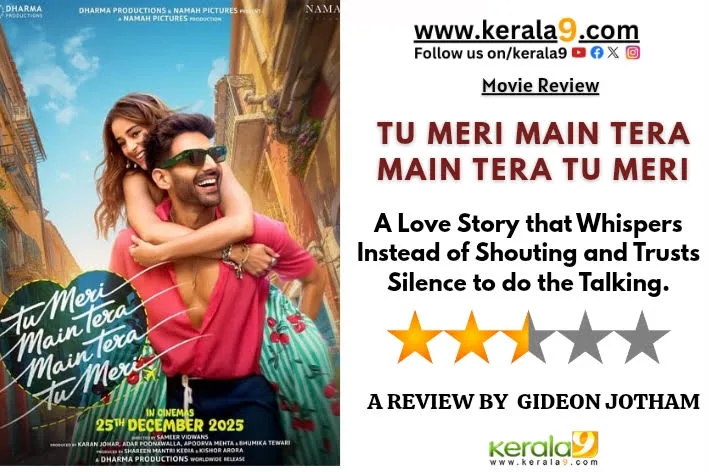
Tu Meri Main Tera, Main Tera Tu Mer Review

0
ddd

Tu Meri Main Tera, Main Tera Tu Meri: A love story that whispers instead of shouting and trusts silence to do the talking.

A Review by Gideon Jotham 

Film: Tu Meri Main Tera, Main Tera Tu Meri

Director: Sameer Vidwans

Language: Hindi

Genre: Romantic Drama

Duration: 2hr 25 Mins

Positives

Direction

Cinematography

Editing

Performance

Art works

Songs & BGMs

Chemistry

Negatives

Story

Screenplay 

Predictability

Pacing

Limited emotional peaks 

Story

The film follows two ordinary people who meet without expectation and stay without certainty. What begins as a casual connection slowly turns into emotional dependence not dramatic, not instant, but quietly unavoidable. Their relationship grows in shared routines: late conversations, missed calls, unsaid worries, and the comfort of knowing someone is there.

As days pass, affection deepens, but clarity doesn’t. One gives more, waits longer, hopes harder, while the other struggles to understand what commitment truly means. There is no villain here only timing, fear, and emotional hesitation. Love exists, but so does the anxiety of not being chosen first.

The story moves through misunderstandings, emotional distance, and moments where silence hurts more than words. The conflict isn’t about betrayal or loss, but about assurance the need to feel important, valued, and certain in someone else’s life.

In the end, the film asks a simple question rather than offering a dramatic answer: Is love just about feeling deeply, or about showing up consistently? The resolution is gentle, grounded, and true to the film’s nature less about grand closure and more about emotional acceptance.

Direction

The direction of Tu Meri Main Tera, Main Tera Tu Meri is marked by restraint and emotional trust. Instead of pushing the story with dramatic devices, the director allows moments to unfold naturally, relying on pauses, silences, and everyday interactions to carry meaning. This approach suits the film’s core idea that love is felt more in consistency than in confession.

Scenes are staged with minimal interference. Conversations aren’t hurried, emotions aren’t underlined with excess background score, and conflicts are allowed to remain unresolved for longer than usual. This gives the film a lived-in quality, as if we are observing real people rather than characters performing for the screen.

The director also shows confidence in the actors, often holding the frame long enough for expressions to evolve. There’s a clear refusal to spoon-feed emotions; the audience is expected to read between the lines. This subtlety becomes one of the film’s strengths, even though it occasionally tests the patience of viewers used to faster narrative payoffs.

However, this same minimalism slightly limits the film’s emotional peaks. The direction maintains a steady emotional tone throughout, rarely breaking into moments of intensity. While this keeps the film honest, it also means the impact is more lingering than immediate.

Overall, the direction chooses quiet conviction over cinematic noise a conscious decision that defines the film’s identity, even if it doesn’t always elevate it.

Screenplay

The screenplay of Tu Meri Main Tera, Main Tera Tu Meri is built on moments rather than incidents. It doesn’t chase twists or dramatic turns; instead, it strings together conversations, silences, and everyday interactions to show how a relationship slowly takes shape and strain.

Much of the writing relies on what is not said. Conflicts emerge from delayed replies, emotional hesitation, and unspoken expectations. This makes the screenplay feel intimate and relatable, especially for audiences familiar with modern relationships where clarity often comes late.

The dialogues are simple, sometimes almost casual, but they carry weight through context rather than cleverness.Structurally, the film follows a familiar romantic arc, but the screenplay deliberately avoids sharp turning points. Instead of clear breaks, the story flows in a continuous emotional line. This works in establishing realism, but it also results in a narrative that feels predictable in places, with little escalation in tension.

The biggest limitation lies in repetition. Similar emotional beats recur without significant variation, making certain stretches feel prolonged. The screenplay chooses emotional consistency over progression, which softens the overall impact. In essence, the screenplay is honest but cautious. It understands the fragility of love, but stops short of pushing its characters into situations that could deepen the emotional payoff. It stays true to its tone quiet, reflective, and familiar even when it could have taken bolder turns.

Performance

Kartik Aaryan delivers one of his more restrained performances here. Stepping away from overt theatrics, he plays the emotionally vulnerable lover with quiet sincerity. His strength lies in internalization hesitation in his eyes, pauses in speech, and the way he carries emotional weight without spelling it out. Kartik handles the character’s confusion and longing with maturity, making the pain of waiting and uncertainty feel genuine rather than performative.

Ananya Panday shows noticeable growth as a performer. She brings softness and emotional clarity to her role, especially in moments of silence. Her character’s struggle between affection and emotional readiness is conveyed subtly, through expressions and body language rather than dialogue-heavy exposition. Ananya’s performance feels controlled and honest, lending credibility to the emotional distance her character maintains.

Together, their performances complement the film’s tone. Neither tries to overpower the other, and both stay within the emotional rhythm set by the direction. While the roles themselves don’t demand extreme emotional breakdowns, both actors succeed in making small feelings feel real which is exactly what the film requires.

The performances may not be explosive, but they are consistent, grounded, and emotionally believable, anchoring the film’s quiet romantic core.

Cinematography

The cinematography of Tu Meri Main Tera, Main Tera Tu Meri plays a crucial role in shaping its emotional language. The camera doesn’t chase grandeur; it stays close to the characters, often observing rather than announcing. This intimacy allows the audience to feel like silent participants in the relationship rather than distant viewers.

Soft lighting and warm color palettes dominate the visual tone, reinforcing the film’s gentle, comforting mood. Even urban spaces cafés, streets, rooms are framed with a sense of calm familiarity, turning ordinary locations into emotionally resonant spaces. The visuals mirror the characters’ inner states: steady, unsure, and quietly hopeful.

The use of static frames and lingering shots gives weight to silence. The camera often holds longer than expected, allowing emotions to surface naturally through expressions and body language. This visual patience aligns perfectly with the film’s slow-burn approach to romance.

At times, the visual style borders on being too safe, rarely experimenting with striking imagery or symbolic framing. Yet this restraint feels intentional. The cinematography chooses emotional clarity over visual spectacle, serving the story without distracting from it.

Overall, the visuals act as a silent storyteller subtle, consistent, and deeply in sync with the film’s emotional rhythm.

Editing

The editing of Tu Meri Main Tera, Main Tera Tu Meri is deliberately unobtrusive, designed to preserve the film’s natural flow rather than create dramatic emphasis. Cuts are clean and patient, allowing scenes to breathe and emotions to settle without interruption. This approach supports the film’s quiet, reflective tone. Transitions between scenes feel smooth and organic, often guided by mood rather than plot urgency. The editor resists the temptation to quicken the pace, choosing continuity over momentum. This helps maintain emotional consistency, making the relationship feel gradual and lived-in.

However, this restraint also becomes a limitation in certain portions. Some sequences linger longer than necessary, repeating similar emotional beats. A tighter edit could have sharpened the narrative without compromising its sincerity. Still, the editing stays true to the film’s core intention: to let emotions unfold in real time. It may test patience, but it never feels manipulative only gentle, honest, and aligned with the story it serves.

Songs & Background Music

Music in Tu Meri Main Tera, Main Tera Tu Meri functions less as an attraction and more as an emotional companion. The songs are placed thoughtfully, arriving at moments where words fall short. Rather than halting the narrative, they extend the characters’ inner feelings, allowing the audience to sit with the emotion a little longer.

The title track becomes the film’s emotional spine. Its repetition doesn’t feel excessive; instead, it reinforces the central idea of mutual belonging and emotional assurance. Other songs maintain a soft, melodic quality, matching the film’s understated romantic tone.

The background score is subtle and restrained. It never forces emotion or dictates how the audience should feel. Often, it simply hums beneath the scene or stays absent letting silence do the heavier work. This minimalism adds authenticity, especially in moments of emotional distance or uncertainty. At times, the music plays it too safe, rarely rising to create a powerful emotional surge. But this again feels like a conscious choice rather than a shortcoming. Overall, the songs and BGMs respect the film’s philosophy: love doesn’t need loud music to be felt sometimes, it just needs the right note at the right moment.

Emotional Depth

The emotional depth of Tu Meri Main Tera, Main Tera Tu Meri lies not in dramatic breakdowns or grand confessions, but in quiet vulnerability. The film understands that the most painful emotions are often the least expressive waiting for a message, overthinking a pause, questioning one’s place in someone else’s life.

Rather than presenting love as passion-driven, the film explores it as an emotional negotiation. The characters aren’t battling the world; they’re battling uncertainty about commitment, priority, and emotional availability. This internal conflict gives the film its emotional core.

What makes the emotional depth effective is its relatability. The film captures the fear of giving more than you receive and the exhaustion of hoping without assurance. These emotions linger because they are familiar, not exaggerated.

However, the film maintains emotional steadiness throughout. It rarely pushes its characters into moments of raw emotional collapse or confrontation. As a result, the depth is consistent but contained felt more as a slow ache than a sharp wound.

In essence, the film doesn’t aim to be emotionally overwhelming. It chooses to sit with feeling, trusting that the audience will recognize the weight of what remains unspoken.

Final Verdict

Tu Meri Main Tera, Main Tera Tu Meri sits right in the middle emotionally sincere but narratively safe. The film earns its score through strong chemistry, gentle direction, pleasing visuals, and music that understands restraint. However, the predictable story, slow pacing, and limited emotional highs prevent it from rising beyond a certain point. It neither disappoints nor fully satisfies it, but doesn’t completely stay.

A decent watch for those who value quiet emotions, but not a film that redefines the romantic genre.

Ratings: 2.5/5

A review by Gideon Jotham 

Bird Flu Confirmed in Alappuzha: Decision to Cull 19,881 Birds

0

Alappuzha: Following the confirmation of bird flu in the district, authorities have decided to cull 19,881 birds in Alappuzha. The culling will cover chickens, ducks and other domestic birds within a one-kilometre radius of the affected areas.

Bird flu has been confirmed in the panchayats of Thakazhi, Karthikappally, Karuvatta, Punnapra South, Purakkad, Cheruthana, Nedumudi and Ambalappuzha South. As the disease has the potential to spread from domesticated birds to humans, health officials have issued precautionary advisories to the public.

The infection has been detected in chickens in Nedumudi, while ducks have tested positive in the other affected panchayats. In Kottayam district, bird flu has also been confirmed among ducks and chickens in the wards of Kuruppanthara, Manjoor, Kallupuraikkal and Velur. Authorities have intensified surveillance and containment measures to prevent further spread of the disease.

SIR Draft Voter List Published in Kerala , How to Check

0

Thiruvananthapuram: The draft SIR (Special Intensive Revision) voter list has been published in Kerala. Voters can check whether their names are included in the list through the link https://voters.eci.gov.in

, Election Commissioner Ratan U Khelkar announced.

According to the Election Commission, 24.08 lakh names have been excluded from the current voter list in the state, accounting for 8.65 percent of voters. Complaints and objections regarding the draft list can be submitted until January 22.

Officials have been appointed to examine the complaints. Enumeration forms were distributed to 2.78 crore voters who were on the electoral roll in October 2025. Of these, 2.54 crore voters submitted the completed forms, while about 24 lakh voters could not be traced, the Commission said.

After accessing the link, users should select the state as Kerala and then choose their district. By selecting the Assembly constituency, a Google Drive folder containing booth-level voter lists will be available. Voters can download and verify the PDF files based on taluk, village or booth number.

Details can also be searched using the voter ID card number through the website electoralsearch.eci.gov.in and the ECINET mobile application.

Those whose names are not included in the list must submit Form 6 to apply for inclusion in the electoral roll.

MediSep Premium Increased to ₹810 per Month

0

Thiruvananthapuram: The premium amount for the MediSep health insurance scheme for government employees and pensioners has been increased. Under the second phase, which comes into effect from January 1, the monthly premium has been revised to ₹810. At present, beneficiaries are paying a premium of ₹500 per month.

The scheme will remain in force until December 2028. MediSep provides health insurance coverage of up to ₹5 lakh and is being implemented by the Oriental Insurance Company.

Underwater Inspection Begins to Assess Structural Strength of Mullaperiyar Dam

0

Kattappana: An underwater inspection using a Remotely Operated Vehicle (ROV) has begun to assess the structural strength of the Mullaperiyar dam. The objective of the inspection is to evaluate the dam’s stability by collecting visual data from the water-facing side of the structure.

In the first phase, the 1,200-foot-long dam is being divided into 12 sections, each 100 feet wide, for inspection. In the subsequent phase, the dam will be examined in narrower sections of 50 feet each. Earlier studies conducted by Kerala had revealed areas where the cement plastering had peeled off and the surki mixture used in construction had eroded, exposing the granite stones.

The current inspection is being carried out using equipment brought from France, with the assistance of four scientific and technical experts from the Central Soil and Materials Research Station (CSMRS), Delhi. In the final stage, images will be captured by dividing the central portion of the dam into 10-foot-wide sections using the ROV.

The underwater inspection on the water-facing side of the Mullaperiyar dam is being conducted in compliance with the directions of the Supreme Court.