KOCHI: In an unprecedented development in the bullion market, gold prices in Kerala have breached the psychological barrier of ₹1,00,000 per pavan (8 grams) for the first time in history. The surge, recorded on Tuesday, marks a significant moment for the state’s economy and its gold-loving consumer base.
The Record-Breaking Figures
According to the latest market data, the price of 22-karat gold rose sharply to:
Per Pavan (8g): ₹1,01,600
Per Gram: ₹12,700
This represents a staggering growth compared to the same period last year, when prices hovered around the ₹57,000 mark. The nearly 80% increase in a single year has sent shockwaves through the retail jewelry sector.
Thiruvananthapuram: The newly elected members of the local bodies across the state took oath of office today. The swearing-in ceremonies began at 10 AM in all three-tier panchayats and municipalities, while in the corporations, the process started at 11:30 AM. The term of the previous governing bodies ended on Saturday.
The election for Chairpersons and Mayors of municipalities and corporations will be held on December 26 at 10:30 AM, while the election for Deputy Chairpersons and Deputy Mayors will take place at 2:30 PM the same day. In the three-tier panchayats, the election of Panchayat Presidents will also be held at 2:30 PM.
New Delhi: Indian Railways has once again revised passenger fares, with the new rates coming into effect from December 26. For ordinary class travel beyond 215 km, fares will increase by 1 paisa per km. There will be no change in ordinary class fare for distances up to 215 km.
For Mail/Express, Non-AC, and AC classes, the fare will go up by 2 paise per km. This means that a 500-km journey in an AC coach will cost ₹10 more.
Railways cited rising operational costs as the reason behind the hike. The latest revision is expected to generate ₹600 crore in additional annual revenue.
Earlier in July this year, Railways had implemented a similar fare hike.
Pathanamthitta: The Kerala High Court has cancelled the government notifications and related reports issued for acquiring land at Cheruvally Estate and surrounding areas for the proposed Sabarimala Greenfield Airport.
The court observed that the state failed to scientifically justify the need for 2,570 acres of land. According to the Airport Authority of India, only 1,200 acres are required for an airport. As per the 2013 Land Acquisition Act, the land acquired must be limited to the minimum required for the project.
The court criticised the Social Impact Assessment (SIA) Unit, the Expert Committee, and the government for failing to explain why such a large area was necessary. The government’s argument that the extra land was intended for “future development” was also rejected, as the reports did not clearly specify what those developments were or how much land they would need.
The court cancelled portions of the SIA report, expert committee report, and government order related to land size, as well as the preliminary notification. It also directed the state to conduct a fresh Social Impact Assessment to determine the accurate land requirement for the project.
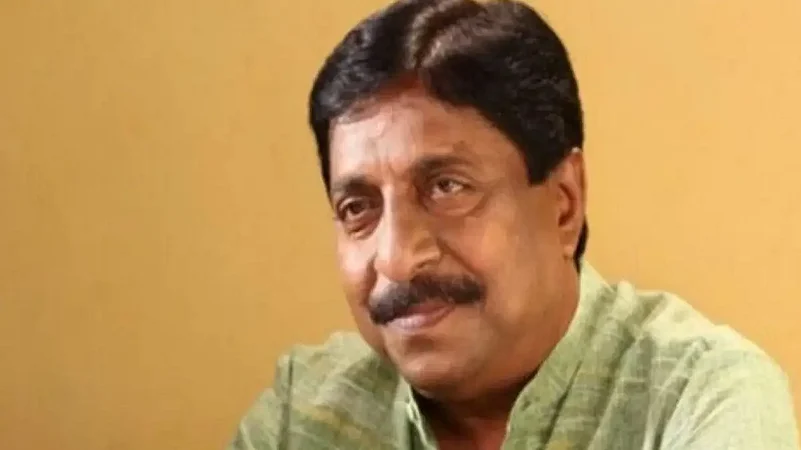
Kerala bid an emotional farewell to beloved actor Sreenivasan, whose cremation was held in the courtyard of his ancestral home at Kandanad. His sons, actors Vineeth Sreenivasan and Dhyan Sreenivasan, lit the funeral pyre.
Placed beside his mortal remains were a handwritten note and a pen—the note, placed by filmmaker Satyan Anthikad, read: “May goodness come to everyone, always.”
The cremation was held with official honours, and several prominent personalities from the film and political fields attended the ceremony.
Sreenivasan, an irreplaceable presence in Malayalam cinema, stepped into the film industry in 1976 with P.A. Backer’s Manimuzhakkam. He passed away at 8:25 AM on Saturday at Thrippunithura Taluk Hospital.
Like the heartfelt final lines that appeared at the end of his films, Sreenivasan quietly moved behind the curtain of life, leaving timeless memories etched in the hearts of Malayalis.
Thiruvananthapuram: The Thiruvananthapuram District Sessions Court has granted bail to Congress leader Sandeep Varyar and Ranjitha Pulikkan in a case related to the alleged online harassment of a woman who filed a sexual assault complaint against Palakkad MLA Rahul Mankootathil.
Bail was granted with conditions. The case includes six accused, based on the survivor’s complaint. Ranjitha Pulikkan, Mahila Congress Pathanamthitta district secretary, is the first accused, while Sandeep Varyar is the fourth accused.
Rahul Easwar is the fifth accused in the case. The other accused include a vlogger from Palakkad, advocate Deepa Joseph, and another social media account holder with the same name.
Thiruvananthapuram: Veteran Malayalam actor, screenwriter, and director Sreenivasan passed away on Monday. He was 69 years old.
He breathed his last at the Thrippunithura Taluk Hospital, where he was undergoing treatment.
Sreenivasan was a towering presence in Malayalam cinema and had acted in nearly 200 films during his illustrious career. Apart from acting, he made significant contributions as a scriptwriter and director, leaving a lasting impact on the industry.
He is survived by his sons, Vineeth Sreenivasan and Dhyan Sreenivasan, both well-known actors in the Malayalam film industry.
Avatar: Fire and Ash Review: A Watchable Visual Spectacle That Burns Bright Yet Feels Emotionally Hollow
A Review by Gideon Jotham
Movie: Avatar: Fire and Ash Director: James Cameron Duration: 3 hrs 15 mins Language: English Genre: Science Fiction, Fantasy
Positives
Direction
Casting
Colour tone & visual palette
Cinematography
Sound design
Performances
CGI
VFX
Negatives
Story
Core concept
Bloated length
Shallow character focus
Weak emotional world-building
High predictability
Story
Avatar: Fire and Ash opens in the spiritual realm, where Jake Sully’s elder and younger sons appear among their ancestors. This sequence is meant to establish grief, legacy, and spiritual continuity. Instead, it feels oddly artificial, almost like a visual obligation rather than an emotional necessity. The loss is acknowledged, discussed, and ritualised, but never truly felt by the audience.
Neytiri’s anger dominates the early portions of the film. Her rage towards humans now repeatedly labelled as “red skins”, is understandable within the narrative, but the writing treats it as a looping emotion rather than an evolving one. We are told she is broken. We are shown she is angry. But the film never allows silence, vulnerability, or contradiction to deepen her pain.
The emotional disconnect becomes clearer when the film attempts to balance grief with expansion. New tribes, new cultures, and a fire-dwelling clan are introduced, but none receive the narrative attention they deserve. They exist as visual showcases rather than living communities. Pandora expands geographically, but contracts emotionally.
One of the film’s most promising elements is the human son of the antagonist a character torn between inherited violence and personal identity. Unfortunately, his arc remains underexplored. He becomes a symbol rather than a person, an idea rather than a character. The film hints at moral complexity but retreats into familiar good-versus-evil territory.
By the time the conflict escalates, the film settles into a predictable rhythm: humans invade, nature responds, spectacle erupts. The beats are familiar, the stakes feel recycled, and the outcome is rarely in doubt. Fire may replace water as the elemental motif, but the narrative structure remains unchanged.
Direction
James Cameron directs Avatar: Fire and Ash with the confidence of a filmmaker who knows the audience will show up regardless. The command over scale, technology, and visual rhythm is absolute. Every frame is polished, every action beat is engineered for maximum spectacle. From a purely technical standpoint, this is elite-level filmmaking.
But direction isn’t just about control; it’s about choice. And Cameron’s choices here feel overly cautious. Instead of challenging the emotional grammar of the Avatar universe, he repeats it. Grief is loud, anger is constant, and conflict is externalised rather than internalised. The film tells us how characters feel instead of letting us discover it through subtext or silence.
Cameron spends enormous time expanding Pandora’s geography, new tribes, new rituals, and new environments, yet gives minimal space for emotional evolution. The direction prioritises world exhibition over character interrogation. Scenes linger on visual awe while character moments are rushed or looped.
Action sequences are staged with mechanical precision, but rarely with surprise. The escalation is predictable, the moral lines clearly drawn, and the outcome never feels in doubt. Cameron opts for safe grandeur instead of risky intimacy.
In short, the direction is technically flawless but emotionally conservative. Cameron builds another monument to his world-building genius, but forgets that even the most beautiful worlds need human or Na’vi fragility to truly matter.
Screenplay
The screenplay is where Avatar: Fire and Ash quietly collapses under its own weight. For a film that runs over three hours, the writing feels surprisingly thin. Plenty is happening on screen, but very little is actually developing.
The script relies heavily on repetition, grief is restated, anger is recycled, and conflicts are revisited without gaining new meaning. Instead of letting emotions evolve, the screenplay keeps circling the same emotional beats, mistaking duration for depth.
Character arcs are sketched, not written. Jake remains steady but static. Neytiri’s rage dominates her presence without progression. The younger characters are introduced with promise but abandoned midway, their journeys feeling more like placeholders for future films than complete arcs in this one. The antagonist’s son is the most layered figure, yet even he is denied a decisive moment of transformation.
Dialogue often serves exposition rather than character. Characters explain their motivations instead of revealing them through action or silence. Subtlety is sacrificed for clarity, and the result feels blunt rather than profound.
The biggest flaw, however, is structure. The film doesn’t move forward, it expands sideways. New worlds, new cultures, and new conflicts are introduced without narrative necessity, stretching the runtime while diluting focus. What could have been a tight emotional continuation becomes an extended setup for what comes next.
Cinematography & Colour Tone
This is where Avatar: Fire and Ash truly earns its ticket price. The cinematography is immaculate, immersive, and obsessively detailed. Every frame feels engineered to be experienced on the largest screen possible. Camera movement is fluid, spatial geography is crystal clear, and action sequences are staged with a rare sense of visual coherence.
The colour tone marks a deliberate shift from the aquatic blues of The Way of Water to a harsher palette dominated by reds, embers, volcanic blacks, and scorched earth hues. Fire isn’t just an element here, it’s a visual philosophy. The warm tones create a constant sense of threat, rage, and instability, reinforcing the film’s thematic obsession with conflict and destruction.
Lighting is used aggressively yet intelligently. Faces are often half-lit by fire or ash-filled skies, visually mirroring the moral and emotional fractures within the characters. Wide shots emphasise scale and devastation, while close-ups remain intimate without losing texture, an achievement in effects-heavy filmmaking.
Despite the heavy use of CGI, the film rarely looks artificial. Depth, contrast, and atmospheric layering give the visuals weight and tactility. Even in chaos, the image remains readable, something many modern blockbusters fail to achieve.
If the story struggles to burn, the cinematography never does. It carries emotional intent, tension, and grandeur on its own shoulders.
Sound Design & Music
The sound design in Avatar: Fire and Ash is relentlessly immersive and often more emotionally persuasive than the screenplay itself. From the crackle of fire and collapsing terrain to the layered ambience of tribal spaces and battlefields, the film creates a dense acoustic world that constantly pulls the audience inward.
Fire is given a sonic identity roaring, hissing, suffocating used not just for realism but for tension. Silence is employed sparingly, but when it appears, it lands. These quiet pockets briefly allow emotion to surface, even when the writing doesn’t fully support it.
The music leans heavily into tribal percussion and rising orchestral swells, designed to amplify scale rather than intimacy. It works exceptionally well during action and world-building sequences, but rarely settles into a memorable thematic identity. The score supports the film instead of leading it functional, powerful, but not emotionally haunting.
In several moments, the sound design ends up doing the narrative’s emotional labour. Where character arcs feel underwritten, sound fills the gap, guiding audience response and reinforcing stakes.
Performance of the Actors
The performances in Avatar: Fire and Ash are uniformly committed, but rarely transcendent largely because the actors are boxed in by a screenplay that prioritises spectacle over psychological depth.
Sam Worthington delivers a controlled and grounded performance as Jake Sully. He carries the weight of leadership with restraint, but the character itself has reached a plateau. Jake reacts more than he evolves, and Worthington is left maintaining a steady presence rather than exploring new emotional territory.
Zoe Saldaña brings ferocity and intensity to Neytiri, embodying rage, grief, and defiance with physical conviction. However, the performance is trapped in a single emotional register. The lack of progression in her arc limits what could have been one of the film’s most devastating portrayals of loss.
The younger cast shows flashes of vulnerability and internal conflict, particularly in moments of doubt and moral hesitation. Unfortunately, these performances are fragmented by uneven writing. Their arcs feel interrupted, as if they exist more to seed future instalments than to complete meaningful journeys here.
The standout remains the antagonist’s son. His internal struggle caught between inherited violence and personal conscience adds a layer of complexity missing elsewhere. The actor plays this tension with restraint, making him the most human presence in the film. Ironically, his strength only highlights how underwritten the rest of the ensemble is.
No performance is weak, but none are fully unleashed.
VFX & CGI
This is where Avatar: Fire and Ash becomes untouchable. The VFX and CGI are not just impressive they are authoritative. James Cameron once again proves that when it comes to building digital worlds that feel physically real, he is operating in a league of his own.
Fire, ash, smoke, and molten landscapes behave with startling realism. Flames have weight, heat feels oppressive, and environmental destruction carries texture rather than looking like decorative chaos. The integration between live-action performance capture and digital environments is seamless, allowing characters to move, emote, and exist naturally within entirely synthetic worlds.
What stands out most is restraint. Despite the scale, the film avoids visual clutter. Action sequences remain legible, spatial geography is always clear, and the camera never loses orientation a rarity in effects-heavy cinema. Even during large-scale destruction, the imagery remains grounded.
Creature design continues the Avatar tradition of evolutionary logic. Nothing feels randomly invented; everything looks like it belongs to a functioning ecosystem. The fire-based elements are not just visually striking but conceptually cohesive.
Ironically, the technical brilliance only highlights the film’s narrative shortcomings. The technology is ready for emotional ambition, the screenplay never fully attempts.
Final Verdict
Avatar: Fire and Ash is a triumph of technology and a failure of storytelling ambition. It overwhelms the senses but rarely touches the heart. Cameron proves once again that he can build worlds, but this time, he forgets to populate them with compelling emotional journeys.
Thrissur: The Thrissur Cyber Police have registered a case against Martin for posting a video on social media that revealed the identity of a sexual assault survivor. Martin is the second accused in the actress assault case and is currently serving a sentence at Viyyur Central Jail.
The survivor had lodged a complaint stating that Martin had circulated an abusive video targeting her on social media and had disclosed her identity. Acting on the complaint, the police initiated legal action.
The survivor has also demanded action against those who shared the video. She submitted a complaint to DIG Harishankar along with 24 video links. Subsequently, police identified 27 social media account holders who shared the video.
The survivor had earlier raised the issue with Chief Minister Pinarayi Vijayan, alleging cyber harassment, circulation of false information, and sharing of personal details on social media. During her meeting with the Chief Minister, she highlighted the cyber attacks she was facing, following which the Chief Minister directed officials to take appropriate action.
Kochi: The Kerala High Court has deferred the consideration of the bail plea filed by former Travancore Devaswom Board President M. Padmakumar in the Sabarimala gold theft case. The court observed that the case is of a serious nature.
Justice Badruddin heard the plea. Padmakumar has filed the bail application in one of the two cases registered against him. Earlier, the Vigilance Court had rejected his bail plea, prompting him to approach the High Court.
The court stated that the matter requires detailed arguments and cannot be decided immediately. The plea has been admitted, and the court indicated that it will be considered after the Christmas vacation.