New Delhi/Thiruvananthapuram: The All India Congress Committee (AICC) has officially announced its complete list of candidates for the 2026 Kerala Assembly Elections. Contesting 95 seats this time—an increase from the 92 seats in the previous election—the Congress party aims for a decisive comeback under the United Democratic Front (UDF) banner.
The announcement follows a period of intense deliberation, concluding with KPCC President K. Sudhakaran relenting to the high command’s decisions to ensure party unity.
Total Seats: Congress is contesting 95 seats directly and supporting several independent and rebel candidates in others.
Major Contestants: High-profile leaders like V.D. Satheesan (Paravur), Ramesh Chennithala (Haripad), and Chandy Oommen (Puthuppally) are set to defend their constituencies.
Fresh Faces & Strategic Shifts: The list includes a mix of seasoned veterans and new faces, including Ramesh Pisharody in Palakkad and Ramya Haridas in Chirayinkeezhu.
Full List of Congress Candidates by Constituency
Sl. No.
Constituency
Candidate Name
1
Irikkur
Adv. Sajeev Joseph
2
Dharmadam
Abdul Rasheed
3
Thalassery
K.P. Saju
4
Peravoor
Adv. Sunny Joseph
5
Mananthavady (ST)
Ms. Usha Vijayan
6
Sulthanbathery (ST)
I.C. Balakrishnan
7
Kalpetta
Adv. T. Siddique
8
Nadapuram
K.M. Abhijith
9
Quilandy
Adv. K. Praveen Kumar
10
Balusseri (SC)
V.T. Sooraj
11
Elathur
Mrs. Vidhya Balakrishnan
12
Kozhikode North
Adv. K. Jayanth
13
Nilambur
Aryadan Shoukath
14
Wandoor (SC)
A.P. Anil Kumar
15
Thavanur
V.S. Joy
16
Ponnani
Noushad Ali
17
Thrithala
V.T. Balram
18
Kongad (SC)
Mrs. K.A. Tulsi
19
Malampuzha
A. Suresh
20
Palakkad
Ramesh Pisharody
21
Tarur (SC)
K.C. Subramanian
22
Chittur
Adv. Sumesh Achuthan
23
Nemmara
T. Thankappan
24
Alathur
K.N. Febin
25
Manalur
T.N. Prathapan
26
Ollur
Adv. Shaji J Kodankandath
27
Thrissur
Rajan J Pallan
28
Nattika (SC)
Adv. Sunil Laloor
29
Kaipamangalam
T.M. Nazar
30
Puthukkad
K.M. Babu Raj
31
Chalakudy
Saneesh Kumar Joseph
32
Kodungallur
O.J. Janeesh
33
Angamaly
Roji M. John
34
Aluva
Anwar Sadath
35
Paravur
V.D. Satheesan
36
Ernakulam
T.J. Vinod
37
Thrikkakara
Mrs. Uma Thomas
38
Kunnathunad (SC)
V.P. Sajeendran
39
Muvattupuzha
Dr. Mathew Kuzhalnadan
40
Vaikom (SC)
K. Binimon
41
Kottayam
Thiruvanchoor Radhakrishnan
42
Puthuppally
Chandy Oommen
43
Aroor
Mrs. Shanimol Usman
44
Cherthala
K.R. Rajendra Prasad
45
Haripad
Ramesh Chennithala
46
Mavelikkara (SC)
Ms. Adv. Muthara Raj
47
Karunagapally
C.R. Mahesh
48
Kottarakkara
Mrs. Adv. P. Aisha Potty
49
Pathanapuram
Jyothikumar Chamakkala
50
Kundara
P.C. Vishnunadh
51
Kollam
Mrs. Adv. Bindhu Krishna
52
Chathannoor
Sooraj Ravi
53
Chirayinkeezhu (SC)
Ms. Ramya Haridas
54
Vattiyoorkavu
K. Muraleedharan
55
Kovalam
M. Vincent
56
Uduma
K. Neelakandan
57
Trikaripur
Sandeep Varier
58
Kalliasseri
Rajeevan Kappachery
59
Kannur
Adv. T.O. Mohanan
60
Mattannur
Chandran Thillenkari
61
Pattambi
T.P. Shaji
62
Shornur
P. Harigovindan
63
Kunnamkulam
Ajay Mohan
64
Wadakkancherry
Vaishakh Narayanaswami
65
Perumbavoor
Manoj Moothedan
66
Vypeen
Tony Chammy
67
Kochi
Mohammad Shiyas
68
Thiruvananthapuram
Deepak Joy
69
Devikulam (SC)
F. Raja
70
Udumbanchola
Adv. Senapathy Venu
71
Idukki
Roy K. Poulose
72
Peermade
Adv. Syriac Thomas
73
Ettumanoor
Nattakom Suresh
74
Kanjirappally
Prof. Rony K. Baby
75
Poonjar
Sebastian M.J.
76
Alappuzha
A.D. Thomas
77
Kayamkulam
M. Liju
78
Chengannur
Eby Kuriakose
79
Ranni
Pazhakulam Madhu
80
Aranmula
Abin Varkey
81
Konni
Prof. Satheesh Kochuparambil
82
Adoor (SC)
Adv. Santhakumar
83
Chadayamangalam
M.M. Nazeer
84
Varkala
Varkala Kahar
85
Nedumangad
Meenankal Kumar
86
Vamanapuram
Sudheersha Palode
87
Kazhakkootam
Sarathchandra Prasad
88
Nemom
K.S. Sabarinadhan
89
Aruvikkara
V.S. Sivakumar
90
Parassala
Sanal
91
Kattakkada
M.R. Baiju
92
Neyyattinkara
N. Shakthan
93
UDF Alliances and Independent Support
The Congress-led UDF will also support various independent and rebel candidates in critical seats to maximize their chances against the LDF and BJP:
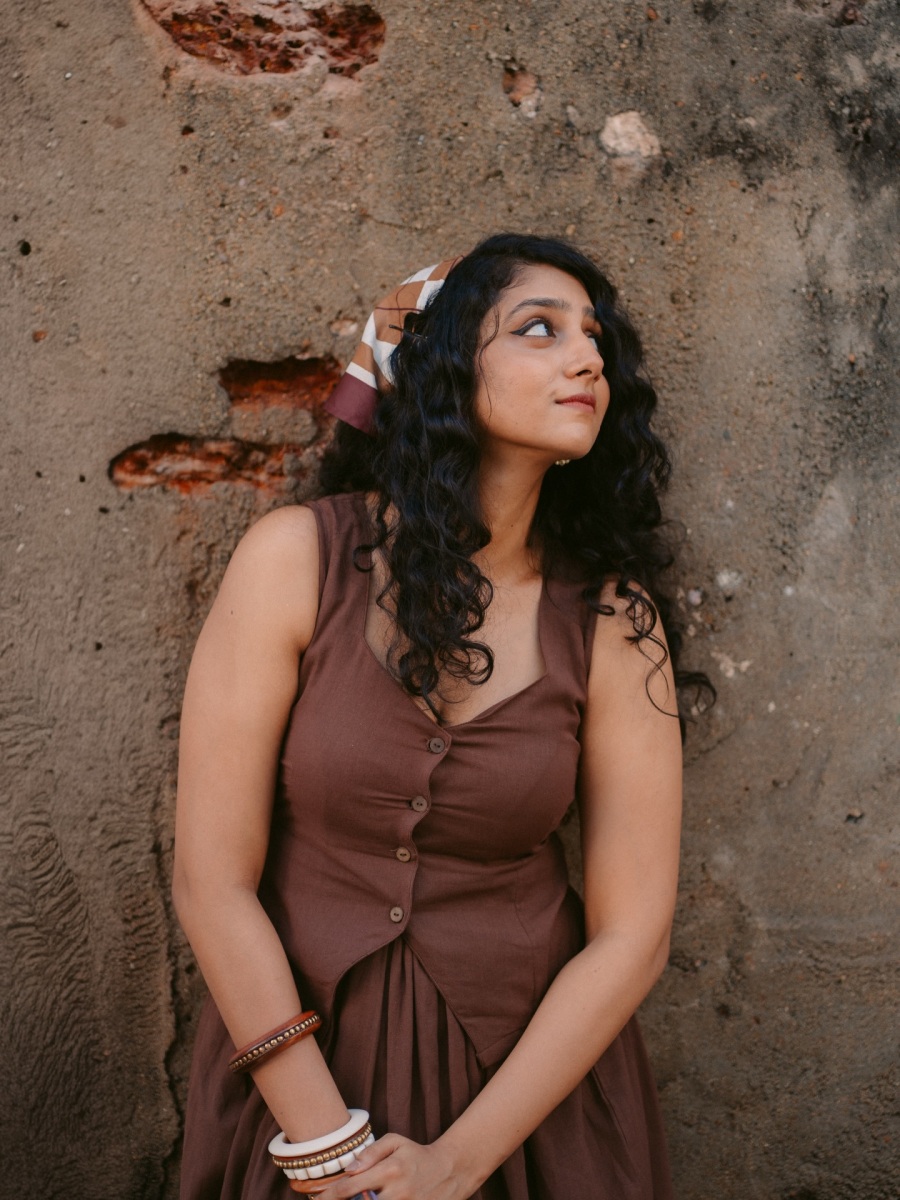
Find Latest photos of Aarsha Chandini Baiju. Arsha Baiju new hd images in photoshoot.Arsha Baiju movie stills, Arsha Baiju pics latest. Actress Arsha Baiju real life images in fashion dresses
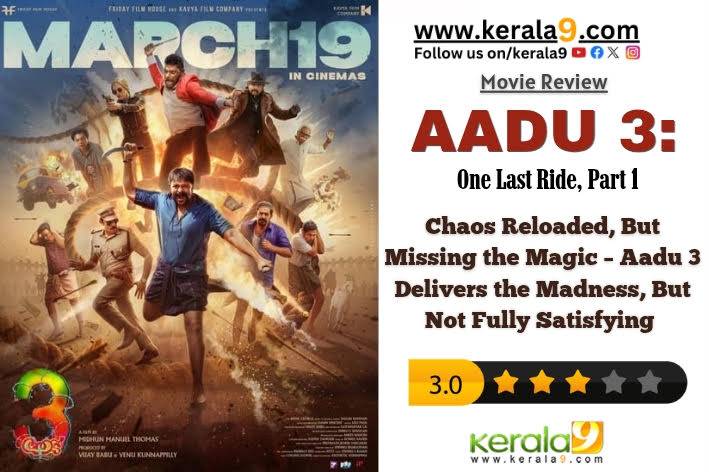
AADU 3 Part 1 Review: Chaos Reloaded, But Missing the Magic – Aadu 3 Delivers the Madness, But Not Fully Satisfying
ONE WORD: Chaos Reloaded, But Missing the Magic – Aadu 3 Delivers the Madness, But Not Fully Satisfying
LANGUAGE: MALAYALAM
DURATION: 02 Hours 50 Minutes
GENRE: Fantasy Comedy Drama
•POSITIVES:
1: Direction
2: Story and fantasy concept
3: Comedies
4: Performance of actors
5: Cinematography
6: Background Score
7: Art Direction
8: Second Half
•NEGATIVES:
1: Predictable
2: Duration of the film
3: Screenplay could have been better
4: Slow first half
AADU 3 Part 1STORY:
The film moves between two different time periods, connecting the present-day life of Shaji Pappan and his gang with a past rooted in the 1700s. In the current timeline, Pappan once again lands in trouble when he crosses paths with Satan Xavier’s men, who are involved in a plan targeting a bridge. What initially appears to be a routine conflict soon turns into something much bigger, as the bridge is revealed to have a strange and personal link to Pappan’s past. As the narrative shifts across timelines, the story brings in elements like rebirth, parallel identities, and a layer of fantasy that ties everything together. The presence of his longtime rival Dude, along with a new external group, adds to the confusion and escalates the situation further. What follows is a chain of chaotic events where past and present overlap, leading to a mix of humor, conflict, and unexpected twists, giving the film a broader and more ambitious narrative setup.
AADU 3 Part 1REVIEW & ANALYSIS OF THE FILM:
POSITIVES
1. Direction:
The direction shows a certain level of control, but it doesn’t fully capitalize on the potential of the film’s premise. While the filmmaker manages to keep the narrative from completely derailing, the grip often feels inconsistent rather than firm. There are moments where the storytelling works effectively, especially when blending fantasy with humor, but these highs are not sustained throughout.
The tonal balance between fantasy and comedy, although interesting on paper, feels uneven in execution. At times, the film leans too heavily on comedy, undercutting the weight of important scenes that could have added depth or tension. The director seems more comfortable staging humorous sequences than handling narrative intensity, which results in a lack of emotional or dramatic impact.
Moreover, the staging of certain key moments lacks sharpness. Instead of building momentum, some scenes feel stretched or loosely structured. While the film never becomes entirely dull, it rarely reaches a level of tight, compelling storytelling that keeps the audience fully invested. Overall, the direction is decent but falls short of delivering a consistently engaging and well-controlled cinematic experience.
2. Story & Fantasy Concept
The core idea of combining a dual timeline narrative with a time travel concept is ambitious and intriguing. However, the execution doesn’t fully match the strength of the concept. While the integration of familiar characters into this fantasy setup is handled in a somewhat convincing manner, the writing often plays it safe, avoiding deeper exploration of its own ideas.
The time travel element, which should have been a major highlight, feels underdeveloped and is introduced more as a convenient plot device rather than a well-built narrative foundation. Instead of adding complexity or emotional weight, it mostly serves to create momentary excitement without long-lasting impact.
Additionally, the screenplay relies heavily on sudden occurrences and convenient transitions. While these moments keep the narrative moving, they also expose a lack of strong structural depth. The continuity is maintained at a surface level, but when examined closely, the progression feels less organic and more constructed.
Another drawback is the predictability in key portions of the plot. Despite the fantasy angle, many developments follow familiar patterns, reducing the sense of surprise. The film hints at a larger universe and leaves room for a sequel, but this setup feels more like a missed opportunity than a fully satisfying narrative arc. In essence, the story has a strong foundation and plenty of scope, but the writing doesn’t fully explore its potential, resulting in a film that is engaging in parts but not consistently compelling.
3. Comedy
Comedy remains the backbone of the film, staying true to the essence of the franchise. The humor is not just situational but also character-driven, which makes it more effective. Interestingly, even during intense or crucial moments, the film smartly injects comedy, making the experience unique and highly entertaining. Characters like Dude, Pappan, and Shammer consistently deliver laugh-out-loud moments. Their presence ensures that even serious scenes don’t feel heavy, maintaining a light-hearted tone throughout. The film successfully uses comedy as a narrative tool rather than just an add-on.
4. Performances
The performances elevate the film significantly:
Jayasurya as Pappan delivers a solid performance, perfectly retaining the character’s signature traits and energy. His consistency helps anchor the film. Vinayakan as Dude is a standout performer. He effortlessly balances humor, intensity, and unpredictability, making his character both entertaining and intriguing. His timing and screen presence add immense value. Sunny Wayne as Sathan Xavier gets more scope in this installment and utilizes it well, maintaining the comedic rhythm effectively. Vijay Babu as Sarbath Shammer continues his usual entertaining streak, making good use of his screen time with impactful comic moments. Dharmajan Bolgatty as Captain Cleetus steals the show. His comic timing, expressions, and ability to sustain humor from start to finish make him one of the most memorable aspects of the film. Saiju Kurup as Arakkal Abu was at his best as usual and other actors like Indrans, Sudhi Koppa, Bijukuttan, Aju Varghese, Bhagath Manuel have done complete justice to their respective supporting characters.
5. Technical Aspects
Cinematography
The visual treatment of the film, especially during the periodic sequences, is impressive. The cinematography effectively captures the mood and enhances the fantasy elements. The visuals are clean, well-composed, and supportive of the narrative, adding depth to the storytelling.
Background Score
The background score plays a crucial role in enhancing the film’s impact. Each character is accompanied by distinct theme music, which adds both nostalgia and excitement. These musical cues elevate key moments, especially during entry scenes and important plot developments, making them more engaging and memorable.
Art Direction
The art department deserves appreciation for its effort in recreating the period settings. The sets are designed neatly and blend well with the narrative. The attention to detail helps in making the fantasy world more believable and immersive.
CGI
Considering the requirements of the story, the use of CGI is handled decently. While not extraordinary, it is convincing enough to support the narrative without becoming distracting. The visual effects serve their purpose effectively within the film’s scale.
6: Second Half
The film truly picks up pace in the second half. Compared to the first half, it is more engaging, faster, and packed with interesting developments. The narrative shifts into a more thrilling mode while still retaining its comedic essence. This balance between humor and progression makes the latter half more enjoyable and impactful.
NEGATIVES FELT:
1. Predictability
Despite building itself on a fantasy-driven premise with elements like dual timelines and time travel, the film surprisingly falls into familiar narrative patterns. Many of the twists that are meant to create impact can be seen coming from a distance, reducing the sense of surprise. Instead of subverting expectations, the writing often follows a safe route, making certain key moments feel routine rather than exciting.
This predictability becomes more noticeable because the film promises complexity but doesn’t fully deliver on it. The audience is rarely challenged or caught off guard, which slightly weakens the overall engagement. With a concept like this, there was ample opportunity to create layered storytelling, but the film settles for straightforward progression instead.
2. Duration
The film suffers from an overstretched runtime that affects its overall sharpness. While there is enough content to justify a decent length, the lack of tight editing makes several portions feel unnecessarily prolonged. Certain scenes linger longer than required, and a few sequences could have been trimmed without affecting the narrative. This extended duration particularly impacts the pacing in the earlier portions, where the film takes time to find its rhythm. A more disciplined edit could have made the storytelling more crisp, enhancing both the entertainment value and narrative flow. Instead, the film occasionally feels indulgent especially the first half makes the momentum slow.
3. Screenplay
The screenplay is where the film shows its biggest limitations. While the story idea has strong potential, the writing doesn’t fully translate that strength onto the screen. Several scenes feel underwritten, lacking the depth and detailing needed to make them truly impactful. Transitions between key moments often feel convenient rather than organic, giving the impression of a loosely structured narrative. Emotional beats are not explored deeply, and dramatic moments sometimes pass without leaving a lasting impression. The film also relies heavily on its comedy to carry the narrative, which, while effective in parts, cannot completely compensate for the lack of a tightly woven screenplay. With more refined writing—especially in terms of structure, character development, and conflict building—the film could have achieved a much stronger narrative impact.
4: Slow First Half
The first half of the film struggles with pacing issues, taking considerable time to establish its world, characters, and narrative direction. While this buildup is necessary to some extent, the execution feels inconsistent, with several scenes not contributing significantly to the overall progression.
The shift between timelines, which should have been an engaging narrative device, works only partially. While a few of these transitions feel interesting and spark curiosity, others come across as just average, lacking the impact needed to hold strong attention. This inconsistency makes the flow feel uneven—at times engaging, but at other moments just “okay,” without creating any real excitement. There is a noticeable lack of urgency in the storytelling during this phase. Even though the comedy elements help maintain a watchable tone, they don’t fully compensate for the slow momentum. The film doesn’t become boring outright, but it also doesn’t reach a level where the audience feels completely hooked.
This results in a mixed experience—watchable, mildly engaging in parts, but not consistently compelling. The contrast becomes more evident when compared to the second half, which is far more dynamic and focused.
CONCLUSION:
So overall, Aadu 3 feels like a film caught between ambition and identity. It tries to grow bigger, louder, and more complex, but in doing so, loses some of the raw, carefree madness that once made the franchise so much fun. Midhun Manuel Thomas tries to scale up the vision, but somewhere along the way, the film drifts away from the chaotic charm that once defined it. That said, it’s not a dull ride. The humor still clicks, the characters still entertain, and the second half brings in the energy the film initially lacks. You keep waiting for it to fully take off—and while it never quite reaches that high, it gives enough moments to stay invested. Overall, a film that promises more than it delivers, but still manages to entertain in its own messy, uneven way — a one-time watch with flashes of fun.
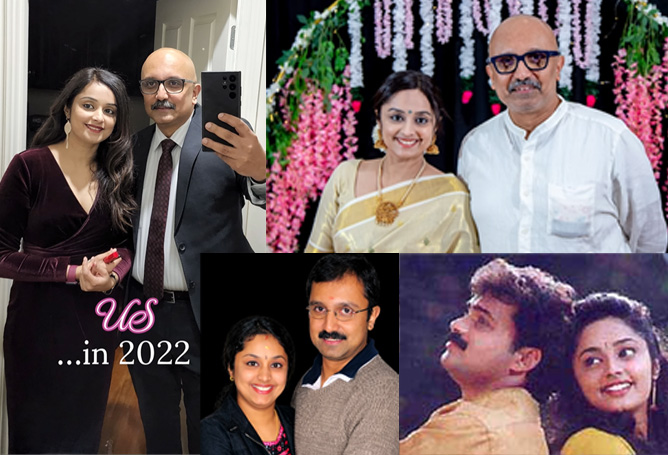
Deepa Nair, who stole the hearts of Malayali audiences with her debut as ‘Annie’ in the Kunchacko Boban starrer Priyam, is currently making waves on social media. The actress shared a heartwarming “Now & Then” post with her husband, Rajeev, celebrating over 23 years of togetherness.
A Journey of 23 Beautiful Years Despite appearing in only one film in 2000, Deepa remains a household name in Kerala. Reflecting on her long-standing marriage, she wrote:
“Following the trend of Now & Then, with my husband. We have been together for more than 23 years, with thousands of memories shared. From then to now, we’ve grown up, changed, and built a life we love. It hasn’t always been perfect, but it’s always been us. I think we’ve earned the ‘Couple Goals’ tag by now, right?”
From Silver Screen to Software Engineering While she received several offers for major films like Chakram and Devadoothan following the success of Priyam, Deepa chose to prioritize her education. A native of Thiruvananthapuram, she completed her engineering degree and transitioned into the IT sector. She is currently working as a Software Engineer in Melbourne, Australia, where she lives with Rajeev and their two daughters, Shradha and Madhavi.
The “Santhoor Mommy” of Mollywood Fans were quick to flood the comment section, not just to congratulate the couple, but to express awe at Deepa’s age-defying looks. Even at 46, many pointed out that she looks almost identical to her character in Priyam. Many followers have humorously dubbed her the “Santhoor Mommy,” asking for her beauty secrets and wondering if she would ever consider a comeback to the big screen.
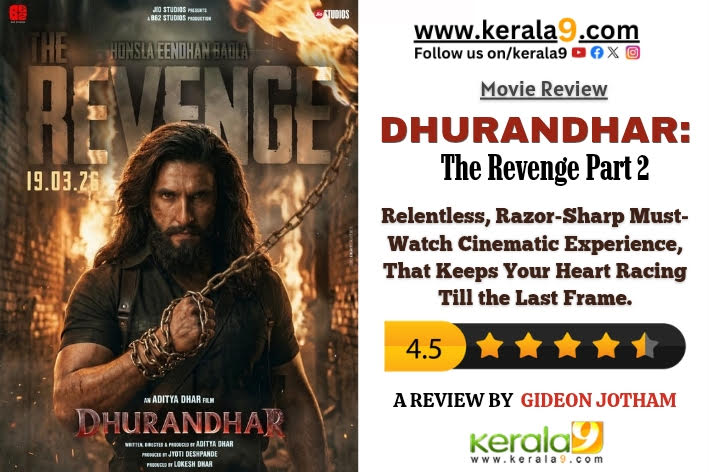
Dhurandhar 2 The Revenge Review – A Relentless, Razor-Sharp Must-Watch Cinematic Experience
Film: Dhurandhar: The Revenge Director: Aditya Dhar Language: Hindi Duration: 3hr 55min Genre: Political Action Spy Thriller
A Review by Gideon Jotham
Positives
Engaging
Intense
Controlled
Immersive
Layered
Powerful
Direction
Script
Cinematography
Artwork
Music and Background Score
Costumes
Negative:
Insertion of Propongda
Dhurandhar 2 Story
At a surface level, Dhurandhar: The Revenge is about vengeance, but beneath that, it is a meditation on what grief does to a human being when it is left unresolved, when justice feels distant, and when memory becomes both a refuge and a weapon.
The film begins in stillness. The protagonist isn’t introduced as a “hero,” but as a man anchored in routine, someone whose identity is quietly built around relationships, small joys, and a sense of moral certainty. There is warmth in his world, and more importantly, there is trust in people, in systems, in the idea that life, however flawed, still has an order.
That belief is what the film destroys first.
The inciting tragedy is not just an event; it is a rupture. It doesn’t merely take something away from him; it redefines his relationship with reality itself. What makes this moment powerful is not its scale, but its intimacy. The loss feels personal, almost suffocating, because the film lingers not on the violence, but on the aftermath, the silence in rooms that once held laughter, the absence that cannot be negotiated with.
From here, the story resists turning immediately into a conventional revenge arc. Instead, it allows the protagonist to fracture. His grief is not loud it is internalized, simmering, transforming into something colder and more deliberate. The man we saw in the beginning doesn’t disappear overnight; he erodes. And in that erosion, something else takes shape, someone capable of doing what his former self never could.
As he steps into this new reality, the narrative widens. What initially seemed like a personal tragedy begins to reveal systemic rot, layers of power, influence, and moral compromise. The antagonists are not just individuals but embodiments of a world where accountability is negotiable. This shift is crucial because it reframes his revenge: it is no longer just about settling a score, but about confronting a structure that enabled the loss in the first place.
Yet, the film’s most compelling tension lies within the protagonist himself. Every step he takes forward pulls him further away from who he used to be. His pursuit is methodical, almost surgical, but it comes at a cost, the gradual numbing of empathy, the blurring of right and wrong. The question the story keeps asking, quietly but persistently, is: When does justice stop being justice and start becoming obsession?
Flashbacks play a significant role here, not as mere exposition, but as emotional counterpoints. They remind us of the man he was, creating a haunting contrast with the man he is becoming. These moments don’t just justify his actions; they complicate them, forcing the audience to sit with discomfort rather than easy validation.
By the time the narrative approaches its climax, the stakes are no longer just external. The confrontation is as much internal as it is physical. Victory, in the traditional sense, begins to feel hollow because the film subtly suggests that revenge doesn’t restore what was lost, it only redefines what remains.
In the end, Dhurandhar: The Revenge doesn’t simply ask whether the protagonist succeeds. It asks something far more unsettling: Even if he does… what version of him is left to live with it?
Screenplay
The screenplay of Dhurandhar: The Revenge operates with a level of precision and control that is both rare and demanding. Writing a film that spans close to four hours is, in itself, a structural challenge, but what makes this screenplay remarkable is how it transforms that duration into an advantage rather than a burden.
At its core, the writing is built on architectural discipline. This is not a story that unfolds randomly or leans on episodic convenience. Instead, it feels carefully engineered, each act feeding into the next with deliberate intent. The first act lays emotional groundwork with patience, allowing the audience to fully inhabit the protagonist’s world. This is crucial, because when the narrative eventually fractures, the impact is not superficial, it is deeply felt.
What stands out is the screenplay’s commitment to cause-and-effect storytelling. Nothing happens in isolation. Every decision the protagonist makes triggers consequences that ripple forward, shaping future events. This creates a chain reaction where the narrative never feels stagnant; it is constantly evolving, constantly tightening its grip.
The second act is where the writing truly asserts its strength. Many films struggle here, especially those with extended runtimes, often falling into repetition or narrative fatigue. But here, the screenplay avoids that trap through layered conflict design. It doesn’t rely on a single driving force; instead, it introduces multiple threads, personal revenge, systemic corruption, psychological deterioration, all unfolding simultaneously. These threads intersect, collide, and complicate one another, creating a sense of unpredictability.
Equally important is the screenplay’s handling of tension. Rather than depending solely on action, it builds unease through information control, revealing just enough to keep the audience curious, while withholding enough to maintain suspense. Scenes often carry a dual purpose: what is happening on the surface, and what is being implied beneath it. This subtext-driven writing ensures that even dialogue-heavy moments remain engaging.
The pacing deserves particular attention. Maintaining audience engagement for four hours requires more than just plot, it requires rhythmic intelligence. The screenplay understands this. It alternates between high-intensity sequences and quieter, introspective moments, creating a flow that prevents exhaustion. Importantly, these slower moments are not filler; they deepen character psychology, making the eventual confrontations more impactful.
Another key strength is character-driven progression. The plot does not drag the protagonist forward; rather, the protagonist’s evolving mindset drives the plot. As his moral boundaries shift, so does the nature of the story itself. Early decisions feel reactive, almost impulsive. Later ones become calculated, even ruthless. This progression is not abrupt, it is gradual, believable, and unsettling.
The dialogue, while rooted in a mass-appeal framework, often carries emotional and thematic weight. Confrontations are not just about dominance; they are about ideology, pain, and justification. Lines are written to resonate, not just to impress, giving the film moments that linger beyond their immediate impact.
What truly sets the screenplay apart, however, is its ability to sustain narrative engagement over an extended duration without dilution. There is a constant sense of forward motion, an invisible pull that keeps the audience invested. Even when the film takes detours into backstory or emotional reflection, these moments feel integrated rather than disruptive.
That said, such tight control can occasionally feel almost too calculated. The screenplay rarely allows chaos or unpredictability to exist without eventual explanation. For some viewers, this might reduce the sense of organic spontaneity. But within the framework of a large-scale revenge drama, this precision ultimately reinforces the film’s immersive quality.
By the time the story reaches its final act, the screenplay has already done the heavy lifting. The climax does not feel like an isolated peak, it feels like the inevitable culmination of everything that has come before. This is the hallmark of strong writing: when the ending feels both surprising and, in hindsight, unavoidable.
In the end, the screenplay of Dhurandhar: The Revenge is not just “tight”, it is meticulously constructed, emotionally aware, and structurally resilient. It proves that length is not a limitation when the writing is driven by clarity, purpose, and a deep understanding of narrative mechanics.
Direction
The direction of Dhurandhar: The Revenge is defined by control, conviction, and a clear understanding of scale. Handling a four-hour narrative is not merely about staging scenes, it’s about sustaining vision, tone, and emotional continuity across an expansive canvas. What the director achieves here is not just coherence, but command.
From the very beginning, there is a noticeable sense of intentional storytelling. The director doesn’t rush into spectacle; instead, he allows the world and its characters to settle in. This patience is crucial, because it builds a foundation that makes every later escalation feel earned rather than manufactured. The film never feels like it is trying to impress, it feels like it is unfolding with purpose.
One of the most striking aspects of the direction is its ability to balance intimacy with scale. On one hand, there are large, stylized sequences, action set pieces, confrontations, and dramatic peaks, that deliver the expected cinematic highs. On the other hand, there are quiet, almost still moments where the camera lingers on the protagonist, allowing the audience to sit with his emotions. This duality is handled with remarkable fluidity, ensuring that neither aspect overwhelms the other.
The director also shows a strong grasp of visual storytelling. Rather than relying solely on dialogue, many emotions are conveyed through framing, lighting, and movement. The use of shadows, confined spaces, and empty frames subtly reflects the protagonist’s psychological state. As the story darkens, so does the visual tone, creating a seamless alignment between narrative and imagery.
Another key strength lies in performance direction. The lead actor’s transformation feels grounded and gradual, which is a testament to how carefully the character has been guided. Emotional beats are given room to breathe, nothing feels rushed or exaggerated. Even in high-intensity scenes, the performances retain a sense of realism, avoiding the trap of becoming overly theatrical.
What truly elevates the direction, however, is its handling of tension and engagement over time. Keeping an audience invested for four hours requires more than just strong writing, it requires an instinct for when to hold back and when to release. The director demonstrates this instinct consistently. Scenes are allowed to build, sometimes slowly, but always with a sense of underlying momentum. There is rarely a moment that feels unnecessary or disconnected.
The film’s tonal consistency is another achievement. Despite shifting between emotional drama, action, and psychological conflict, the direction ensures that the film never feels fragmented. Everything exists within a unified vision, dark, intense, and emotionally charged.
If there is any limitation, it is that the direction is so controlled, so precise, that it occasionally leaves little room for raw unpredictability. Everything feels designed, calculated to achieve a specific impact. While this works in maintaining engagement, it can slightly reduce the sense of spontaneity.
Yet, this very precision is also what makes the film work on such a large scale. The director never loses sight of the narrative, never allows the film to drift, and never compromises on emotional clarity.
In the end, the direction of Dhurandhar: The Revenge is not just about executing a story, it is about sustaining an experience. It holds the audience, guides them, and refuses to let go, proving that with the right vision, even a four-hour film can feel immersive, cohesive, and relentlessly engaging.
Reel vs Real: The Question of Propaganda
One of the more intriguing aspects of Dhurandhar: The Revenge is how it navigates the thin, often uncomfortable line between cinematic storytelling (“reel”) and ideological influence (“real”). Revenge dramas, by nature, tend to simplify morality, but this film both uses and, at times, challenges that simplification.
On the “reel” level, the film operates within a familiar framework: a wronged individual rises against a corrupt system, confronting powerful figures who appear almost untouchable. This structure is designed for emotional impact, it gives the audience someone to root for and something to feel against. The anger, the injustice, the eventual retaliation, all of it is heightened, stylized, and shaped for maximum engagement.
But beneath this cinematic layer lies a more complex question:
Is the film merely telling a story, or is it shaping a perspective?
The portrayal of power structures in the film leans toward a certain absolutism systems are shown as deeply flawed, sometimes beyond redemption. At the same time, the protagonist’s actions, however extreme, are framed with a sense of justification. This is where the line between narrative and messaging begins to blur. The film doesn’t explicitly preach, but it strongly guides emotional alignment, leaving little ambiguity about who deserves sympathy and who doesn’t.
However, what prevents it from becoming outright propaganda is its occasional awareness of moral cost. The protagonist’s journey is not entirely glorified. There are moments, subtle but significant, where the film hints at the psychological toll of his actions. These moments act as cracks in the otherwise solid “hero vs system” narrative, suggesting that revenge, even when justified, is not without consequence.
The tension between “reel” and “real” becomes most evident in how the audience interprets the story. On one level, it is a cathartic experience, watching injustice being confronted in ways that reality often denies. On another level, it risks reinforcing a worldview where individual retribution replaces institutional justice, which can be a dangerous simplification when translated into real-world thinking.
What’s important is that the film doesn’t entirely close this debate. It presents its world with conviction, but leaves enough emotional residue for the audience to question what they’ve witnessed. Is the protagonist a symbol of justice, or a product of a broken system? Is the system irredeemable, or simply distorted for narrative effect?
In the end, Dhurandhar: The Revenge exists in that grey space. It is not pure propaganda, but neither is it completely neutral. It is a film that uses cinematic intensity to shape emotional truth, and in doing so, invites the audience to reflect on how much of what they feel belongs to the story, and how much they carry back into reality.
Performances
Dhurandhar: The Revenge thrives not just on its scale and writing, but on a densely packed ensemble cast that brings texture, intensity, and credibility to its world. What stands out is how the film doesn’t rely on a single performance, it builds a collective force of characters, each contributing to the narrative’s emotional and ideological weight.
At the center is Ranveer Singh, who delivers a performance that is both physically commanding and emotionally layered. He doesn’t just play a man seeking revenge, he embodies transformation. His shift from vulnerability to controlled fury is gradual and deeply felt. What makes his performance compelling is the restraint; even in explosive moments, there is a sense of internal conflict simmering beneath the surface.
Akshaye Khanna brings a quiet, almost unsettling intensity to his role. His performance is marked by composure and intelligence, making him a formidable presence without needing overt dramatics. He operates in silences as much as in dialogue, and that minimalism works powerfully in contrast to the film’s scale.
Sanjay Dutt adds gravitas that only experience can bring. There is a certain weight and authority in his presence, every scene he occupies feels elevated. He doesn’t overplay; instead, he leans into controlled intensity, making his character feel lived-in and consequential.
R. Madhavan, as Ajit Sanyal, delivers one of the more nuanced performances in the film. He brings measured realism, grounding the narrative when it risks becoming too stylized. His performance feels intellectual and emotionally aware, offering a strong counterbalance to the protagonist’s intensity.
Arjun Rampal, appearing in dual shades (including Major Iqbal), brings a layered ambiguity to his roles. There’s a certain controlled unpredictability in his portrayal, he feels both composed and dangerous, which adds intrigue to his presence on screen.
Among the extended cast, Sara Arjun as Yalina Jamali leaves a strong impression with a performance that carries emotional sensitivity. She brings a certain fragility and authenticity that enhances the film’s emotional core.
Saumya Tandon, as Ulfat, delivers a grounded and sincere performance, adding emotional texture to the narrative. Her character may not dominate screen time, but it adds depth to the world the film builds.
Rakesh Bedi as Jameel Jamali brings familiarity and subtle presence, while Gaurav Gera as Mohammad Aalam adds moments of realism through his naturalistic approach.
Actors like Manav Gohil (Sushant Bansal), Naveen Kaushik (Donga), and Akash Khurana (Devavrat Kapoor) contribute effectively, ensuring that even smaller roles feel purposeful rather than ornamental.
The presence of characters like Uzair Baloch (played by Danish Pandor) and others across the narrative adds to the film’s sense of realism and scale, making the world feel populated and lived-in rather than constructed.
Even the brief appearances, from actors like K. Anshuman Thakur, Sanjay Mehandiratta, Aquib Ali Zarwari, and Vikash Rai, serve the narrative without distraction, reflecting the director’s ability to extract functional, believable performances across the board.
Cinematography
The cinematography operates with a strong sense of mood and psychological alignment. It doesn’t merely capture events, it reflects the internal state of the narrative. In the early portions, frames feel more open, balanced, almost breathable. But as the story descends into darker territory, the visual palette gradually shifts, shadows deepen, compositions tighten, and the world begins to feel more claustrophobic.
There is a deliberate use of contrast and lighting to underline moral ambiguity. Characters are often placed in half-lit frames, suggesting duality, what is seen versus what is hidden. Night sequences, in particular, stand out for their textured use of light, where illumination feels selective rather than natural, guiding the viewer’s attention with precision.
The camera movement is equally purposeful. It avoids unnecessary flamboyance, instead opting for controlled motion, slow pushes, steady tracking shots, and composed frames that allow tension to build organically. When the film does expand into larger, more dynamic visuals, the shift feels earned, amplifying the scale without breaking tonal consistency.
Close-ups are used effectively, especially in emotionally charged moments. The camera lingers just enough to make the audience sit with discomfort, forcing engagement rather than offering easy escape. At the same time, wider frames are used to establish isolation, placing characters within vast or empty spaces to visually reinforce their psychological distance.
Overall, the cinematography is not just aesthetic, it is narrative-driven, evolving with the story and deepening its emotional impact.
Editing
If the cinematography defines how the film looks, the editing defines how it breathes.
For a film that runs close to four hours, the editing is remarkably disciplined and cohesive. The biggest achievement here is sustained engagement, the film rarely feels sluggish, which is a direct result of how tightly it has been cut.
The pacing is carefully modulated. High-intensity sequences are edited with sharp precision, quick, impactful cuts that enhance urgency without creating confusion. In contrast, emotional and reflective moments are given space, with longer takes that allow performances to resonate. This contrast in tempo is what keeps the viewing experience dynamic rather than exhausting.
Transitions between scenes are handled with subtle intelligence. Instead of abrupt jumps, the film often uses visual or thematic continuity to move from one moment to another, creating a seamless narrative flow. This is particularly effective in sequences involving flashbacks or parallel storytelling, where the editing ensures clarity without over-explaining.
Another strength is the handling of narrative density. With multiple characters and intersecting arcs, the risk of fragmentation is high, but the editing keeps everything aligned. Each thread is revisited at the right moment, maintaining coherence while still building tension.
Importantly, the editor understands when to hold back. Not every moment is cut for speed; some are allowed to linger, creating a sense of weight and consequence. This restraint adds to the film’s emotional depth.
If there is a minor limitation, it is that the editing, much like the direction, is highly controlled. There is little room for raw, chaotic energy, everything feels carefully structured. While this enhances clarity, it slightly reduces the feeling of unpredictability.
Background Score
The background score is arguably one of the film’s most powerful tools. It doesn’t merely accompany scenes, it drives them from within.
From the very beginning, there is a noticeable emphasis on tonal atmosphere. Low, brooding compositions dominate the early portions, creating a sense of unease even in seemingly calm moments. As the narrative progresses, the score evolves alongside the protagonist, becoming heavier, more percussive, and increasingly urgent.
What stands out is the use of layered instrumentation. Instead of relying on a single identifiable theme, the score builds itself through textures, deep bass lines, sharp percussive hits, and haunting melodic undertones. This layering creates a sense of constant tension, as if something is always about to unfold.
In high-intensity sequences, the score becomes almost visceral. It doesn’t just heighten action, it immerses the audience in it, syncing with movement and rhythm in a way that makes scenes feel more immediate and impactful. Yet, the film shows restraint where it matters. In emotionally charged moments, the music often pulls back, allowing silence or minimal instrumentation to take over. This contrast makes those scenes feel more intimate and real.
There are also recurring motifs, subtle musical signatures associated with the protagonist’s journey. These motifs evolve over time, mirroring his psychological transformation. By the climax, the score doesn’t just support the narrative, it reflects the culmination of everything the character has become.
Songs
The songs in the film are used sparingly but strategically. Rather than interrupting the narrative, they are woven into it, often serving as emotional extensions of the story.
Some tracks function as reflective pieces, slowing the narrative down to explore loss, memory, and longing. These songs add a layer of emotional depth, giving the audience space to connect with the protagonist beyond his actions.
Others lean into intensity, complementing the film’s darker themes. Even here, the focus remains on mood rather than spectacle. The songs are not just designed to be catchy, they are designed to belong within the film’s world.
Sound Design Integration
What elevates the music further is how seamlessly it blends with the film’s sound design. Background score, ambient noise, and silence are all used in coordination, creating a cohesive auditory experience. At times, the absence of music can be as powerful as its presence, allowing tension to build more organically.
CONCLUSION
Dhurandhar: The Revenge is not just a film, it is an experience of sustained intensity, a rare blend of scale, control, and emotional weight that refuses to dilute itself for convenience. In an era where attention spans are shrinking, this film dares to demand four hours, and remarkably, it earns every single minute of it.
What truly sets it apart is not just its technical excellence or star power, but its clarity of vision. The screenplay remains razor-sharp, the direction unwavering, the performances deeply committed, and the technical craft, from cinematography to background score, works in unison to create something immersive and cohesive. There is a sense that nothing here is accidental; every frame, every pause, every eruption of emotion feels designed with intent.
Yet, beyond all its cinematic strengths, what lingers is the film’s emotional aftertaste. It doesn’t simply deliver revenge, it explores its cost. It doesn’t just present conflict, it makes you sit with its consequences. And in doing so, it elevates itself beyond conventional mass cinema into something far more resonant and introspective.
This is not a perfect film, it is, at times, almost too controlled, too precise, but perhaps that very precision is what allows it to maintain such an unbroken grip on the audience.
In the end, Dhurandhar: The Revenge stands as a testament to what mainstream cinema can achieve when ambition meets discipline. It is bold, immersive, and unapologetically intense, a film that doesn’t just aim to entertain but to consume your attention completely.
In the fast-evolving world of modern dating, a new term is taking over social media feeds: Delulu Dating. If you’ve spent any time on TikTok or Instagram lately, you’ve likely seen the phrase “Delulu is the solulu” (delusional is the solution). But what does it actually mean for your love life?
From “situationships” to “beige flags,” Gen Z is famous for coining a new romantic lexicon. Now, Delulu Dating is the latest trend encouraging singles to embrace a “fantasy-first” mindset. Here is everything you need to know about this viral relationship movement.
What Exactly is Delulu Dating?
Derived from the word “delusional,” Delulu Dating is a mindset where individuals choose radical optimism over reality. It involves staying hopeful and manifesting a “happily ever after” even when the current dating signs are less than ideal.
In a world filled with ghosting and “breadcrumbing,” being delulu is a conscious choice to wear rose-tinted glasses. It’s about believing a relationship will work out despite obvious red flags or a lack of clear commitment.
Why is Gen Z Embracing the “Delulu” Mindset?
For many, this trend is a survival mechanism against “dating fatigue.” After endless swiping and failed matches, the delulu approach offers a sense of levity and hope.
Manifestation: Many see it as a form of manifesting—believing so strongly in a positive outcome that you “attract” it into reality.
Confidence Boost: By acting as if they are already in a secure, loving relationship, daters often feel more confident and less anxious.
Escapism: It provides a playful escape from the often harsh and transactional nature of modern dating apps.
The Benefits: Is There a Sunny Side to Delusion?
Believe it or not, experts suggest that a little bit of “delulu” energy can be healthy. It encourages people to:
Remain open to new connections.
Stop over-analyzing every small interaction.
Approach dating with a sense of humor rather than dread.
The Risks: When Red Flags Become Invisible
While the trend is mostly playful, there is a thin line between “hopeful” and “denial.” The biggest risk of Delulu Dating is the tendency to ignore toxic behaviors or serious compatibility issues.
If you find yourself making excuses for a partner who consistently disrespects your boundaries, you might be crossing from “playfully delulu” into a “delusionship”—a relationship that exists primarily in your head.
How to Navigate the Trend Safely
If you want to try the delulu way, follow these three tips:
Stay Self-Aware: Keep one foot on the ground. It’s okay to dream, but don’t ignore your gut feeling if something feels truly wrong.
Set Time Limits: If your “manifestation” hasn’t turned into a reality after a few months, it might be time for a reality check.
Prioritize Communication: Don’t just assume they are “too shy to text.” Ask for the clarity you deserve.
The Verdict: Delulu dating is the internet’s way of saying “never say never.” Whether it leads to a fairy-tale ending or just a funny story for the group chat, it’s clear that for Gen Z, a little bit of imagination is the ultimate “solulu” for the modern dating struggle.
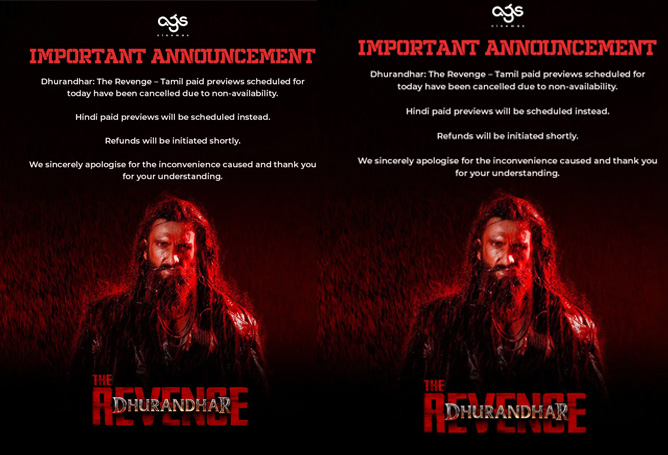
In a disappointing update for fans eagerly waiting to catch early screenings, the scheduled Tamil paid previews for the highly anticipated film ‘Dhurandhar: The Revenge’ have been cancelled for today.
The makers released an official statement announcing the sudden cancellation. However, fans who have already pre-booked their tickets do not need to worry, as the team has assured that a full refund process will begin shortly.
The official statement reads:
“We regret to inform that the Tamil paid previews of Dhurandhar: The Revenge scheduled for today have been cancelled. Refunds will be initiated shortly. Thank you for your patience.”
GURUVAYUR: T.M. Narayanan Namboothiri has been selected as the new Melsanthi (Head Priest) of the renowned Guruvayur Sree Krishna Temple for a six-month term beginning April 1. Hailing from Thekkuparambath Mana Sreenilayam in Cherpulassery, Palakkad, he was chosen through a draw of lots held after the temple reopened following the ‘Ucha Pooja’ (noon pooja). He is currently serving as the Melsanthi at the Illikkottukurissi Shiva Temple in Palakkad.
Out of the 49 applications received for the prestigious position, 35 candidates qualified for the final draw after a screening interview. The current Melsanthi, Moorthiyedath Mana Sudhakaran Namboothiri, drew the lots. Narayanan Namboothiri’s name was picked in the very first draw to receive the divine assignment.
The new Melsanthi will officially assume charge on the night of March 31. Prior to taking over, he will observe a strict 12-day ‘Bhajanam’ (a period of intense prayer and meditation) within the temple premises.
The selection ceremony was attended by prominent figures, including Temple Thanthris Brahmasree P.C. Dinesan Namboothiripad and Krishnan Namboothiripad, Devaswom Chairman A.V. Gopinath, Managing Committee members Brahmasree Mallissery Parameswaran Namboothiripad, C. Manoj, and K.S. Balagopal, along with Administrator O.B. Arunkumar, media representatives, and numerous devotees.
Exercise is universally recommended for better physical and mental health. It promises a better mood, stronger muscles, and long-term well-being. However, there is a quieter truth that often goes unnoticed: sometimes, the very workout routine meant to help you can quietly become a source of intense stress.
When the physical load crosses a certain line, recovery slows down, hormones shift, and your mind begins to resist what it once enjoyed. Here are five subtle but consistent signs that your workout routine is stressing you out instead of helping you:
1. You Feel Wired After Workouts, Not Calm A good workout usually leaves the body tired but settled, with a clearer mind. However, when exercise overstimulates the nervous system, you might experience a restless energy that lingers for hours. This happens because intense or prolonged workouts increase cortisol (the stress hormone). When cortisol stays high, the body struggles to switch into recovery mode and stays on high alert.
2. Small Aches Are Turning Into Constant Pain While muscle soreness a day or two after a workout is completely normal, lingering discomfort that shifts location or becomes sharper is a red flag. Stress-driven training often ignores crucial recovery windows, denying muscles, joints, and connective tissues the time they need to repair. Over time, this leads to micro-injuries, and pain starts feeling like a warning rather than progress.
3. Your Motivation is Fading, Even if Discipline Remains There is a stark difference between showing up to the gym with purpose and dragging yourself through a routine. When workouts begin to feel like a mental burden and your enthusiasm drops, something deeper may be off. Chronic physical stress affects dopamine, the brain chemical linked to motivation and reward. When dopamine dips, even activities you once enjoyed start to feel dull.
4. Sleep is Getting Worse, Not Better Exercise is known to improve sleep quality, but when routines become too intense or are poorly timed, your sleep can suffer. Late-night high-intensity sessions or back-to-back demanding workouts keep the nervous system active, making it difficult to fall asleep or stay asleep. When sleep declines, recovery declines, creating a continuous loop of stress.
5. Your Body Feels Constantly Fatigued, Not Stronger While progress in fitness often comes with temporary fatigue, constant and deep tiredness is a sign that something is wrong. If your muscles feel heavy before you even start, or if workouts that once felt manageable now feel impossibly hard, you may be experiencing ‘overtraining syndrome’. Your body simply does not have enough resources to repair and rebuild.
The Bottom Line: A workout routine should support your life, not compete with it. The goal isn’t just to push your limits, but to understand them. Everyone’s body is different—some thrive on high intensity, while others respond better to slower, steady movements. Pay attention to how your body and mind respond, and remember: rest is not a break from progress; it is an essential part of it.