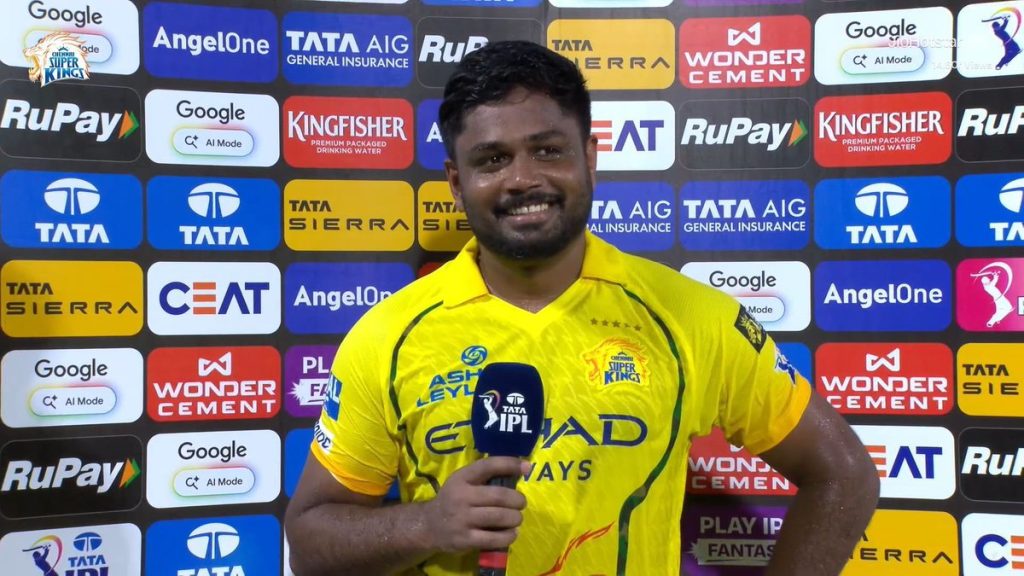
Chennai: Star Kerala batter Sanju Samson has etched his name in the record books, delivering a masterclass performance to hand the Chennai Super Kings (CSK) their first victory of the IPL 2026 season. During Saturday’s high-octane clash against the Delhi Capitals at the MA Chidambaram Stadium, Samson slammed a magnificent unbeaten century, becoming the first-ever wicketkeeper-batter to score an IPL hundred for the Yellow Army.
This historic feat means Sanju has achieved a milestone that even legendary CSK captain MS Dhoni never managed during his tenure as a wicketkeeper. Dhoni’s highest score as a designated wicketkeeper for the franchise remains 84.
Stepping up in Dhoni’s absence behind the stumps, Samson put on a spectacular show for the home crowd. He smashed an unbeaten 115 off just 56 deliveries, accelerating at a phenomenal strike rate of 205.36. His explosive innings was studded with 15 boundaries and 5 towering sixes. He reached the magical three-figure mark in the 18th over with a boundary off T. Natarajan.
This marks Sanju Samson’s fourth century in his IPL career, having previously scored tons for the Delhi Capitals and the Rajasthan Royals. He joined CSK via a trade ahead of the IPL 2026 mini-auction and has proven his worth after a quiet start to the season.
CSK Registers First Win, Climbs Up the Points Table
Propelled by Samson’s breathtaking knock and a crucial half-century from Ayush Mhatre (59 off 36 balls), Chennai posted a massive total of 212/2 in their 20 overs. Captain Ruturaj Gaikwad chipped in with 15, while Shivam Dube remained unbeaten on a quickfire 20 off 10 balls.
Defending the mammoth total, CSK restricted the Delhi Capitals and secured a clinical 23-run victory.
This win comes as a massive relief for the Super Kings. After suffering defeats in their first three outings of the season, this much-needed victory courtesy of Samson’s heroics has finally moved CSK off the bottom spot in the IPL 2026 points table, keeping their campaign alive and kicking.
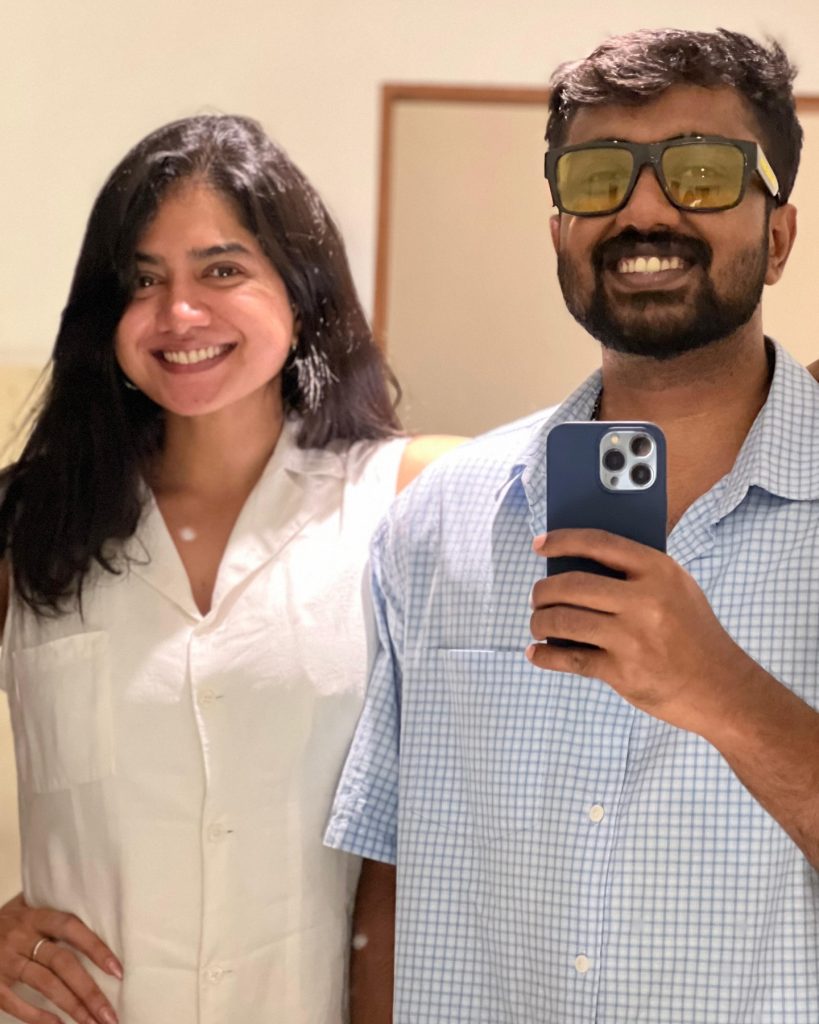
Malayalam actress Anarkali Marikar has shared one of the happiest and proudest moments of her life with her fans. The actress expressed her immense joy and excitement as her partner, Ameen Barif, makes his directorial debut with the newly released film Kaaki Circus.
Sharing her happiness on witnessing this major milestone in his career, Anarkali stated, “Today is a very emotional day for me. I am a little nervous, but at the same time, filled with immense pride and excitement. I feel lucky to have been a part of his journey.”
Anarkali is also creatively involved in her partner’s debut project. She revealed that she has sung a track for the movie and also lent her voice to dub for actress Gauthami Nair. Kaaki Circus is currently streaming on the OTT platform ZEE5.
Earlier, in an interview, Anarkali had openly spoken about being in a live-in relationship with her boyfriend. She had mentioned back then that his biggest dream was to become a filmmaker and that both their families were well aware and supportive of their relationship.
Anarkali Marikar made her acting debut in 2016 with the hit movie Aanandam. She later went on to deliver notable performances in films like Vimaanam, Mandharam, Uyare, and the recent hit Gaganachari.
Malayalam actress Bhamaa recently took to social media to share an adorable picture with her daughter, Gauri. The actress, who loves sharing beautiful moments of her motherhood journey with her fans, posted the lovely photo with a heartwarming caption.
“Life with her ‘G'”, Bhamaa wrote alongside the picture. The ‘G’ affectionately stands for her daughter, Gauri.
Even though Bhamaa has taken a break from the silver screen, this post makes it clear just how much she is enjoying every moment of her life with her little one. Fans and fellow celebrities have flooded the comments section, showering the cute duo with love.
ONE WORD: A Futuristic Love Experiment That Falls Short Due to Weak Direction and Script
LANGUAGE: TAMIL
DURATION: 02 Hours 36 Minutes
GENRE: Sci-fi Romantic Comedy Drama
A Review by Arunjyothi.R
•POSITIVES:
1: Concept
2: Music and Background Score
3: Visual and Production Quality
4: Cinematography
5: Editing
6: VFX
•NEGATIVES:
1: Fully Predictable
2: Weak Screenplay
3: Average Direction
4: Poor Emotional Connection
5: Flat Comedies
6: Failed Love Track
7: Underwhelming performance of actors
STORY:
Set in the year 2040, the story follows Surya (SJ Suryah), a visionary entrepreneur who introduces LIK (Love Insurance Kompany) a futuristic platform powered by an app that evaluates relationships and claims to identify what qualifies as “real love.”
Dheema (Krithi Shetty) lives in a hyper-digital space, completely dependent on her phone and the LIK app for emotional decisions. In contrast, Vasu (Pradeep Ranganathan) comes from an organic world, untouched by technology, where mobile phones and social media have no place.
Their lives intersect when Vasu falls in love with Dheema at first sight. What begins as a pure and instinctive connection soon gets entangled in the influence of technology. Just as their relationship starts to take shape, it abruptly collapses when Dheema walks away, guided by Vasu’s low “love score” on the app.
Refusing to accept defeat, Vasu challenges himself to make her fall for him again within 30 days. His journey evolves into more than just winning her back, it becomes a heartfelt attempt to prove that love isn’t something that can be measured by algorithms, but something that grows naturally through genuine emotion.
INTRODUCTION:
Directed by Vignesh Shivan, the film unfolds in the year 2040, a futuristic setting where technology has deeply entered even the emotional side of human life, reducing relationships into data-driven outcomes. At the core of this world is Love Insurance Kompany (LIK), an app that evaluates love by assigning a “love score” based on behavior, compatibility, and emotional patterns, making people rely more on algorithms than their own feelings. Blending science fiction with a romantic narrative, the film is built on a fresh and promising concept where the idea itself becomes the driving force. With such a unique premise, does the film manage to stay engaging and truly do justice to its idea? Unfortunately, despite the potential, the execution and writing turn out to be disappointing.
REVIEW & ANALYSIS OF THE FILM:
Positives:
1: Interesting Concept
Set in the year 2040, the film presents a futuristic world where smartphones and advanced technology have become an integral part of human life, influencing not just daily routines but even emotional decisions. In this highly digitized environment, relationships are no longer purely organic; they are observed, analyzed, and validated through intelligent systems. At the center of this idea is Love Insurance Kompany (LIK), an app that calculates a “love score” by studying behavior, compatibility, and emotional patterns—attempting to measure something as pure and unpredictable as love through data and logic. This unique blend of a romantic narrative with a sci-fi backdrop feels fresh and intriguing, instantly creating curiosity about how such a world would function. It reflects a bold and imaginative creative vision from Vignesh Shivan, bringing in a concept that stands out for its originality and strong potential.
2: Rich Production and Grand Visuals
The film presents a visually rich and grand portrayal of a futuristic 2040, where every frame reflects a world shaped by advanced technology and modern lifestyle aesthetics. The use of bright, vibrant colors and sleek, well-designed spaces gives the film a polished and premium look, making the future feel both appealing and immersive. The environments are crafted in a way that blends luxury with digital sophistication, creating a setting that feels aspirational yet believable within its sci-fi tone. What stands out is how the sci-fi backdrop is seamlessly integrated into everyday life within the film’s world. From the presence of smart systems to the overall digital atmosphere, the future setting doesn’t feel forced but naturally becomes a part of the characters’ surroundings. The production quality consistently supports this vision, maintaining a sense of scale and richness throughout. This strong visual detailing and thoughtful presentation of a tech-driven future enhance the film’s overall appeal, making the world-building feel engaging and visually captivating.
3: Music as the Saving Grace
With Anirudh Ravichander at the helm, the film’s music emerges as a consistent emotional anchor, carrying a soothing and immersive vibe throughout. The songs flow with a light, breezy charm, making them instantly appealing while still holding on to a certain emotional depth. There’s a clear effort to blend romance with a modern, slightly futuristic tone, and it reflects in the way each track feels purposeful and well-placed, adding to the mood rather than interrupting it. Anirudh’s familiar style—melodic, catchy, and emotionally tuned, gives the film a steady rhythm that keeps the experience pleasant.
The background score works in a more understated manner, gently supporting scenes and maintaining a smooth emotional continuity. It never overpowers, yet it quietly lifts moments, making transitions feel more connected. Dheema Dheema stands out with its soft, dreamy texture, creating a calming theatre experience that lingers with a sense of nostalgia and warmth. Enakena, despite being an older track, blends seamlessly into the film, and hearing it on the big screen adds a deeper emotional resonance, bringing out its pain and intensity at just the right moment. Pattuma adds a fresh layer to the album, and Anirudh’s vocals give it an extra edge, making it more engaging and enjoyable.
In many moments, it is the music that quietly carries the film forward, especially when the engagement dips. Anirudh Ravichander’s compositions maintain a steady emotional flow, filling the spaces with mood, feel, and atmosphere that help the film stay afloat. The songs and background score together create a comforting presence, softening the impact of the less engaging stretches and making the overall experience easier to sit through. At several points, the music almost feels like the saving grace of the film, stepping in to lift scenes that otherwise struggle to hold attention. It adds warmth, emotion, and a certain charm that briefly reconnects the audience to the intended mood. While the film itself may not consistently stay engaging, Anirudh’s work ensures that it doesn’t completely lose its emotional touch, and that remains one of its most noticeable strengths.
4: Quality Technical Aspects
The cinematography, editing, and VFX collectively contribute to shaping the film’s visual appeal, especially in presenting its futuristic 2040 setting. The visuals by Ravi Varman capture a vibrant, stylized world where technology blends seamlessly into everyday life, creating a colorful and modern atmosphere that suits the sci-fi romantic backdrop. Each frame helps establish the digital lifestyle of this world, making the setting feel visually engaging and consistently aligned with the film’s theme. The editing by Pradeep E Ragav maintains a fairly smooth flow, ensuring that scenes transition without confusion and the narrative remains visually easy to follow. It supports the film’s structure by keeping the pace steady and the emotional beats connected, even during uneven moments. The VFX stands out for being pleasing and well-suited to the setting, with good quality work that enhances the futuristic world without drawing unnecessary attention to itself. The digital elements feel naturally integrated, and importantly, there is no sense of over-exaggeration or artificial overload. Instead, the effects remain balanced and believable, adding to the overall visual comfort of the film. Together, these three aspects help the film maintain its visual consistency and prevent it from completely losing its grip in less engaging stretches.
Negatives:
1: Direction That Fails to Capitalize on Its Concept
Director Vignesh Shivan presents a concept with clear ambition, set in a technologically advanced future where human relationships are monitored, measured, and influenced by digital systems. While the premise opens up space for satire, emotion, and commentary on modern love, the execution struggles to bring these layers together in a convincing manner. The film frequently feels like it has an interesting idea at its core but fails to fully develop it into a cohesive cinematic experience. Instead of exploring the deeper possibilities of a world governed by a “love score” system, the narrative often remains surface-level, missing the chance to build stronger emotional or thematic impact.
In terms of storytelling approach, the film leans heavily on star presence and youthful energy, particularly around Pradeep Ranganathan, but the writing does not consistently support him with well-structured or impactful sequences. The relationship dynamics and conflicts are introduced with some clarity, especially the contrast between characters like the protagonist and the system-driven world around him, but the progression lacks depth and tightness. Even though a few individual scenes manage to generate mild interest, they are not strong enough to carry the film as a whole, resulting in an uneven viewing experience.
The initial portions show some promise with a familiar yet engaging setup, particularly in the way the hero’s efforts to connect with the heroine are staged. However, as the narrative moves forward, the grip weakens, and the film begins to lose its rhythm. Several moments come across as forced or underdeveloped, affecting the overall flow and emotional engagement. What begins as an intriguing idea gradually turns into a predictable structure, and the screenplay does not sustain the novelty it initially suggests, leading to a largely underwhelming progression.
2: Weak Screenplay with Emotionally Flat Writing
The script follows a completely predictable path, offering very little surprise or freshness in its progression. Even with a futuristic setup involving a “love score” system and a technologically driven world, the narrative unfolds in a routine manner that feels familiar and easily guessable. The story beats arrive exactly as expected, without any inventive twists or engaging deviations, making the overall flow feel flat and conventional throughout.
The screenplay also suffers from weak construction and inconsistent detailing. Scenes often feel loosely connected, with the writing failing to properly build momentum or add meaningful depth as the film moves forward. Several interesting ideas are introduced but never explored with clarity or impact, leading to a scattered and underdeveloped narrative. This lack of strong structure affects the pacing and reduces the overall grip the film could have maintained.
On the emotional front, the film struggles significantly to create any lasting connection. The love track, which should have been the emotional core, fails to generate genuine warmth or depth, coming across as flat and uninvolving. Similarly, the father–son track, which had clear potential to deliver emotional weight and sentiment, is also handled weakly. Due to poor writing choices and an ineffective directorial approach, these moments never reach their intended impact, leaving both emotional arcs underwhelming and forgettable.
3: Comedy That Fails to Land
The comedy in the film doesn’t manage to work at any level, with humour that feels forced, unfunny, and poorly written. Instead of creating light and engaging moments, the jokes fall flat and fail to bring even basic entertainment value. Many scenes that are clearly designed to be humorous end up feeling awkward and stretched, making the comedy portions more tiring than enjoyable. Even with performers like Yogi Babu in the mix, the potential for effective humour is not realised. His presence, which could have elevated several moments, is undercut by weak writing and uninspired staging. The comedy sequences that were meant to deliver a fun and engaging experience completely fail due to the poor script and mediocre direction, leaving no memorable or impactful humorous moments in the film.
4: Overdramatic Love Track
The love track in the film fails to create any emotional
impact, lacking both depth and genuine feeling. What should have been the heart of the narrative instead comes across as hollow, with the romantic moments not building any real connection with the audience. The chemistry and emotional progression feel underdeveloped, making it difficult to invest in the relationship or feel any sense of involvement in their journey. The reasons behind the separation and the conflicts within the love story are handled in an overly dramatic manner, without the necessary emotional grounding or subtlety. Instead of feeling natural or relatable, the situations appear exaggerated and forced, which further weakens the emotional core. As a result, the entire love track struggles to evoke empathy or attachment, leaving it flat and unconvincing throughout.
5: Underwhelming Performances Across the Cast
Pradeep Ranganathan carries a familiar energy and screen presence that was evident in his earlier works, but in this film it comes across in a more uneven manner. While there is visible effort in his performance, it largely feels average and does not leave a strong or lasting impression. Compared to his previous outings, the vibrant intensity that usually defines his roles appears slightly missing here, even though he still manages to hold attention in parts. Moments like the “love at first sight” sequence and his interactions in the friendship portions, especially with Gouri G Kishan, are handled well and feel more natural. However, the emotional stretches and action-driven scenes do not quite land with the intended impact. Krithi Shetty brings a pleasing screen presence and looks well-suited to her role, but her performance remains fairly average overall. The emotional scenes do not fully connect, and some expressions feel underdeveloped, reducing the depth of her character. Comedy elements involving Yogi Babu attempt to provide light moments, but they do not translate into effective humour despite his effort. In contrast, Seeman delivers a steady and convincing performance, especially in emotional portions, adding a sense of authenticity to his character. Gouri G Kishan stands out among the cast with a strong and controlled performance, handling her important role with confidence and leaving a positive impression through her portrayal.
CONCLUSION:
So overall, LIK (Love Insurance Kompany) had given me a disappointing experience, despite being built on a very fresh and imaginative concept set in a futuristic 2040 world where technology even controls human emotions and measures love through a “love score” system. The idea itself is striking and has strong potential, offering a unique blend of science fiction and romance that initially creates curiosity. The colourful visual presentation and the music by Anirudh Ravichander also add some engaging moments, helping the film stay watchable in parts and giving it its most appealing stretches.
However, beyond this promising concept and musical strength, the film fails to deliver a satisfying cinematic experience. The writing feels uneven, the emotional depth is missing, and both the love track and comedy portions do not land effectively. Even though the core idea keeps it interesting in parts, the storytelling does not support it well enough to maintain consistent engagement. In the end, despite its fresh premise and strong musical backing, the overall experience turns out to be disappointing and does not fully live up to its potential.
San Diego, CA — Concluding a historic 10-day journey around the moon, NASA’s Artemis II crew safely returned to Earth on Friday, capping off a monumental milestone in human space exploration.
The Orion capsule, named Integrity, executed what NASA officials described as a “bullseye landing,” splashing down in the Pacific Ocean off the coast of San Diego at 8:07 p.m. EDT on April 10, 2026.
Mission Commander Reid Wiseman quickly confirmed that all four astronauts—which also included Victor Glover, Jeremy Hanson, and Christina Koch—were in good health following their incredible 695,000-mile round trip. Following the splashdown, U.S. Navy recovery teams hoisted the crew into helicopters and transported them to the medical bay of the recovery ship, the USS John P. Murtha, for preliminary evaluations.
The return to Earth was the final and most perilous test for the Artemis II mission. As the Orion capsule pierced Earth’s atmosphere, it had to endure extreme compressive heating, reaching scorching temperatures of up to 5,000 degrees Fahrenheit (2,800 degrees Celsius)—about half as hot as the surface of the sun. The spacecraft’s advanced heat shield performed flawlessly, protecting the crew before a series of parachutes deployed to slow the capsule to a gentle 19 mph just before hitting the water.
The successful completion of the Artemis II flyby mission paves the way for the next giant leap in space exploration. With this crucial test flight in the books, NASA is now setting its sights on Artemis III, which is currently scheduled for 2027. That mission will aim to do what hasn’t been done in over half a century: return humans to the lunar surface.
Looking even further ahead, the space agency plans to launch the Artemis IV and V missions as soon as 2028, laying the groundwork for a $20 billion permanent lunar base and establishing a sustained human presence on the moon.
For now, however, the world celebrates the safe return of the Artemis II crew—the first humans to travel to lunar distances in the 21st century.
ONE WORD: An Engaging and Refreshing Dark Comedy That Balances Tension and Fun
LANGUAGE: MALAYALAM
DURATION: 02 Hours 25 Minutes
GENRE: Dark Comedy Thriller
•POSITIVES:
1: Direction
2: Story and Screenplay
3: Screenplay
4: Comedies
5: Performance of every actors
6: Cinematography
7: Background Score
8: Editing
9: Thrilling Second Half
10: Dark Comedy Mood of the film
•NEGATIVES:
1: Some scenes are predictable
2: Logical issues are there but don’t overthink about it
STORY:
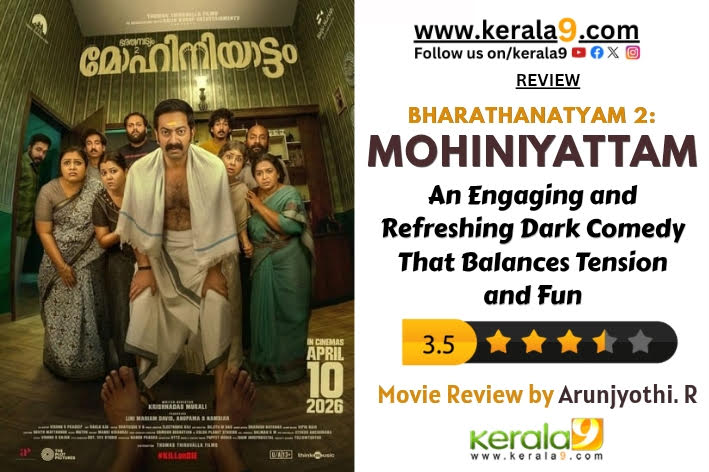
In Mohiniyattam, the story shifts to Sreekandapuram as Sasidharan and his family set out with a simple goal, helping Rukmini Amma secure a home of her own. What starts off as a short, heartfelt visit slowly turns complicated when Govinda Raja, an old associate of Bharathan Nair, unexpectedly steps in. With his arrival, long-buried truths begin to surface, quietly shaking the foundation of the family’s beliefs and relationships. As the past unfolds piece by piece, their stay stretches far beyond what they had planned, pulling them into an emotionally tense and uncertain space. In the end, it all leads to a gripping situation where the family finds themselves desperately trying to hide a secret, one that has the power to alter their fate forever.
REVIEW & ANALYSIS OF THE FILM:
First of all, dark comedy is still a relatively unexplored space for Malayalam audiences. When Mukundan Unni Associates released, it broke that barrier and turned out to be a surprise success. A similar tonal blueprint is carried into Mohiniyattam, but with a more layered approach. The film balances humor with an underlying sense of danger, where the laughs often come from uncomfortable, morally grey situations. It doesn’t rely on loud comedy; instead, it builds its humour from tension, irony, and the absurdity of circumstances. This duality makes the film both entertaining and gripping, as the audience is constantly caught between amusement and unease. The director succeeds in crafting a dark comedy crime thriller that feels fresh, engaging, and tonally consistent.
What truly stands out is the director’s control over the film’s mood. From the very beginning, there’s a steady build-up of tension, subtly mixed with moments of dark humour that never feel forced. The transitions between crime-driven sequences and comedic beats are handled with precision, ensuring that neither element overpowers the other. As the narrative progresses, the film becomes increasingly intense, yet it never loses its quirky edge. This careful balancing act keeps the audience hooked, as every scene carries a sense of unpredictability. The director smartly sustains the high points and injects just enough thrill to keep the anticipation alive till the very end.
The making style perfectly complements the strength of the script. Every frame feels purposeful, and the director’s vision is clearly reflected in the way scenes are structured and performed. One of the film’s biggest strengths lies in how effectively the cast is utilised—each actor is given space to contribute meaningfully, enhancing both the comedic and dramatic layers of the story. The performances never feel exaggerated, which is crucial for a film operating in such a delicate genre. It’s evident that the director had a clear intention: to present something unconventional while still keeping it accessible. By blending dark comedy with crime elements so seamlessly, he ensures that the film appeals to a wide spectrum of viewers.
The narrative is packed with continuous developments, where one incident leads to another in a tightly woven chain of events. Despite the number of occurrences, nothing feels out of place or overly dramatic. The screenplay maintains a natural flow, making even the most bizarre situations feel believable within the film’s world. The director’s clean and controlled approach prevents the story from slipping into chaos, instead keeping it grounded and immersive. Interestingly, the film doesn’t push the audience to question its logic too deeply, instead, it draws them into its rhythm and tone. By maintaining this consistency from start to finish, the director ensures that viewers remain fully engaged, experiencing the tension, humour, and unpredictability as a cohesive whole.
The story of Mohiniyattam unfolds in a way that constantly feeds on tension, unpredictability, and the shifting dynamics within the family. What makes it compelling is how the film builds gripping situations out of seemingly normal moments, slowly pulling the audience into a space filled with unease and curiosity. The tension is not forced, it grows naturally from the circumstances, and every reveal adds a new layer to the conflict. At the same time, the film never loses its dark comedic core. The humour is smartly woven into the narrative, often emerging from the seriousness of the situations, which makes the experience both entertaining and unsettling. This balance helps maintain the overall mood of the plot, where the audience is always engaged, either anticipating what might go wrong next or reacting to the absurdity of what’s already happening.
The screenplay plays a crucial role in making the film consistently engaging from start to finish. It is carefully written with a clear understanding of its tone, ensuring that the tension, humour, and emotional beats coexist without clashing. Each scene is designed to either build suspense or add depth to the situation, creating a steady rhythm that keeps viewers hooked. The gripping moments are well-placed, and the transitions between high-tension sequences and lighter, darkly comic portions feel seamless. What stands out is the effort to present something fresh—the writing doesn’t rely on familiar tropes but instead explores a different narrative style that feels new to the audience. The script is crafted with precision, making sure the mood of the premise is maintained throughout, and this careful construction is what ultimately makes the film an engaging and immersive watch.
The second half of Mohiniyattam is where the film truly finds its grip and elevates itself into a full-fledged thriller. As the narrative progresses, the stakes rise sharply, and the situations become more intense, pushing the characters into morally complex and high-pressure scenarios. The tension is sustained brilliantly, with each scene adding a new layer of urgency and unpredictability. There’s a constant sense of “what next?” that keeps the audience on edge, as the film smartly builds momentum without losing control. The thrilling elements are not just about sudden twists, but about how the consequences of earlier events start catching up, creating a chain reaction that feels both natural and gripping. Alongside this, the dark comedy mood remains one of the film’s strongest pillars. Even in the most serious and nerve-wracking moments, the film finds space for subtle, ironic humour that enhances rather than breaks the tension. This unique blend ensures that the audience is not just watching a thriller, but experiencing a layered narrative where fear, fun, and absurdity coexist. The consistency in maintaining this dark comedic tone, even during the peak of tension, is what makes the film stand out and keeps it engaging till the very end.
The technical side of Mohiniyattam plays a strong role in shaping its overall impact. The cinematography effectively captures the mood of the story with well-composed frames and purposeful shot choices, especially in the second half where the tension peaks and the visuals subtly enhance the uneasy atmosphere. Every frame feels aligned with the film’s tone, helping maintain the dark, immersive world throughout. Complementing this is the background score, which smartly supports the narrative without overpowering it. The music elevates key moments, reinforces the dark comedy flavour, and even incorporates familiar, trending-style tunes in a way that feels organic to the situations, adding an extra layer of engagement. The editing, on the other hand, remains crisp and seamless, ensuring that the film flows smoothly from one scene to another. There are no jarring cuts or mismatched moments, and the transitions are handled cleanly, allowing the audience to stay fully absorbed in the film’s rhythm and engaging viewing experience.
Mohiniyattam is not driven by a single heroic presence; instead, it thrives on a collective effort where every actor contributes meaningfully to the narrative. Saiju Kurup leads from the front with a controlled and convincing performance. While traces of his familiar acting style are visible, he brings in enough variation to make the character feel fresh and well-understood. His portrayal is subtle, neat, and perfectly aligned with the film’s tone. Swathi Das Prabhu stands out with his natural comic timing, while also handling the emotional beats effectively, adding depth to his character. Sreeja Ravi and Kalaranjini, as the mother figures, bring in a unique blend of humour and underlying darkness, with Kalaranjini’s comedic moments being particularly entertaining.
Baby Jean adds a lively spark to the film with his engaging screen presence and well-maintained comic tone, making his portions genuinely enjoyable. Sruthy Suresh and Divya M Nair, in their supporting roles, contribute effectively with light-hearted moments and deliver performances that fit seamlessly into the narrative. Suraj Venjaramoodu appears in a crucial role, bringing in surprising turns along with glimpses of his signature comedic style. Nandu Poduval also leaves a mark with his expressions and well-timed humour, especially in the latter half of the film. Towards the end, Vinay Forrt makes a brief yet notable cameo, adding to the film’s humour and rounding off the ensemble with a memorable presence.
CONCLUSION:
I went into Mohiniyattam with fairly low expectations, but it turned out to be a surprisingly entertaining experience. The film stands out for the way it embraces its dark comedy roots, especially in how it transforms even brutal and serious situations into moments of humour without losing the intensity of the narrative. That approach in the making feels bold and refreshing, giving the film a distinct identity. Backed by engaging storytelling, solid performances, and consistent technical support, it manages to keep the audience invested throughout. What really worked for me was the overall vibe it maintained—there’s a unique mood and energy that stays intact from beginning to end. It keeps you hooked with its tension, makes you laugh at the most unexpected moments, and delivers a satisfying watch as a whole. I genuinely enjoyed the film and loved the tone it carried. More importantly, I found myself enjoying this even more than the first part. It works as a solid sequel that not only lives up to expectations but also expands its world in a more engaging way, making it a film that can entertain a wide range of audiences.
The wait is over! The much-anticipated trailer for the spy action thriller ‘Mr. X’, starring Tamil star Arya and Malayalam’s lady superstar Manju Warrier, has been released, promising a high-octane cinematic experience.
Directed by Manu Anand (of FIR fame), the trailer suggests a gripping chase involving national security and international espionage.
Key Highlights of ‘Mr. X’:
The Plot: The film is reportedly inspired by five real-life incidents related to national security. The story revolves around a mission to track down a missing nuclear device.
The Cast: Along with Arya and Manju Warrier, the film features a stellar ensemble including Gautham Karthik, Sarath Kumar, Anagha, and Raiza Wilson.
Visual Grandeur: Shot across various locations in India and Azerbaijan, the film boasts top-notch production values and breathtaking action sequences.
Manju Warrier’s Role: Fans are particularly excited to see Manju Warrier in a powerful, stylish avatar in this big-budget Tamil venture.
Release Date: ‘Mr. X’ is all set to hit the big screens worldwide on April 17. With its intense background score and sleek visuals, the movie is expected to be a treat for action movie lovers.
Kochi: Malayalam film director Ranjith has been released from the Ernakulam Sub Jail after being granted bail in a sexual assault case. He walked out of the facility following the processing of his bail order. While a large media contingent was present at the jail gates, the director chose not to make any statements before departing in a waiting vehicle.
Bail Conditions and Legal Proceedings The Ernakulam First Class Magistrate Court granted bail to the director under several strict conditions:
He is strictly prohibited from attempting to influence any witnesses.
He must cooperate fully with the ongoing investigation and appear before investigating officers whenever summoned.
He had previously sought interim bail citing the election period, which was denied by the court.
Background of the Case The case originated from a complaint filed by a young actress who alleged that she was sexually assaulted by the director on January 30, 2026. The incident reportedly occurred inside a film set caravan in Thodupuzha, Idukki. Following the complaint, Ranjith was arrested in a dramatic manner on March 31 in Thodupuzha and subsequently brought to Kochi.
Arguments in Court
Defense: Ranjith’s legal team argued that the allegations were part of a conspiracy, claiming the complaint was filed because he had criticized the actress’s performance on set. They also cited his health issues and ongoing medical treatment as grounds for bail.
Prosecution: The prosecution opposed the bail plea, arguing that Ranjith was not cooperating with the investigation. They further expressed concern that his influence could lead to the intimidation of witnesses, many of whom were employees on his film set.
Popular Malayalam actress Anna Rajan, best known for her role in Angamaly Diaries, has shared a heartfelt note on her social media page to clarify the nature of her subscription-based content. Amidst rising misconceptions regarding celebrity subscription models, the actress emphasized that her platform is strictly professional and creative.
Reflecting on her two-year journey with the subscription feature, Anna highlighted that the space was created to foster a closer bond with her genuine fans.
Key Highlights from Her Statement:
Exclusive Access: Subscribers get early access to her latest photos and reels before they are released to the general public.
Direct Connection: The platform allows fans to share their wishes and interact with her more closely in a dedicated space.
Professional Integrity: Addressing potential misconceptions, Anna stated, “Subscription doesn’t mean unprofessional content. This space is all about quality, creativity, and respectful interactions.”
Strict Boundaries: The actress made it clear that followers should not expect anything inappropriate, stressing that she only shares genuine and professional content.
“Thank you for understanding and being part of my journey,” she added, expressing gratitude to those who have supported her throughout this process.
By setting these boundaries, Anna Rajan joins a growing number of creators who are reclaiming the narrative around paid social media features, ensuring that “exclusive” remains synonymous with “quality” rather than “inappropriate.”
Actress Sameera Reddy has once again won hearts on the internet with her honest and vulnerable social media post. Known for being a strong advocate of body positivity, the actress shared a few unseen childhood pictures and opened up about her early struggles with self-esteem, body image, and deep-rooted insecurities.
Reflecting on her younger days, Sameera admitted that she severely lacked self-belief. “I had zero confidence as a kid,” she wrote. “I swear if I could shake this dark plumpy insecure girl and tell her how amazing she is going to be.. I would.”
The actress also connected her past experiences to her current role as a mother, emphasizing the importance of raising children with the right values to navigate a difficult world. “When I had my kids I knew I had to teach them kindness and compassion first but also the importance of boundaries and self belief. In this world unfortunately the balance is tough one. And I felt that pain growing up,” she shared.
Sameera used her post as a powerful reminder for her followers to actively support and uplift the people around them. “This is a reminder. To rally around people you love. Protect them. Strengthen them. Hear them. Whether a child or a full grown adult,” she urged.
Concluding the emotional note, she confessed that her journey to self-acceptance is still ongoing: “I’m Still Un- learning my perception of me ❤️ I’m sure we all trying to go past what’s engrained in our childhood.”
Sameera Reddy has consistently inspired her fans by embracing her natural self, often sharing unfiltered photos showcasing her grey hair, bare skin, and postpartum body changes. Her latest post continues to encourage many to break free from the insecurities tied to their childhood.