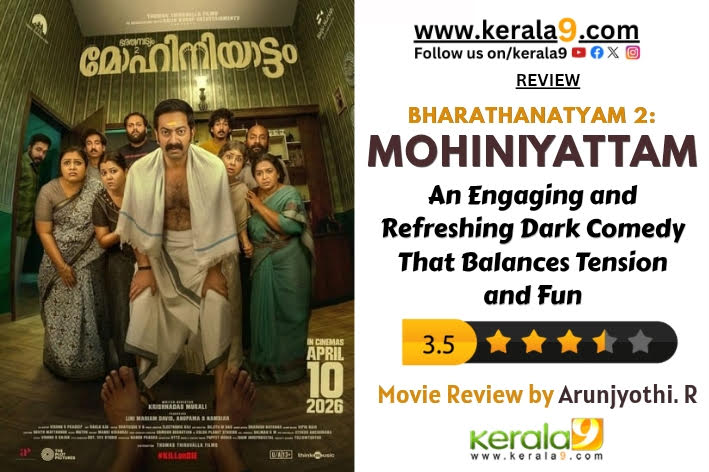
ONE WORD: An Engaging and Refreshing Dark Comedy That Balances Tension and Fun
LANGUAGE: MALAYALAM
DURATION: 02 Hours 25 Minutes
GENRE: Dark Comedy Thriller
•POSITIVES:
1: Direction
2: Story and Screenplay
3: Screenplay
4: Comedies
5: Performance of every actors
6: Cinematography
7: Background Score
8: Editing
9: Thrilling Second Half
10: Dark Comedy Mood of the film
•NEGATIVES:
1: Some scenes are predictable
2: Logical issues are there but don’t overthink about it
STORY:
In Mohiniyattam, the story shifts to Sreekandapuram as Sasidharan and his family set out with a simple goal, helping Rukmini Amma secure a home of her own. What starts off as a short, heartfelt visit slowly turns complicated when Govinda Raja, an old associate of Bharathan Nair, unexpectedly steps in. With his arrival, long-buried truths begin to surface, quietly shaking the foundation of the family’s beliefs and relationships. As the past unfolds piece by piece, their stay stretches far beyond what they had planned, pulling them into an emotionally tense and uncertain space. In the end, it all leads to a gripping situation where the family finds themselves desperately trying to hide a secret, one that has the power to alter their fate forever.
REVIEW & ANALYSIS OF THE FILM:
First of all, dark comedy is still a relatively unexplored space for Malayalam audiences. When Mukundan Unni Associates released, it broke that barrier and turned out to be a surprise success. A similar tonal blueprint is carried into Mohiniyattam, but with a more layered approach. The film balances humor with an underlying sense of danger, where the laughs often come from uncomfortable, morally grey situations. It doesn’t rely on loud comedy; instead, it builds its humour from tension, irony, and the absurdity of circumstances. This duality makes the film both entertaining and gripping, as the audience is constantly caught between amusement and unease. The director succeeds in crafting a dark comedy crime thriller that feels fresh, engaging, and tonally consistent.
What truly stands out is the director’s control over the film’s mood. From the very beginning, there’s a steady build-up of tension, subtly mixed with moments of dark humour that never feel forced. The transitions between crime-driven sequences and comedic beats are handled with precision, ensuring that neither element overpowers the other. As the narrative progresses, the film becomes increasingly intense, yet it never loses its quirky edge. This careful balancing act keeps the audience hooked, as every scene carries a sense of unpredictability. The director smartly sustains the high points and injects just enough thrill to keep the anticipation alive till the very end.
The making style perfectly complements the strength of the script. Every frame feels purposeful, and the director’s vision is clearly reflected in the way scenes are structured and performed. One of the film’s biggest strengths lies in how effectively the cast is utilised—each actor is given space to contribute meaningfully, enhancing both the comedic and dramatic layers of the story. The performances never feel exaggerated, which is crucial for a film operating in such a delicate genre. It’s evident that the director had a clear intention: to present something unconventional while still keeping it accessible. By blending dark comedy with crime elements so seamlessly, he ensures that the film appeals to a wide spectrum of viewers.
The narrative is packed with continuous developments, where one incident leads to another in a tightly woven chain of events. Despite the number of occurrences, nothing feels out of place or overly dramatic. The screenplay maintains a natural flow, making even the most bizarre situations feel believable within the film’s world. The director’s clean and controlled approach prevents the story from slipping into chaos, instead keeping it grounded and immersive. Interestingly, the film doesn’t push the audience to question its logic too deeply, instead, it draws them into its rhythm and tone. By maintaining this consistency from start to finish, the director ensures that viewers remain fully engaged, experiencing the tension, humour, and unpredictability as a cohesive whole.
The story of Mohiniyattam unfolds in a way that constantly feeds on tension, unpredictability, and the shifting dynamics within the family. What makes it compelling is how the film builds gripping situations out of seemingly normal moments, slowly pulling the audience into a space filled with unease and curiosity. The tension is not forced, it grows naturally from the circumstances, and every reveal adds a new layer to the conflict. At the same time, the film never loses its dark comedic core. The humour is smartly woven into the narrative, often emerging from the seriousness of the situations, which makes the experience both entertaining and unsettling. This balance helps maintain the overall mood of the plot, where the audience is always engaged, either anticipating what might go wrong next or reacting to the absurdity of what’s already happening.
The screenplay plays a crucial role in making the film consistently engaging from start to finish. It is carefully written with a clear understanding of its tone, ensuring that the tension, humour, and emotional beats coexist without clashing. Each scene is designed to either build suspense or add depth to the situation, creating a steady rhythm that keeps viewers hooked. The gripping moments are well-placed, and the transitions between high-tension sequences and lighter, darkly comic portions feel seamless. What stands out is the effort to present something fresh—the writing doesn’t rely on familiar tropes but instead explores a different narrative style that feels new to the audience. The script is crafted with precision, making sure the mood of the premise is maintained throughout, and this careful construction is what ultimately makes the film an engaging and immersive watch.
The second half of Mohiniyattam is where the film truly finds its grip and elevates itself into a full-fledged thriller. As the narrative progresses, the stakes rise sharply, and the situations become more intense, pushing the characters into morally complex and high-pressure scenarios. The tension is sustained brilliantly, with each scene adding a new layer of urgency and unpredictability. There’s a constant sense of “what next?” that keeps the audience on edge, as the film smartly builds momentum without losing control. The thrilling elements are not just about sudden twists, but about how the consequences of earlier events start catching up, creating a chain reaction that feels both natural and gripping. Alongside this, the dark comedy mood remains one of the film’s strongest pillars. Even in the most serious and nerve-wracking moments, the film finds space for subtle, ironic humour that enhances rather than breaks the tension. This unique blend ensures that the audience is not just watching a thriller, but experiencing a layered narrative where fear, fun, and absurdity coexist. The consistency in maintaining this dark comedic tone, even during the peak of tension, is what makes the film stand out and keeps it engaging till the very end.
The technical side of Mohiniyattam plays a strong role in shaping its overall impact. The cinematography effectively captures the mood of the story with well-composed frames and purposeful shot choices, especially in the second half where the tension peaks and the visuals subtly enhance the uneasy atmosphere. Every frame feels aligned with the film’s tone, helping maintain the dark, immersive world throughout. Complementing this is the background score, which smartly supports the narrative without overpowering it. The music elevates key moments, reinforces the dark comedy flavour, and even incorporates familiar, trending-style tunes in a way that feels organic to the situations, adding an extra layer of engagement. The editing, on the other hand, remains crisp and seamless, ensuring that the film flows smoothly from one scene to another. There are no jarring cuts or mismatched moments, and the transitions are handled cleanly, allowing the audience to stay fully absorbed in the film’s rhythm and engaging viewing experience.
Mohiniyattam is not driven by a single heroic presence; instead, it thrives on a collective effort where every actor contributes meaningfully to the narrative. Saiju Kurup leads from the front with a controlled and convincing performance. While traces of his familiar acting style are visible, he brings in enough variation to make the character feel fresh and well-understood. His portrayal is subtle, neat, and perfectly aligned with the film’s tone. Swathi Das Prabhu stands out with his natural comic timing, while also handling the emotional beats effectively, adding depth to his character. Sreeja Ravi and Kalaranjini, as the mother figures, bring in a unique blend of humour and underlying darkness, with Kalaranjini’s comedic moments being particularly entertaining.
Baby Jean adds a lively spark to the film with his engaging screen presence and well-maintained comic tone, making his portions genuinely enjoyable. Sruthy Suresh and Divya M Nair, in their supporting roles, contribute effectively with light-hearted moments and deliver performances that fit seamlessly into the narrative. Suraj Venjaramoodu appears in a crucial role, bringing in surprising turns along with glimpses of his signature comedic style. Nandu Poduval also leaves a mark with his expressions and well-timed humour, especially in the latter half of the film. Towards the end, Vinay Forrt makes a brief yet notable cameo, adding to the film’s humour and rounding off the ensemble with a memorable presence.
CONCLUSION:
I went into Mohiniyattam with fairly low expectations, but it turned out to be a surprisingly entertaining experience. The film stands out for the way it embraces its dark comedy roots, especially in how it transforms even brutal and serious situations into moments of humour without losing the intensity of the narrative. That approach in the making feels bold and refreshing, giving the film a distinct identity. Backed by engaging storytelling, solid performances, and consistent technical support, it manages to keep the audience invested throughout. What really worked for me was the overall vibe it maintained—there’s a unique mood and energy that stays intact from beginning to end. It keeps you hooked with its tension, makes you laugh at the most unexpected moments, and delivers a satisfying watch as a whole. I genuinely enjoyed the film and loved the tone it carried. More importantly, I found myself enjoying this even more than the first part. It works as a solid sequel that not only lives up to expectations but also expands its world in a more engaging way, making it a film that can entertain a wide range of audiences.
RATING: 3.5/5
A Review By Arunjyothi. R