

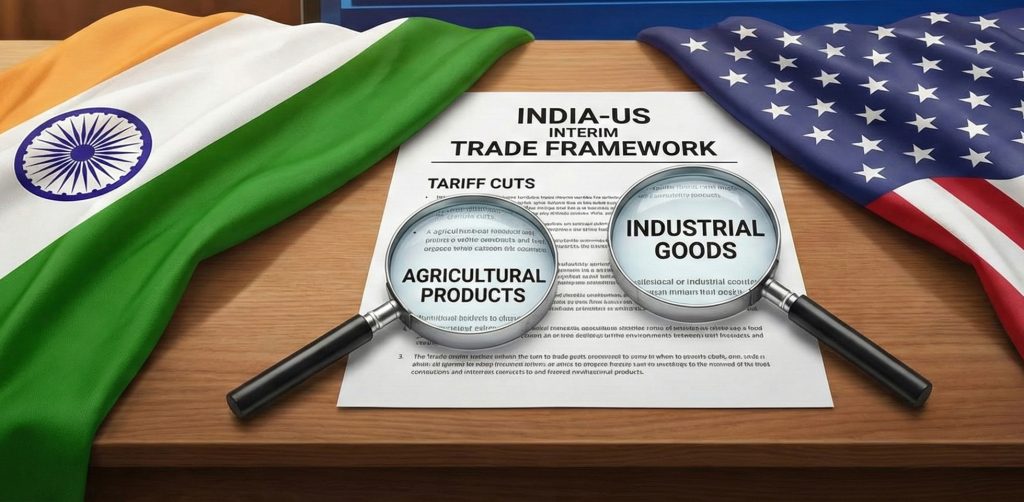
New Delhi / Washington D.C. — In a definitive move to reshape global supply chains, India and the United States have officially unveiled an Interim Trade Framework. This agreement marks a critical milestone toward a comprehensive Bilateral Trade Agreement (BTA), aimed at fostering reciprocal trade and deepening strategic ties between the world’s two largest democracies.
The deal centers on a “give-and-take” model: India will open its vast domestic market to American industrial and agricultural goods, while the US will provide significant tariff relief and sectoral access to Indian exporters.
Key Highlights: What the US Gains
India has committed to dismantling several long-standing trade barriers to make American products more competitive.
- Industrial Goods: India will eliminate or sharply reduce tariffs on almost all US industrial products.
- Agricultural Access: Duties will be slashed on a variety of US food products, including:
- Animal feed (DDGs and red sorghum)
- Tree nuts and fresh fruits
- Soybean oil, wine, and spirits
- Regulatory Reforms: India has agreed to resolve non-tariff barriers within six months, specifically targeting medical devices and ICT (Information and Communication Technology) products, aligning them with international standards.
Major Wins for Indian Exporters
The United States has offered a structured roadmap for tariff relief that benefits India’s core export sectors.
- Lower Reciprocal Tariffs: For now, the US will apply a 18% reciprocal tariff on Indian goods, including textiles, leather, chemicals, and machinery—a significant drop from previous levels.
- Zero-Tariff Roadmap: Once the interim deal is fully implemented, the US will remove tariffs entirely on:
- Generic Pharmaceuticals (subject to ongoing reviews)
- Gems and Diamonds
- Aircraft and Aircraft Parts
- Metals & Auto Parts: India will receive relief from national security tariffs on aircraft parts made with steel and aluminum, alongside a preferential quota for auto parts.
The $500 Billion Commitment
Perhaps the most ambitious part of the framework is India’s indication to purchase $500 billion worth of US goods over the next five years. This massive procurement plan includes:
- Energy: Oil, gas, and coking coal.
- Aviation: Commercial aircraft and parts.
- Tech: Data center equipment and high-end Graphics Processing Units (GPUs) for AI development.
Strategic Realignment: The China Factor
While not explicitly named in the joint statement, the agreement is widely viewed as a move to counter the “non-market practices of third countries”—a clear reference to China. Both nations have pledged to collaborate on investment screening, export controls, and supply chain resilience to ensure economic security.
What’s Next?
The interim framework is set for rapid rollout. Negotiators from both sides will continue working toward a final Bilateral Trade Agreement (BTA), which is expected to include more robust rules on digital trade and further reductions in compliance hurdles for businesses.
As Prime Minister Modi noted, this deal strengthens the “Make in India” initiative by opening doors for MSMEs and farmers to a $30 trillion US market.