
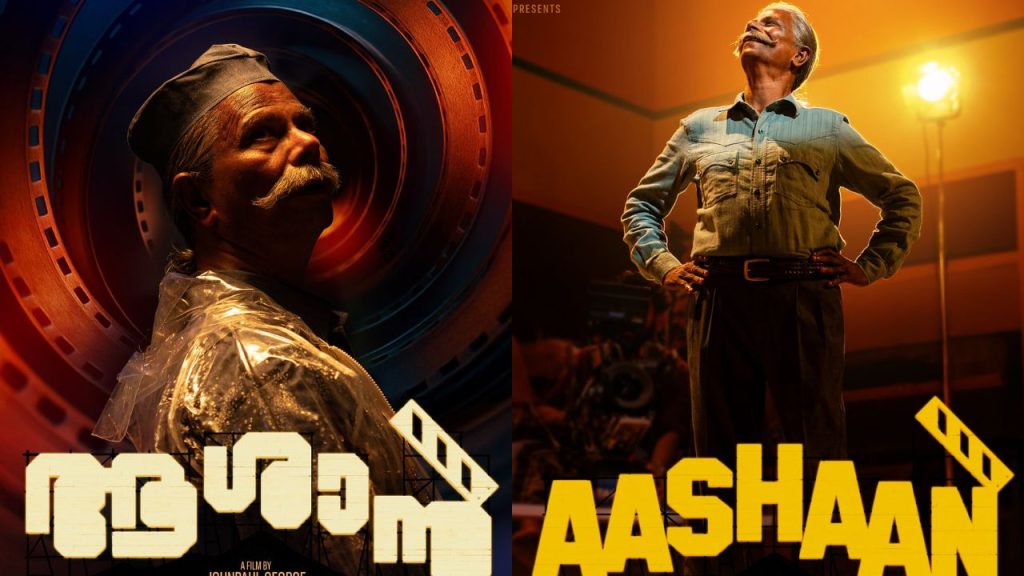
AASHAAN A Review by Arunjyothi R
ONE WORD: An Honest Attempt That Gradually Loses Its Way in Writing and Pacing
LANGUAGE: MALAYALAM
DURATION: 02 Hours 40 Minutes
DIRECTOR: Johnpaul George
GENRE: Comedy Drama
•POSITIVES:
1: Production Quality
2: Performance of Indrans
3: Performance of every actors
4: Music and Background Score
5: Art Department
7: VFX
8: Situational Comedies
•NEGATIVES:
1: Direction
2: Story and Screenplay
3: Melodramatic Second Half
4: Emotional arch lacks depth
5: Slow paced
6: Editing
7: Movie lags at many areas
STORY:
Anand is a true cinema lover who dreams of directing a feature film one day. He is also good at VFX, but his only chance to enter the film industry comes when he starts assisting popular director KRS. Once known for back-to-back hits, KRS is now struggling after many flops. Hoping to make a strong comeback, he takes a big risk by selling his own property to produce a new film. The story needs a special location, a flat with a circular design. The crew searches everywhere but fails to find one. Anand then suggests a flat where his friend lives, solving a major problem for the team. Because of this, Anand officially joins the project as an assistant director. But the flat is under the control of Aashan, a well-known and friendly person in the community, who also dreams of working in cinema. Through his friend, Anand meets Aashan and requests help. Aashan agrees to give the flat for shooting, but only on one condition, he wants a role in the film. Without informing the director, Anand agrees. Soon, Anand and Aashan become close friends, connected by their love for movies and shared dreams. When the shooting begins, things slowly start to fall apart. Problems increase, pressure builds, and the reality of the film industry hits hard. Anand and Aashan face many struggles as they try to hold on to their dreams, learning that cinema is not just about passion, but also about sacrifice and survival.
REVIEW & ANALYSIS OF THE FILM Aashaan:
POSITIVES:
1. Production Quality
Aashaan maintains a commendable level of production quality throughout its runtime. Even though the film is made within a limited budget, the makers ensure that it never looks compromised. The visual clarity, lighting choices, and overall presentation feel controlled and well-planned. Every technical department works within its limits, giving the film a clean and polished finish that supports the realistic tone.
As both director and producer, John Paul George shows clear responsibility in handling the film’s production values. The film avoids unnecessary extravagance and instead focuses on consistency and quality. This approach helps the audience stay engaged and gives the film a professional look, especially important for a story set within the filmmaking world.
2. Performance of Indrans
Indrans delivers one of the most emotionally effective performances in Aashaan. His acting is subtle yet powerful, relying heavily on facial expressions, body language, and silence rather than loud dialogue. In the emotional scenes, he conveys pain, disappointment, and helplessness with remarkable ease. A slight change in his eyes or posture is enough to communicate what the character is going through, making these moments deeply believable. These scenes stand out because of how naturally Indrans internalizes emotion instead of projecting it.
One of the film’s most memorable aspects is the Kathakali-related portions, where Indrans brings grace and dignity to the performance. His involvement in these scenes feels authentic and respectful, adding cultural depth to the character. The humour scenes involving Indrans also work well, as his timing is effortless and never forced. Even in lighter moments, he maintains realism and avoids caricature. The humiliation scene, in particular, is handled brilliantly—Indrans portrays shame, confusion, and quiet anger with great restraint. Without overdoing the emotion, he makes the audience feel the weight of the moment. This scene alone shows his mastery as an actor and becomes one of the film’s strongest highlights.
3. Performances of Joemon Jyothir and Supporting Actors
Joemon Jyothir delivers a refreshing and convincing performance, proving that he is capable of much more than just humour roles. While he is already known for his comic timing, Aashaan gives him the space to explore emotional depth, and he uses it effectively. His expressions feel natural and unforced, especially in scenes that demand vulnerability and inner conflict. He handles emotional moments with restraint, avoiding exaggeration, which suits the realistic tone of the film. His dialogue delivery is another strong point. Joemon maintains clarity and emotional balance, making even simple lines feel meaningful. The character represents the dreams and struggles of a young filmmaker trying to find his place in the industry, and Joemon portrays this journey with honesty. The frustration, hope, desperation, and silent determination are clearly visible in his performance. More importantly, his acting adds strength to the film whenever the narrative slows down. Through his sincere performance, Joemon Jyothir becomes a key emotional support for the film, making the character relatable and believable despite the screenplay’s limitations.
The supporting cast and lead actors deliver uniformly good performances. No character feels out of place, and the acting remains realistic and controlled throughout. The actors clearly understand the film’s tone and avoid overacting, which helps maintain the film’s grounded nature. What stands out is how the performances help the film survive its weaker writing. Even during slow or melodramatic scenes, the actors manage to hold the viewer’s attention. Their sincerity and commitment add value to the narrative and prevent the film from completely losing its emotional grip.
4. Music and Background Score
The music of Aashaan, composed by John Paul George, carries a familiar emotional texture of the song in Guppy and Ambili. While it may remind audiences of his earlier works, the songs fit well within the film’s mood. They are soft, pleasant, and easy on the ears, adding emotional support rather than dominating the narrative. The background score is used carefully and effectively. It enhances key moments without becoming overpowering or distracting. This restrained use of music aligns well with the film’s realistic approach and helps maintain emotional continuity across scenes.
5. Art Department
The art department plays an important role in shaping the film’s setting. The circular flat and shooting environments are designed with attention to detail, making them feel natural and functional rather than artificial. These spaces add credibility to the film’s behind-the-scenes filmmaking theme.
The interiors and props reflect realism and support the characters’ world. The art direction quietly strengthens the storytelling by creating believable spaces where the drama unfolds. This subtle but effective work adds depth to the film’s visual experience.
6. VFX
Considering the film’s limited budget, the VFX work is impressive and well-executed. The effects are clean, stable, and properly blended into the scenes without drawing unnecessary attention. The makers focus on quality rather than quantity, which works in the film’s favour.
The climax sequences, in particular, showcase well-handled VFX that add visual impact. The technical team clearly understands their limitations and delivers effects that look convincing. This smart and controlled approach enhances the overall production value of the film.
7. Situational Comedy
The situational comedy in Aashaan, especially in the first half, adds a light and refreshing touch. The humour is subtle and situational rather than loud or forced. These moments bring small smiles and help ease the seriousness of the film’s theme. Though the comedy is not meant to create continuous laughter, it works well within the narrative. It helps establish characters and situations naturally, making the early portions engaging and watchable. This gentle humour plays a key role in making the first half enjoyable.
NEGATIVES FELT:
1. Direction
John Paul George returns with Aashaan after Guppy and Ambili, choosing a subject that revolves around film shooting and the filmmaking process. While this idea is interesting on paper, it automatically limits the film’s reach. Audiences who are familiar with cinema, shooting locations, and the behind-the-scenes world may find the concept engaging. However, for general viewers, the incidents and situations may feel less relatable and emotionally distant. The major issue with the direction is not the making style but the narrative grip. John Paul George’s realistic approach works initially, but the film moves on a flat emotional graph.
The story neither rises to impactful highs nor falls into gripping conflicts. This steady, almost stagnant flow reduces audience involvement. The director’s choice to stay away from commercial elements further weakens the film’s ability to hold attention for its full runtime. In the second half, the direction slips into melodrama at several points. These moments feel forced and repetitive, affecting the viewing experience. The promising beginning slowly fades due to predictability and lack of emotional depth. Though the director tries to portray struggle and pain, the emotional connection fails to fully translate on screen. The lack of strong scene connectivity also affects the flow, as events occur one after another without leaving a lasting impact.
2. Story and Screenplay
The story of Aashaan has the basic elements needed for a good emotional drama. Dreams, struggles, ambition, and cinema itself form a strong foundation. However, the execution of these ideas remains strictly average. The writing does not explore these themes deeply, resulting in a surface-level emotional experience. The film had the potential to be a moving feel-good drama, but the script fails to extract that emotional strength.
Predictability is a major issue throughout the film. From beginning to end, most events can be easily guessed. Predictability alone is not a problem, but here it becomes an issue because the screenplay lacks engaging moments to compensate for it. There are very few scenes that surprise or emotionally move the audience, making the narrative feel monotonous.
The screenplay is one of the weakest aspects of the film. Anand and Aashaan are the central characters, and the story focuses on their dreams and struggles. However, the emotional depth of these characters is not fully developed. Scenes are written in a way that maintains the same emotional tone throughout, without building tension or attachment. Even the climax, which should have created a strong impact, feels underwhelming. Apart from the VFX, the emotional payoff remains minimal.
3. Melodramatic Second Half
The second half of Aashaan heavily depends on melodrama, which becomes one of the film’s biggest drawbacks. Emotional moments are repeatedly stretched, making several scenes feel forced rather than organic. Instead of allowing emotions to flow naturally, the film often pushes them too hard, reducing their impact. What could have been subtle and powerful ends up feeling predictable and emotionally exhausting.
This melodramatic approach also affects the film’s realism. Since the first half maintains a grounded tone, the sudden emotional heaviness in the later portions feels inconsistent. These repeated emotional beats slow down the narrative and weaken audience engagement. If handled with more restraint, the second half could have felt far more effective and believable.
4. Emotional Arc Lacks Depth
The film focuses on dreams, ambition, and struggle, but the emotional journey of the characters lacks sufficient depth. While the audience understands what Anand and Aashaan want, the film fails to make us strongly feel their inner conflicts. Their pain, frustration, and desperation are shown on screen, but they rarely translate into a deep emotional connection.
The emotional progression of the characters remains mostly flat throughout the film. There are no strong emotional peaks or turning points that leave a lasting impact. Because of this, even important moments fail to resonate deeply. Stronger emotional writing and more layered character development could have significantly improved the film’s emotional strength.
5. Slow Pace
Pacing is a major issue, especially in the second half of the film. Many scenes take longer than necessary to reach their point, resulting in a sluggish narrative flow. The lack of urgency in the storytelling makes the film feel longer than its actual runtime, testing the patience of the audience.
This slow pace could have worked if the scenes offered strong emotional or narrative payoffs, but that rarely happens. Instead, the film spends too much time establishing events without pushing the story forward. A tighter screenplay and more focused scene execution would have greatly enhanced the film’s rhythm.
6. Lag in Many Portions
The combined effect of slow pacing, melodrama, and average screenplay results in noticeable lag at several points in the film. Certain scenes feel repetitive and unnecessary, adding little value to the overall narrative. These lags disrupt the flow and reduce viewer engagement. The lag becomes more evident in the second half, where scenes could have been trimmed or edited more sharply. With better editing choices and tighter storytelling, the film could have maintained a more engaging tempo. Unfortunately, these frequent lags weaken the overall impact of Aashaan and hold it back from reaching its full potential.
7. Editing
Editing is one of the areas where Aashaan clearly needed more refinement. Several scenes run longer than necessary, even when they do not add much emotional or narrative value. A tighter edit could have improved the film’s pacing and helped maintain audience interest, especially in the second half. Transitions between scenes felt okay, mismatched feel was not felt but the film required a sharper and more decisive editing approach. Many moments that repeat the same emotional beat could have been trimmed or merged. Instead of building momentum, the editing often allows scenes to linger, which weakens their impact. A more aggressive edit would not only have reduced the runtime but also strengthened the emotional weight of key scenes by keeping the storytelling focused and crisp.
8. Lag in Many Portions
Lag is a recurring issue throughout the film, becoming more noticeable as the story progresses. This lag is mainly caused by slow pacing, stretched scenes, and repetitive emotional moments. Several sequences feel like they exist only to fill time rather than move the story forward. As a result, the audience may feel disengaged during these portions.
The lag is particularly evident in the second half, where the film struggles to maintain narrative energy. Scenes that could have been resolved quickly are prolonged, reducing the overall impact of important events. With better editing and tighter screenplay execution, these lags could have been easily avoided. Unfortunately, these prolonged moments weaken the film’s grip and affect the overall viewing experience.
CONCLUSION:
Aashaan is a film driven more by intent than impact. It carries a genuine affection for cinema and the filmmaking process, which reflects in its solid production values, neat technical execution, and well-thought-out art direction. The performances, especially by Indrans and Joemon Jyothir, become the film’s strongest pillars. Their restrained acting, emotional honesty, and natural screen presence add weight to several scenes and keep the narrative grounded even when the writing falters. The film’s subtle humour and realistic tone further add to its sincerity.
At the same time, Aashaan struggles to rise beyond its limitations. The screenplay remains predictable, the pacing slows considerably in the second half, and melodramatic stretches dilute the emotional effect. The lack of a strong emotional build and tighter editing results in frequent lags, making the experience uneven. I would recommend Aashaan to viewers who appreciate realistic, character-driven films and stories rooted in the world of cinema. For those looking for engaging drama or commercial excitement, this may feel underwhelming. Overall, it is an honest attempt that works in parts but falls short of becoming truly memorable.
Aashaan Movie RATING: 2.5/5
A Review by Arunjyothi. R