
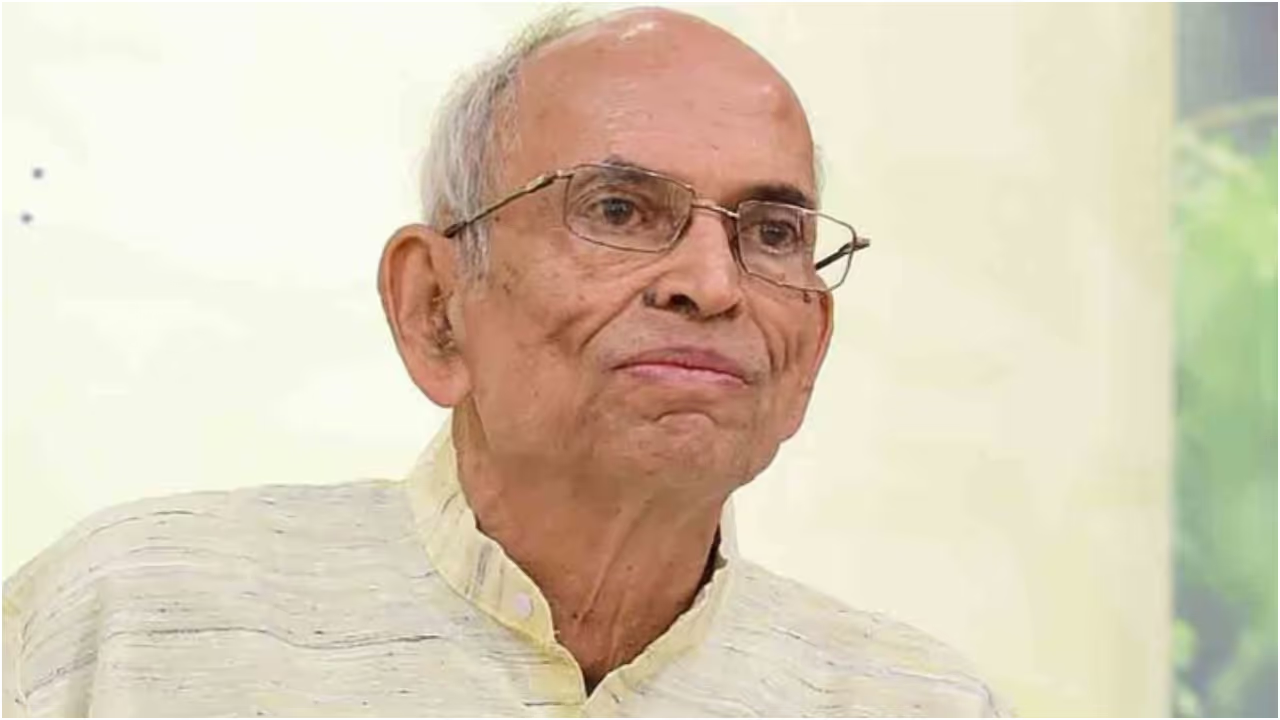
PUNE: Madhav Gadgil, one of India’s most preeminent ecologists and environmental scientists, passed away at his residence in Pune. He was 83.
Gadgil laid the scientific foundation for modern environmental studies in India and was a defining figure in the conservation movement for decades. He is perhaps best known for heading the Western Ghats Ecology Expert Panel (WGEEP), popularly known as the Gadgil Committee.
The landmark “Gadgil Report” recommended designating the entire Western Ghats as an Ecologically Sensitive Area (ESA), proposing strict regulations on developmental activities that damage the environment. While the report initially faced political and social resistance, Gadgil’s warnings have gained significant traction in recent years. His farsighted recommendations became a focal point of discussion in Kerala following a series of devastating floods and landslides, particularly in areas like Wayanad, which many attributed to ignoring the ecological sensitivities he highlighted.
Beyond his work on the Western Ghats, Gadgil’s academic contributions were immense. He established the Centre for Ecological Sciences at the Indian Institute of Science (IISc) in Bengaluru and played a pivotal role in formulating India’s Biological Diversity Act of 2002.
In recognition of his lifetime of service to ecology and the environment, the Government of India conferred upon him the Padma Shri in 1981 and the Padma Bhushan in 2006.
His passing is widely seen as an irreparable loss to the scientific community and the environmental movement in India, leaving behind a legacy of rigorous science combined with a deep commitment to protecting the natural world.