

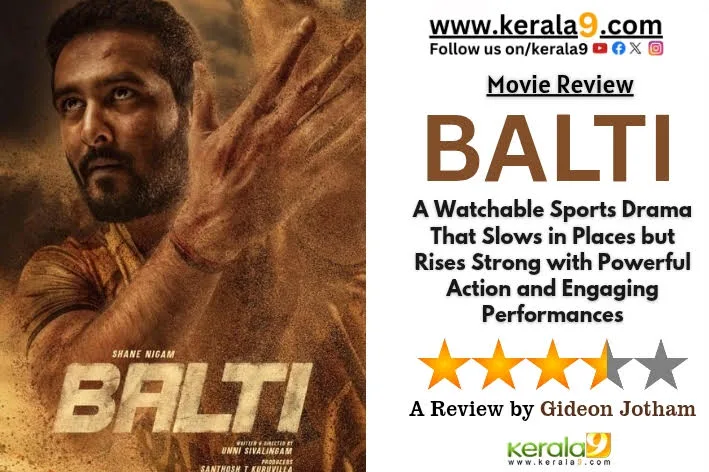
Balti Movie Review: A Watchable Sports Drama That Slows in Places but Rises Strong with Powerful Action and Engaging Performances
Director: Unni Sivalingam
Writers: Unni Sivalingam, Vinayak Sasikumar
Genre: Sports Action, Drama
Language: Malayalam, Tamil
Runtime: 151 minutes
Positives
- Strong story foundation
- Cinematography
- Engaging screenplay with momentum in the second half
- Confident direction
- Powerful performances from the lead and supporting actors
- Well-choreographed stunts
- Thumping background score
Negatives
- Predictable plot beats
- Rope removal (VFX flaws) that reduce the impact of key scenes
- Underdeveloped side characters
- Certain subplots left undisclosed or unfinished
- Slow pacing in the first half
Direction
Watching Balti feels like boarding a flight that struggles on the runway. The first half moves slowly, circling the ground, testing patience like a plane trying to gather speed but not quite taking off. The pacing feels heavy, the buildup stretched but you sense the director is holding back, preparing for something.
And then, somewhere after that midpoint, the film finally takes flight. Once it’s in the air, Balti soars. The action sequences crackle with energy, the emotions hit harder, and the performances find their rhythm. It’s here that the director shows his brilliance balancing intensity with intimacy, giving weight to both the stunts and the silences. The flight feels steady, strong, and thrilling, as though the turbulence of the first half was worth enduring.
But when the film approaches its end, it doesn’t land it leaves us mid-air, suspended. That unfinished descent isn’t a flaw, though; it’s a promise. The director deliberately closes on an unresolved note, setting the stage for a sequel that transforms this journey into something bigger: a war between two best friends. It’s not just spectacle he’s aiming for, but a saga that continues.
What makes this direction memorable is not just the adrenaline of the action, but the emotional sincerity beneath it. The camera doesn’t just chase violence; it listens to the characters’ silences, the unspoken pain, the weight of choices. Even in its flaws, you feel the director’s hand guiding the story with belief that these characters and their conflicts matter.
In short, Balti is directed like a flight: shaky in takeoff, brilliant in the air, and unfinished in landing, pointing instead to the skies of what’s yet to come.
Story
At its heart, Balti is the tale of four friends kabaddi players bound by loyalty, dreams, and the reckless energy of youth. Their lives take a tragic turn because of one impulsive decision, a choice made without thought, but with consequences that ripple into everything that follows. This single misstep becomes the axis on which their fates spin, turning friendship into fracture and hope into heartbreak.
The conflict with Alphonse and Selvaraghavan’s characters gives the story real spark. Their presence pushes the drama beyond just a sports-to-gangster transition it becomes personal, charged with betrayal and pride. At times, the confrontations feel alive, drawing us into the weight of broken bonds and shifting loyalties.
But for all its intensity, the predictability of the writing weighs the film down. The arcs are familiar the hot-headed choices, the fall from grace, the redemption attempts. It’s a template Kollywood has served many times before, and here it doesn’t always find freshness. The redemption arc in particular feels uneven more like a ticked box than a lived-in journey.
And yet, despite its flaws, Balti manages to survive because of its sincerity. Even when the story falls into cliché, the emotions of these four friends keep it afloat. The idea that one rash decision could unravel everything resonates it feels human, it feels real. We’ve all known moments where one choice changes everything, and Balti leans into that tragedy.
This is not a story of heroes and villains alone it’s the story of friends torn apart, a bond tested in blood and betrayal. The film ends without resolution, holding back its true landing, because the real story is yet to come: a war between two best friends, once brothers, now destined to be enemies. That unfinished note turns a predictable tragedy into the opening chapter of something larger.
Screenplay
The screenplay of Balti is a carefully woven tapestry of friendship, loyalty, and tragedy, but it doesn’t shy away from showing the fragility of human choices. At its core, it’s the story of four friends whose bond is tested by a single impulsive decision a choice made in haste, without foresight, that sets off a chain reaction of consequences. The screenplay captures not just the external conflicts confrontations with Alphonse and Selvaraghavan but also the internal struggles of each character, showing how guilt, fear, and pride shape their actions.
One of the screenplay’s strengths is how it balances mass-action beats with quieter, more introspective moments. The early sequences linger to build tension and establish relationships, allowing the audience to understand who these friends are and why their bond matters. Scenes on the kabaddi field aren’t just sports sequences they’re narrative devices that mirror loyalty, competition, and the first cracks in their unity.
However, the screenplay isn’t without flaws. Predictable story beats, especially in the first half, occasionally undercut suspense. Certain subplots, such as the uneven redemption arc, feel rushed or underdeveloped, leaving the audience wanting more depth in understanding motivations. Some emotional moments could have been given extra space to resonate, but the screenplay often pivots quickly to action, prioritizing pace over reflection.
Despite these issues, the screenplay succeeds in maintaining engagement through its emotional core. The conflicts feel personal, the stakes feel real, and even predictable sequences are buoyed by the performances and direction. The flow of tension from friendship to betrayal, from remorse to confrontation is structured in a way that keeps viewers invested, particularly once the story takes off in the second half.
Finally, the screenplay masterfully sets up a sense of continuation. The film never fully “lands,” ending instead on a note of unresolved tension and the promise of a larger conflict the impending war between two best friends. This deliberate choice transforms the screenplay from a single story into the opening chapter of a saga, giving it a sense of scale and ambition that extends beyond the runtime.
Cinematography & Visuals
If there’s one department where Balti truly soars, it’s the cinematography. Every frame feels alive, not just in action, but in emotion. The camera doesn’t simply capture events it feels them. From the subtle expressions of Shane, Santhanu, and Selvaraghavan to the intensity of on-field kabaddi clashes, the visuals carry a heartbeat of their own.
Action sequences are dynamic and immersive, but what really sets the cinematography apart is its ability to capture quiet moments with equal power. A glance, a lingering shadow, a fleeting expression of regret or camaraderie these shots linger long after the scene ends. It’s the kind of work that makes you pause and appreciate the storytelling craft, making the audience feel deeply connected to the characters’ world.
In short, the cinematography doesn’t just show the film it elevates it. It transforms Balti from a mass-action drama into a visually and emotionally engaging experience. It’s polished, precise, and yet somehow raw enough to feel authentic. Simply put: it’s just wow.
Editing & Flow
The editing in Balti mirrors the flight-like journey of the film sometimes struggling on the runway, and then soaring once it hits its rhythm. The first half drags at moments, with sequences that linger a little too long, creating a sense of tension that’s more fatigue than suspense. It feels like the film is testing patience, giving space for the characters and story to breathe but not always successfully.
Once the second half kicks in, however, the editing finds its pace. The cuts sharpen the action, heighten the drama, and give the emotional beats room to land. Scenes flow with purpose, and the rising tension feels natural rather than forced. The interplay between quieter, introspective moments and high-octane action sequences is well-managed, making the audience feel every beat, every decision, and every betrayal along with the characters.
There are occasional moments where indulgent slow-motion or stretched sequences pull the viewer out of immersion, but they never dominate. Overall, the editing supports the emotional pulse of the story, keeping the audience invested even when the screenplay leans on predictable beats. Balti flows like a plane that, after struggling on the runway, finally finds the skies steady, exhilarating, and ready for what’s next.
Music & Sound
The music in Balti has its highs and lows. The songs are visually energetic, with choreography that aims to be vibrant and dynamic, but they often fall short of leaving a lasting impression. Some sequences feel stiff or repetitive, lacking the fluidity and creativity that could have made them memorable. Instead of enhancing the narrative or deepening the characters, they act more as commercial detours colorful pauses that momentarily break the tension without adding real emotional weight.
The background score (BGM), in contrast, does a fair job of supporting the film. It punctuates action scenes with bursts of intensity, helping the audience feel the stakes during fights and confrontations. Emotional moments are gently underscored, giving weight to key scenes. However, the score doesn’t surprise or innovate; it plays it safe, following predictable motifs and rhythms that align with the genre without elevating it.
In essence, the music and sound in Balti serve the narrative they don’t distract, but they don’t truly elevate the experience either. The songs miss the emotional mark, and while the BGM provides necessary tension, it rarely becomes memorable. It’s functional and adequate, rather than outstanding, leaving the film dependent more on its story and performances to carry impact.
Performances
Shane Nigam:
Shane steals the show with his mannerisms and on-screen presence it’s pure OMG moments. Every look, gesture, and movement carries weight, making even quiet scenes feel electric. His intensity in action sequences and subtlety in emotional beats show a range that keeps the audience hooked. He doesn’t just act he embodies the character, making the struggles and choices of his role feel deeply personal.
Santhanu Bhagyaraj:
Santhanu brings a natural ease to his role. He doesn’t overplay or exaggerate; instead, he inhabits the character with authenticity, making his dialogues and expressions feel grounded and relatable. Whether in tense confrontations or reflective moments, Santhanu’s performance adds balance and realism, complementing Shane’s intensity perfectly.
Selvaraghavan:
And then there’s Selvaraghavan the real beast of the film. His presence is commanding, his expressions layered, and his energy magnetic. Even in scenes where the screenplay gives him minimal room, he manages to dominate the frame, leaving a lasting impression. His aura and delivery elevate every conflict he’s part of, making the stakes feel higher and the story richer.
Supporting Cast:
Unlike many films where secondary characters fade into the background, Balti gives most supporting actors nearly equal importance. Their arcs are meaningful, their interactions with the leads feel natural, and they contribute to the story’s emotional depth. Only a few minor characters remain underdeveloped, but by and large, the ensemble adds richness and texture, making the world feel lived-in and balanced.
Action & Stunts
The action in Balti is one of its most unforgettable aspects, and it’s not just about choreography it’s about telling the story through physicality and stakes. Every stunt carries weight, both literally and emotionally. You feel Shane, Santhanu, and Selvaraghavan inhabiting their roles, and when they clash, it’s not just a fight it’s a conflict of friendship, pride, and betrayal. Blood splashes, impacts land with palpable force, and every fall or tumble feels real, never staged or artificial. That realism is what makes the stunts hit harder, leaving an impression that lingers beyond the cinema hall.
What’s remarkable is how the action balances spectacle with narrative purpose. The kabaddi sequences, for instance, aren’t just sports they foreshadow tension, highlight team dynamics, and show the physical and emotional stakes of their friendship. Similarly, the confrontations with Alphonse and Selvaraghavan are choreographed to make the audience feel the danger and the character’s desperation, rather than just watching a list of punches and kicks.
There are moments where the stunts could have been slightly tighter or more inventive, and a few sequences have minor loose ends in execution. But these are almost imperceptible because the energy, intensity, and authenticity carry the scenes. The way the camera follows the action, lingering on faces, sweat, and movement, adds a layer of immersion that makes every confrontation feel lived-in and urgent.
It’s also worth noting the emotional resonance of the action. Unlike films where fights are empty spectacle, here each clash has context friendship threatened, revenge sought, pride at stake. You find yourself invested, not just entertained. That’s why every fight, every chase, and every stunt in Balti feels like it has a special place in your heart. It’s not just about seeing action it’s about feeling it, and in that sense, the film succeeds brilliantly.
In short, the stunts in Balti are a perfect marriage of realism, intensity, and storytelling. Even with minor imperfections, they elevate the film, make the characters’ struggles tangible, and give audiences adrenaline-fueled moments that are both thrilling and emotionally satisfying.
 Final Verdict & Rating
Balti is a film that soars and stumbles in equal measure, much like a plane struggling on the runway before finally taking flight. Its first half tests patience with predictable beats and a slower pace, but once the story lifts, the film finds its rhythm delivering thrilling action, emotional stakes, and compelling performances that keep the audience invested.
The real strength lies in the heart of the story the bond of four friends, the consequences of one rash decision, and the tensions that arise from loyalty and betrayal. Shane, Santhanu, and Selvaraghavan bring these characters to life with energy, authenticity, and intensity, while the supporting cast adds texture and balance. Cinematography and action sequences elevate the visual and visceral experience, even if some songs and minor narrative gaps leave room for improvement.
Ultimately, Balti isn’t perfect, but it entertains, engages, and leaves the audience wanting more. The unresolved ending promises a larger conflict and sets up the stage for a sequel a war between two best friends that keeps viewers thinking long after the credits roll.
Rating: 3.5 / 5
A Review by Gideon Jotham